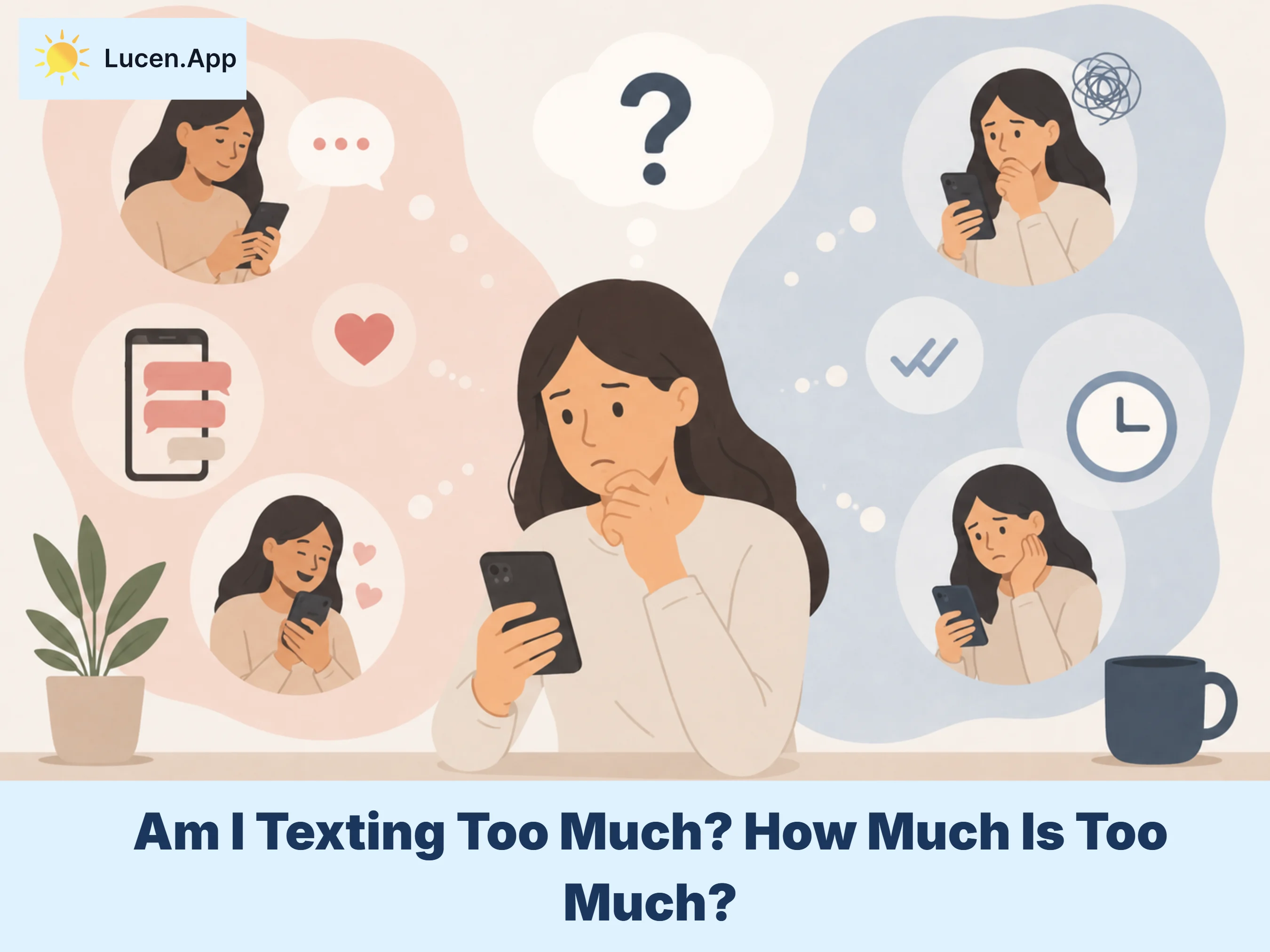
Am I Texting Too Much? How Much Is Too Much?
You are likely texting too much if you constantly initiate conversations, send multiple follow-up messages without receiving a reply, feel anxious while waiting for responses, seek reassurance through texting, expect immediate replies, or struggle to let conversations end naturally. Other signs include frequently checking your phone, carrying on one-sided conversations, and feeling emotionally affected by delayed responses. These patterns often suggest that texting is being driven by habit, anxiety, or emotional dependence rather than balanced communication.
There is no universal number of messages that defines excessive texting. What matters is whether your texting habits create pressure, disrupt personal boundaries, or leave either person feeling overwhelmed. Healthy texting supports connection without creating stress, unrealistic expectations, or constant demands for attention. If communication feels one-sided, emotionally draining, or overly dependent on texting, it may be time to reassess your habits and create a healthier balance.
What Are the Signs of Excessive Texting?
Signs of excessive texting include always starting conversations, sending multiple unanswered messages, double- or triple-texting, constantly checking your phone, feeling anxious while waiting for replies, and carrying on one-sided conversations. These behaviors often indicate over-texting because communication becomes driven by anxiety, habit, or emotional dependence rather than mutual engagement and balanced interaction.
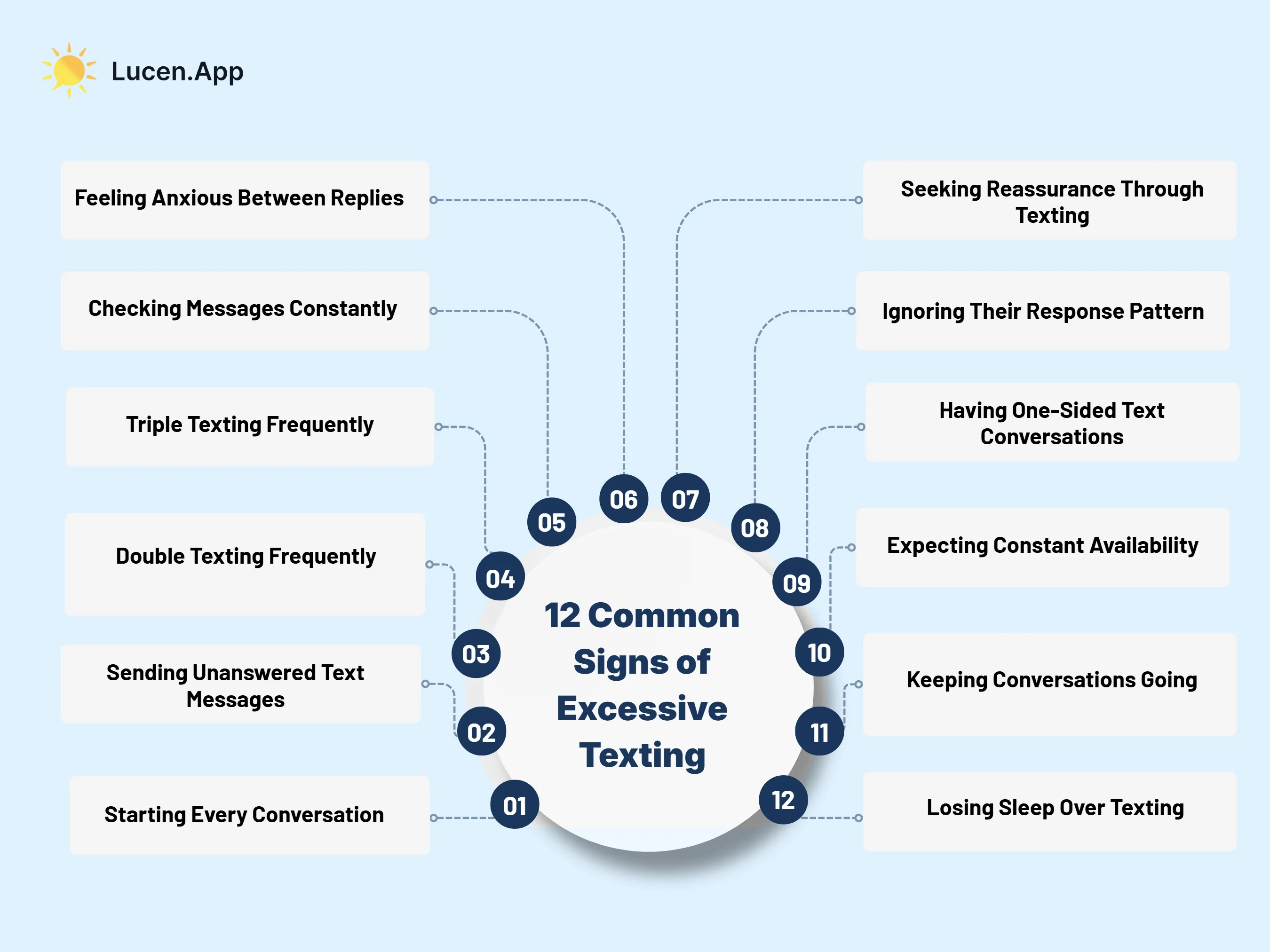
12 common signs of excessive texting are:
- Starting Every Conversation
- Sending Unanswered Text Messages
- Double Texting Frequently
- Triple Texting Frequently
- Checking Messages Constantly
- Feeling Anxious Between Replies
- Seeking Reassurance Through Texting
- Ignoring Their Response Pattern
- Having One-Sided Text Conversations
- Expecting Constant Availability
- Keeping Conversations Going
- Losing Sleep Over Texting
Starting Every Conversation
Consistently starting every conversation is a common sign of excessive texting, where one person repeatedly initiates contact while the other rarely reaches out first. When over-texting becomes a pattern, the responsibility for maintaining communication falls on one person, creating an imbalance that may indicate unequal interest, availability, or emotional investment.
Sending Unanswered Text Messages
Continuing to send text messages without receiving a response is a sign of excessive texting, in which communication persists despite the other person's silence. This pattern can create pressure on the recipient and may suggest difficulty respecting boundaries, communication preferences, or the other person's need for space.
Double Texting Frequently
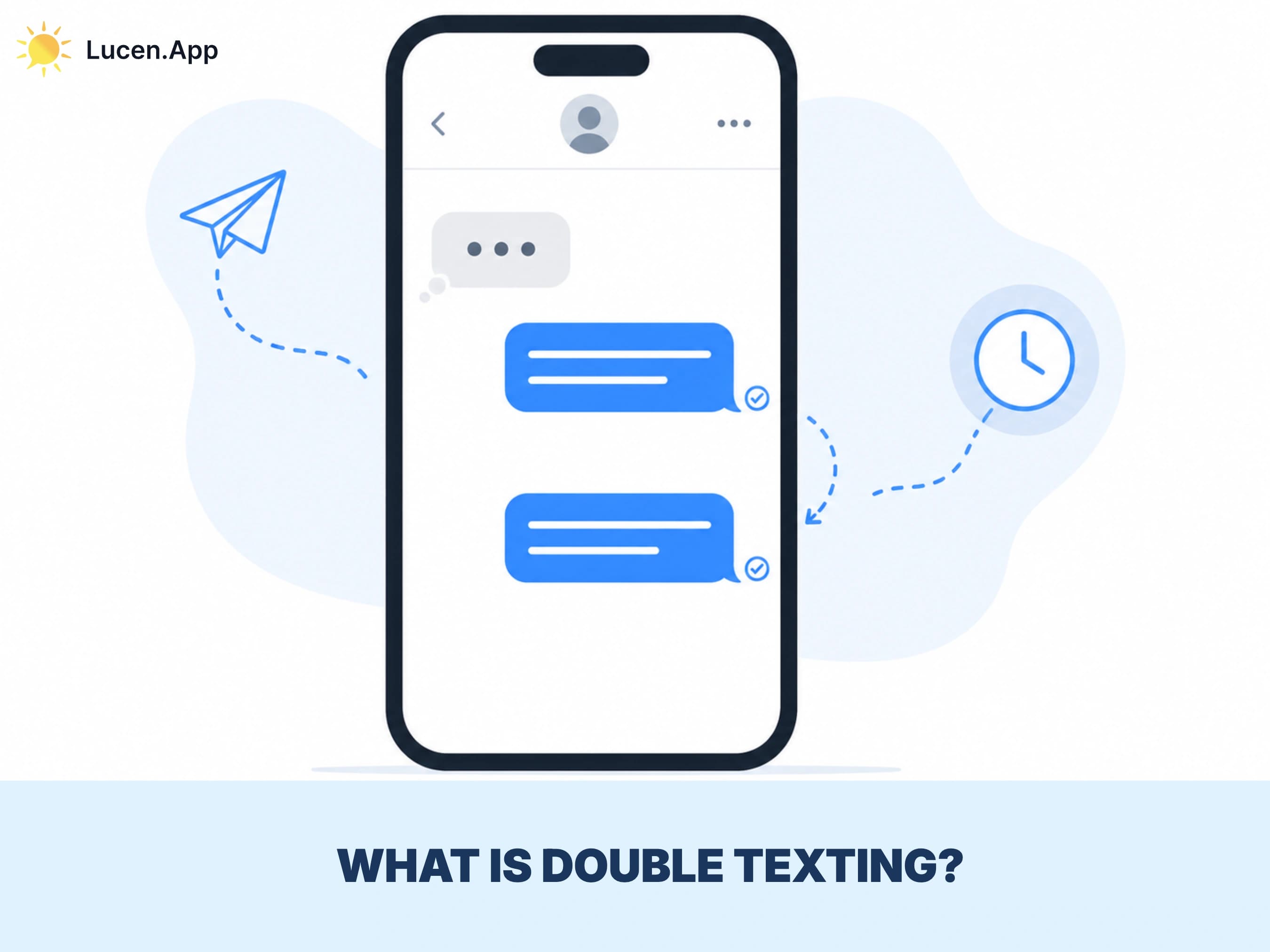
Frequently sending double texts is a sign of excessive texting, in which a follow-up message is sent before receiving a reply to the first. While occasional double texting is normal, repeated follow-ups may signal over-texting driven by impatience, anxiety, or a strong desire for immediate engagement.
Triple Texting Frequently
Frequent triple texting is a stronger sign of excessive texting because it involves sending three or more consecutive messages without receiving a response. Such a pattern of over-texting can overwhelm the recipient, create communication pressure, and disrupt the natural flow of a conversation.
Checking Messages Constantly
Repeatedly checking messages even when no response is expected is a sign of excessive texting, involving frequent checks for replies, notifications, or new messages throughout the day. This habit often reflects an unhealthy preoccupation with texting and can increase stress, distraction, and emotional dependence on ongoing conversations.
Feeling Anxious Between Replies
If you are feeling anxious between replies, it is an emotional sign of excessive texting, in which waiting for a response creates worry, restlessness, or uncertainty. Over-texting often becomes linked to reassurance and validation, causing delayed responses to feel more significant than they actually are.
Seeking Reassurance Through Texting
Constantly seeking reassurance through texting is a sign of excessive texting, involving repeated requests for validation, comfort, or confirmation via messages. Such a pattern of over-texting can develop when emotional security depends on frequent replies rather than on healthy communication and trust-building.
Ignoring Their Response Pattern
Not paying attention to someone's response pattern can lead to excessive texting when you overlook how often or quickly they usually reply. This creates unrealistic expectations based on your own needs rather than their communication style, while respecting response patterns helps maintain balance and reduce frustration in communication.
Having One-Sided Text Conversations
Believing that a person should always be reachable and ready to respond is a clear sign of excessive texting, in which constant availability is expected on both sides. Such expectations can place pressure on communication, weaken personal boundaries, and encourage unhealthy messaging patterns in relationships.
Expecting Constant Availability
A belief in constant availability is a key sign of excessive texting, where there is an assumption that both people should always be reachable and ready to respond. Repeated patterns like this may create tension in communication, diminish personal boundaries, and support unhealthy texting behaviors.
Keeping Conversations Going
Keeping conversations going is a sign of excessive texting, occurring when someone struggles to let a text exchange end naturally. Over-texting often appears through unnecessary follow-up questions, constant updates, or repeated attempts to restart conversations that have already run their course.
Losing Sleep Over Texting
Experiencing sleep loss due to texting is a sign of excessive texting, where messaging habits begin to interfere with healthy rest and recovery. Whether it involves late-night conversations, waiting for replies, or checking notifications, this can disrupt sleep quality and increase emotional dependence on communication.
How Much Texting Is Too Much in a Relationship?
Texting is too much in a relationship when it stops supporting connection and instead creates pressure, stress, or emotional dependency. Whether dating, in a new relationship, or in a long-distance relationship, excessive texting often involves constant messaging, unrealistic expectations of quick replies, and little space for personal life or real interaction. Healthy communication allows natural pacing, mutual comfort, and balance, ensuring that texting strengthens the relationship without feeling overwhelming or obligatory.
How Much Texting Is Too Much While Dating?
While dating, texting is too much when it starts to replace meaningful interaction rather than support it. If conversations continue all day, create pressure to respond immediately, or leave little room for real-life experiences, communication can become overwhelming. Healthy dating communication should build a connection without making either person feel obligated to stay constantly engaged.
How Much Texting Is Too Much in a New Relationship?
Texting becomes too much in a new relationship when communication feels overwhelming, rushed, or emotionally demanding for either person. Excessive texting often involves constant check-ins, oversharing too early, or expecting frequent responses throughout the day. A healthy texting pattern allows connection to develop naturally without creating pressure or dependency.
How Much Texting Is Too Much in a Long-Distance Relationship?
In a long-distance relationship, texting becomes too much when it shifts from creating connection to creating stress, obligation, or unrealistic expectations. Frequent communication can be helpful, but excessive texting occurs when one partner feels pressured to be available at all times. The balance should support closeness without compromising personal space, routines, or emotional well-being.
How Does Texting Too Much Affect Relationships?
Texting too much affects relationships by reducing anticipation, creating false intimacy, signaling neediness, adding communication pressure, causing message fatigue, removing personal space, making someone pull away, hiding real compatibility, and replacing in-person connection. It often turns communication from enjoyable to stressful and unbalanced.
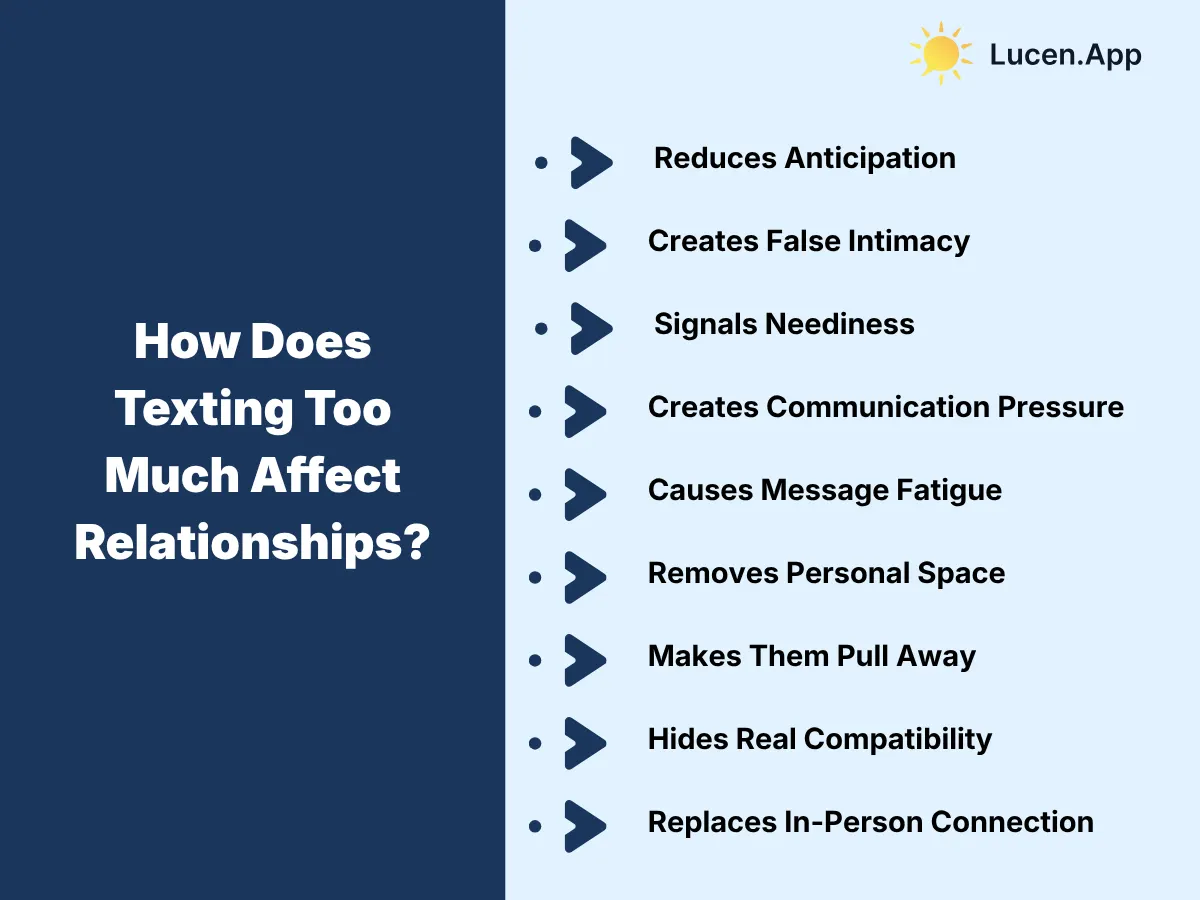
9 major effects of excessive texting on relationships are:
Reduces Anticipation
One effect of excessive texting in a relationship is that it reduces anticipation by eliminating the natural space between interactions. When every thought, update, or activity is shared immediately, there is less opportunity to miss someone or look forward to hearing from them. This can make communication feel predictable rather than exciting.
Creates False Intimacy
Texting too much in a relationship can create a false sense of intimacy by making frequent communication feel deeper than it actually is. While constant messaging may increase familiarity, genuine emotional connection develops through shared experiences, meaningful conversations, and real-world interactions. Excessive texting can sometimes blur the difference between contact and closeness.
Signals Neediness
Frequent check-ins, repeated follow-ups, and constant requests for attention can make excessive texting appear needy. When communication becomes heavily focused on obtaining reassurance or immediate responses, the other person may feel pressured rather than connected. This perception can affect attraction and the overall balance of the relationship.
Creates Communication Pressure
Too much texting in a relationship can create communication pressure by making people feel obligated to respond quickly or keep conversations going. Excessive texting often turns communication into a responsibility instead of a choice. As a result, texting may begin to feel stressful rather than enjoyable.
Causes Message Fatigue
Message fatigue is a common effect of excessive texting, in which the volume of communication becomes overwhelming or exhausting. Excessive texting can make conversations feel repetitive, reduce engagement, and cause someone to lose interest in responding. Over time, constant notifications may create frustration instead of connection.
Removes Personal Space
Excessive texting can interrupt work, hobbies, social activities, and time for personal reflection. Personal space becomes limited when texting demands continuous attention throughout the day. Healthy communication allows both people to stay connected while maintaining independence and individual routines.
Makes Them Pull Away
Rather than fostering closeness, excessive texting can sometimes cause the other person to pull away from the relationship. When communication feels overwhelming, people often create distance by responding less frequently or becoming less engaged. This reaction is usually an attempt to regain balance rather than a lack of interest.
Hides Real Compatibility
Texting too much can hide real compatibility because digital conversations do not reveal everything about a relationship. Important qualities such as communication style, emotional chemistry, and conflict resolution are often easier to evaluate in person. Excessive texting can create a connection that feels stronger online than it does offline.
Replaces In-Person Connection
One of the biggest risks of excessive texting is allowing it to replace in-person interaction. Text messages cannot fully communicate facial expressions, body language, or tone of voice. Strong relationships develop through a combination of digital communication and real-world experiences rather than texting alone.
Does Double Texting Mean You Are Texting Too Much?
No, double texting does not automatically mean you are texting too much, as it is considered excessive only when the follow-up message is driven by anxiety, impatience, or a need to pressure for an immediate response. Sending one extra text can be normal when you forgot to include something, want to clarify a point, or feel enthusiastic about the conversation. The concern begins when double texting becomes frequent, rushed, or one-sided.
A useful way to judge it is by looking at the pattern. If you regularly send follow-up messages before the other person has time to reply, or if you feel uneasy until they respond, it may signal over-texting. Considerate double texting respects the other person's pace, schedule, and communication style. Excessive double texting creates pressure, disrupts balance, and can make the conversation feel more demanding than it naturally would.
How Much Texting is Normal?
There is no single normal amount of texting because healthy communication looks different in every relationship. What matters is not the number of messages exchanged but whether both people feel comfortable with the frequency, pace, and expectations of communication. A texting habit that feels natural and engaging to one couple may feel overwhelming or insufficient to another.
Instead of focusing on message counts, pay attention to how texting affects the relationship. Normal texting supports connection without creating pressure, anxiety, or expectations of constant availability. Both people should feel free to respond at their own pace while maintaining their daily routines and personal space. As relationships evolve, texting habits often change as well. The healthiest communication patterns are those that feel balanced, respectful, and mutually satisfying for both people.
How Can You Stop Texting Them Too Much Without Playing Games?
You can stop texting them too much by giving space without ignoring them, matching their texting energy, moving beyond text conversations, staying busy offline, communicating your needs directly, pausing before sending messages, and focusing on quality over quantity. These strategies help reduce over-texting without resorting to manipulation or waiting games.
Here are some effective ways to stop texting them too much without playing games:
Give Space Without Ignoring
Giving space without ignoring means reducing excessive texting while still maintaining a genuine interest in the relationship. Instead of sending constant updates or follow-up messages, allow conversations to breathe naturally. This approach respects the other person's time and boundaries while showing that communication need not be continuous to remain meaningful.
Match Their Texting Energy
Aligning with someone's texting energy means adjusting your communication style to match their usual response pattern. If they prefer fewer messages or slower replies, excessive texting can create unnecessary pressure. Paying attention to their pace helps maintain balance and prevents communication from feeling one-sided or overwhelming.
Move Beyond Text Conversations
One way to reduce excessive texting is to stop relying on text messages as the primary form of communication. Phone calls, video chats, and in-person conversations provide richer interaction and reduce the need for constant messaging. These communication methods often create stronger connections than lengthy text exchanges alone.
Stay Busy Offline
Engaging in offline activities helps reduce excessive texting by shifting attention away from the phone. Hobbies, exercise, work, social events, and personal projects provide healthy distractions and lessen the urge to constantly check messages. A balanced offline life naturally supports healthier communication habits.
Communicate Your Needs Directly
Communicating your needs directly helps prevent excessive texting driven by uncertainty or mixed expectations. Instead of guessing how often someone wants to communicate, have an honest conversation about preferences and boundaries. Clear communication reduces misunderstandings and creates a texting rhythm that works for both people.
Pause Before Sending Messages
Taking a pause before sending messages is an effective way to reduce excessive texting. It gives you time to reflect on what you want to say and helps prevent impulsive messages driven by boredom, anxiety, or frustration. This simple habit encourages more thoughtful communication and lowers unnecessary message volume.
Focus On Quality Over Quantity
Prioritizing quality over quantity means focusing on meaningful conversations instead of constant messaging. Excessive texting often involves frequent, low-value messages that add little to the interaction. Thoughtful, engaging communication builds stronger connections than a high volume of brief texts sent throughout the day.
How to Use AI Chat Analyzer to Tell if You Are Texting Too Much?
To use an AI chat analyzer to determine if you are texting too much, upload or connect your conversations, and review the communication patterns identified by the tool. An AI chat analyzer examines texting behavior across platforms such as WhatsApp, iMessage, and Instagram to highlight habits that may indicate over-texting, communication imbalance, or excessive reliance on messaging.
Key insights an AI chat analyzer can provide include:
- Response Patterns: Shows who initiates conversations, how often messages are sent, and whether communication is balanced.
- Interest Levels: Measures mutual engagement to determine whether both people contribute equally to the conversation.
- Mixed Signals: Identifies inconsistencies in communication that may indicate confusion or mismatched expectations.
- Red Flags: Highlights behaviors such as repeated follow-ups, one-sided conversations, or excessive messaging.
- Compatibility Insights: Compares texting styles and communication habits to reveal potential areas of friction.
- Conversation Balance: A chat analyzer evaluates whether one person is carrying most of the interaction.