Situationship vs. Relationship: How to Know Where You Stand
Situationships are undefined romantic or sexual connections with unclear commitment and inconsistent communication, while relationships are committed partnerships built on emotional security, exclusivity, and trust. Both types of relationships may involve intimacy and emotional connection, though the difference becomes clear through commitment level, communication patterns, future planning, emotional depth, and integration into each other's daily lives.
People in situationships often avoid define-the-relationship conversations, make last-minute plans, and experience confusion about expectations or exclusivity. Relationships, in contrast, involve clear boundaries, reliable communication, mutual support, and intentional future planning. Signs of a healthy relationship include emotional safety, social integration, and consistent effort from both partners.
Factors such as emotional connection, exclusivity, future-oriented conversations, and level of commitment help determine whether a connection is casual or committed. If the relationship creates ongoing anxiety, unmet emotional needs, or conflicting expectations, it may be time to reassess the dynamic and decide whether the connection aligns with your long-term needs and relationship goals.
What Is a Situationship?
A situationship is a romantic or sexual connection between two people that lacks clear labels, mutual commitment, or a defined long-term direction. This type of relationship is more than a friendship and involves a deeper emotional connection and intimacy than a typical friends-with-benefits (FWB) scenario.
People often enter situationships due to modern dating trends, a desire for intimacy without the pressure of commitment, or to test the waters before deciding whether to define the relationship. While situationships may offer flexibility and fun, they can lead to confusion, anxiety, or heartbreak if one partner expects more commitment or future plans than the other is willing to give.
What Is a Relationship?
A relationship is a committed and clearly defined connection between two people who share mutual trust, emotional support, and long-term goals. Unlike a situationship, which often lacks clarity and commitment, a relationship provides a stable foundation where both individuals know where they stand and what they are working toward.
Partners in a relationship invest in intentional growth together, set clear boundaries, and introduce each other to friends and family as part of their lives. Common expectations include open communication, shared milestones such as anniversaries or future plans, and a sense of emotional security.
Difference Between Situationship and Relationship
Situationship is an undefined romantic or sexual connection with unclear commitment and future expectations, whereas a relationship is a committed partnership built on trust, emotional security, and shared long-term goals. Both types of relationship may involve emotional connection and intimacy, though the levels of clarity, communication, and stability differ greatly.
| Aspect | Situationship | Relationship |
|---|---|---|
| Labels | Undefined | Defined |
| Commitment | Low | High (clear) |
| Communication | Inconsistent or sporadic | Consistent and open |
| Emotional Depth | Emotional connection may feel confusing, guarded, or unclear | Emotional connection is deeper, secure, and openly expressed |
| Boundaries | Unspoken or poorly defined | Discussed clearly and respected by both partners |
| Goal | Focused on present convenience or casual connection without a shared long-term direction | Focused on long-term growth, stability, and shared future plans |
How Do Situationships Compare to Dating and Casual Relationships?
Compared to dating and casual relationships, a situationship usually lacks clear labels, mutual expectations, and long-term direction, even when emotional or physical intimacy is involved. Casual relationships often include agreed boundaries and upfront communication, whereas committed relationships are built on exclusivity, emotional security, and shared future goals, which situationship lacks.
| Relationship Type | Definition | Commitment Level | Communication & Boundaries | Future Direction |
|---|---|---|---|---|
| Situationship | An undefined romantic or sexual connection without clear labels or expectations | Low or unclear commitment | Vague or inconsistent | Rarely discussed seriously |
| Casual Relationship | A romantic or physical connection with agreed casual expectations between partners | Limited commitment with mutual understanding | Discussed upfront | Present enjoyment rather than a long-term goal |
| Committed Relationship | A defined partnership built on trust, exclusivity, and emotional investment | High and mutual commitment | Open communication and respected boundaries | Actively plan for a shared future together |
What Are the Signs You're in a Situationship or a Relationship?
Signs you are in a situationship include unclear commitment, inconsistent communication, and avoided conversations about the future, while relationship signs are emotional safety, exclusivity, and shared long-term goals. Both connections may involve intimacy and emotional connection, though the level of clarity, reliability, and integration into each other's lives often reveals the true nature of the relationship.
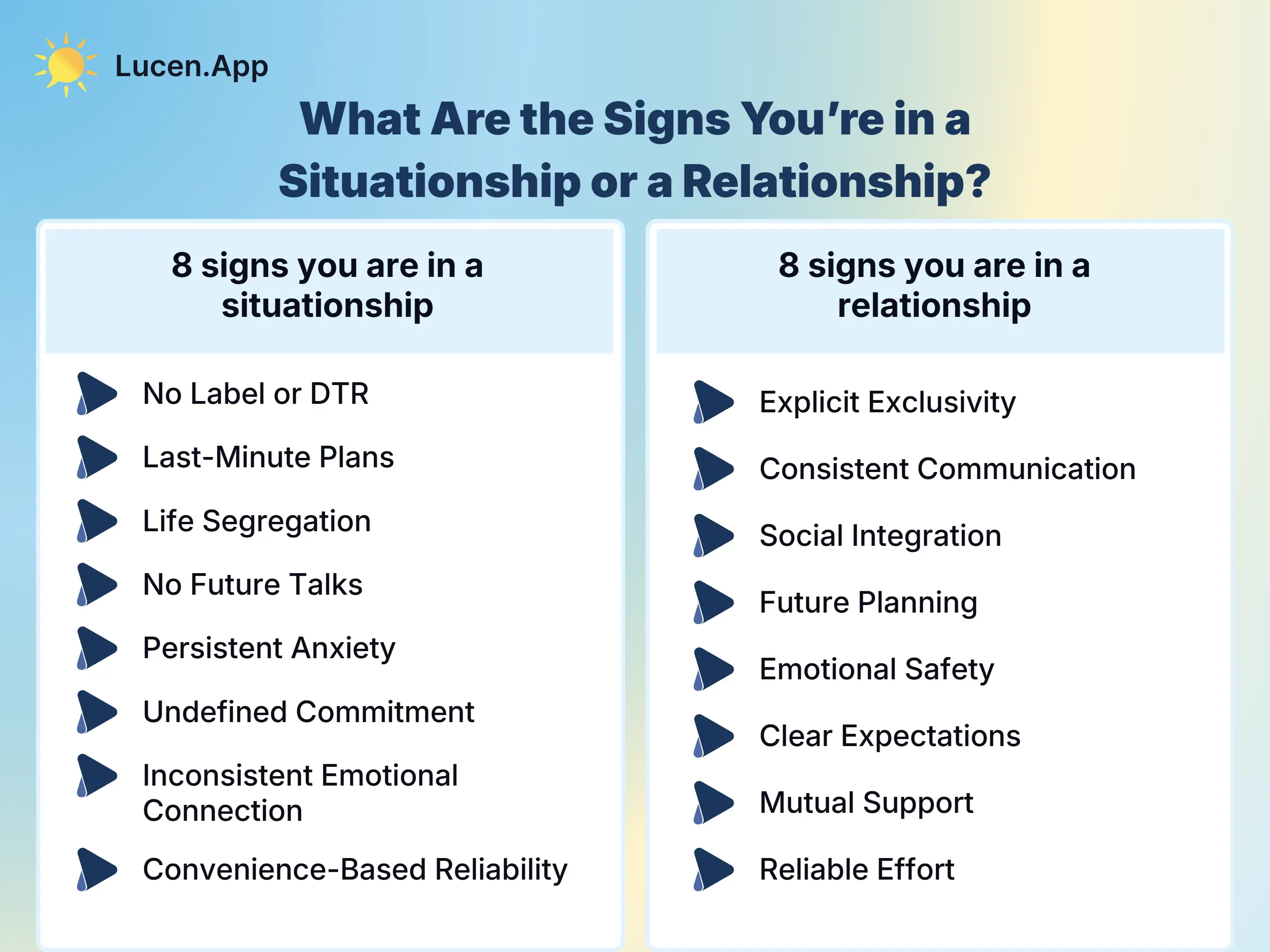
8 signs you are in a situationship are:
- No Label or DTR: You have never had a define-the-relationship conversation and avoid labels like boyfriend or girlfriend.
- Last-Minute Plans: Communication is inconsistent, and plans happen late at night or at the last minute.
- Life Segregation: You have not met their close friends or family, and the connection stays separate from daily life.
- No Future Talks: Conversations focus only on the present, while long-term plans are avoided or answered vaguely.
- Persistent Anxiety: You often feel uncertain about where you stand and worry about being treated like an option instead of a priority.
- Undefined Commitment: Exclusivity and expectations remain unclear or unspoken.
- Inconsistent Emotional Connection: Emotional intimacy may feel confusing, guarded, or unreliable.
- Convenience-Based Reliability: Support and effort often depend on convenience rather than genuine commitment.
8 signs you are in a relationship are:
- Explicit Exclusivity: Both partners openly define the relationship and agree on exclusivity.
- Consistent Communication: Communication is reliable, open, and part of everyday life.
- Social Integration: You are included in each other's social circles, family events, and important moments.
- Future Planning: Vacations, holidays, milestones, and long-term goals are discussed together.
- Emotional Safety: Trust, vulnerability, and emotional support create a secure foundation.
- Clear Expectations: Commitment, boundaries, and relationship expectations are openly understood.
- Mutual Support: Partners consistently support one another in stressful or challenging situations.
- Reliable Effort: Plans, responsibilities, and emotional investment are handled with consistency and care.
What Factors Influence Whether You're in a Situationship or a Relationship?
Factors influencing whether you are in a situationship or relationship are commitment level, communication consistency, emotional connection, exclusivity, future planning, and clarity of expectations. Situationships involve vague boundaries and inconsistent effort, whereas relationships are defined by mutual commitment, emotional security, reliable communication, and shared long-term goals.
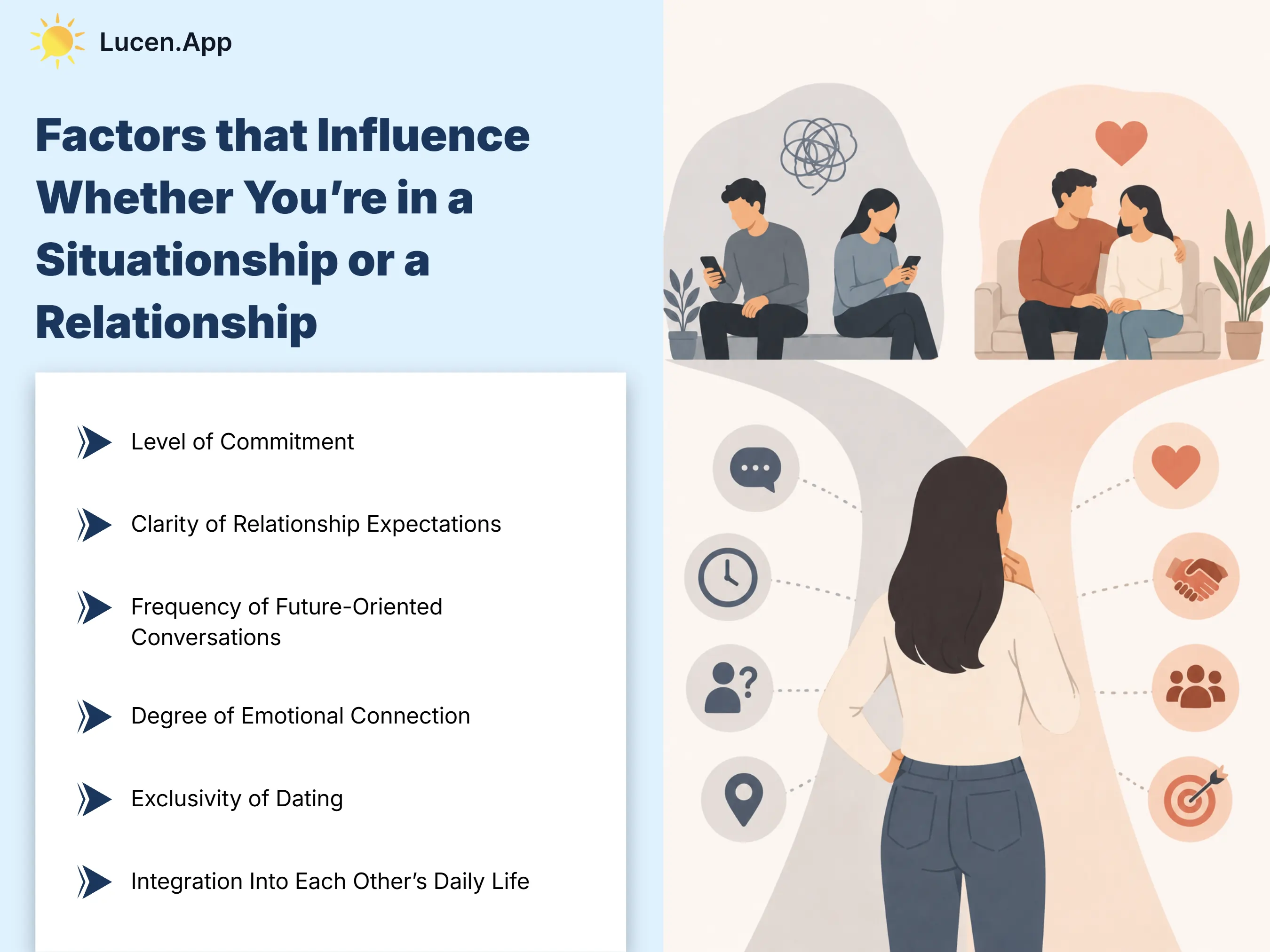
Key factors influencing whether you are in a situationship or a relationship are:
Level of Commitment
Commitment is a major factor in determining whether a connection is a situationship or a relationship, as it reflects how seriously both people take the partnership. In situationships, commitment often remains vague or undefined, whereas relationships are built on clear, mutual commitment between partners.
Clarity of Relationship Expectations
Relationship expectations often remain unclear in a situationship because conversations about boundaries, roles, exclusivity, or future direction may feel avoided or uncomfortable. In a relationship, both partners openly discuss expectations, clearly define boundaries, and create a shared understanding of what the connection means.
Frequency of Future-Oriented Conversations
Future-oriented conversations are a key factor because long-term planning often reflects emotional investment and relationship stability. Conversations in true relationships involve intentional, long-term planning and shared goals, while situationships tend to focus on the present and rely more on spontaneous plans.
Degree of Emotional Connection
Relationships are usually built on trust, vulnerability, emotional support, and consistent reassurance. Situationships, in contrast, may feel emotionally guarded, surface-level, or more focused on physical compatibility than on deeper emotional intimacy.
Exclusivity of Dating
Situationships often lack clear agreements, allowing both people to continue seeing other partners. Relationships involve direct conversations about exclusivity, where both partners commit to each other emotionally and romantically.
Integration Into Each Other's Daily Life
Situationships often stay separate from routines, family events, or close friendships, with interaction based mainly on convenience. Relationships involve shared routines, introductions to friends and family, and active involvement in each other's daily lives and future plans.
When Should You Reassess a Situationship or Relationship?
You should reassess a situationship or relationship when there is persistent anxiety, unmet emotional needs, conflicting expectations, or a negative impact on your mental well-being. Healthy relationships usually create clarity, emotional security, and consistent support, whereas ongoing confusion, avoidance, or uncertainty may signal that the connection no longer aligns with your personal needs or future expectations.
Here are certain cases when you should reassess a situationship or relationship:
- Immediate anxiety or persistent uncertainty: If you feel ongoing anxiety about where you stand with your partner or the status of your connection, this is a sign to reassess. In undefined relationships, constant worry about boundaries or expectations often signals a lack of clarity, which can affect your sense of security.
- Unmet core needs: When important needs such as open communication, exclusivity, or shared future plans are not being met, it is time to evaluate the dynamic. For example, if you want to define the relationship but your partner avoids the conversation, or if you seek a committed relationship while the other person prefers casual dating, this mismatch highlights a need for reassessment.
- The 3-month evaluation mark: Many people use the three-month point as a natural time to reflect on the direction of a romantic or sexual relationship. If the connection remains ambiguous after several months, or if you have not discussed relationship status or future plans, it may be a sign that the situationship is not progressing toward a defined relationship.
- Negative impact on mental health: If the dynamic leaves you feeling exhausted, insecure, or affects your self-esteem, this is a strong indicator to pause and reconsider. A healthy relationship should support your well-being, while ongoing stress or confusion about the type of relationship is a red flag.
- Conflicting expectations: Conflicting expectations can create frustration and emotional distance in a connection. For example, one person may want commitment while the other prefers something casual. Recognizing these differences early can help both people decide whether to continue or redefine the relationship.
What Are Other Types of Relationships Like Situationships?
Relationships like situationships include friends with benefits, casual dating, open relationships, and relationship anarchy. These relationship types often avoid traditional labels or strict commitment, though each dynamic differs in communication, emotional involvement, boundaries, and exclusivity.
Below are relationships that are like situationships:
- Friends with Benefits (FWB): Platonic friends who agree to include physical intimacy without pursuing a committed relationship. As with situationships, the connection stays casual, though boundaries and expectations are often discussed up front.
- Casual Dating: Dating one or more people without expecting exclusivity or long-term commitment. Similar to situationships, the connection may remain undefined, though casual dating usually involves more intentional dating experiences.
- Open Relationships / Ethical Non-Monogamy: Relationships where partners agree to pursue romantic or sexual connections with other people while maintaining clear boundaries. Unlike situationships, these dynamics are usually built on open communication and mutual agreement.
- Relationship Anarchy: A relationship style that rejects traditional labels and allows people to define each connection individually. Similar to situationships, the structure may feel unconventional, though relationship anarchy emphasizes autonomy and intentional communication.
How Can You Turn a Situationship Into a Relationship?
You can turn a situationship into a relationship by understanding your emotional needs, building a stronger emotional connection, improving communication, and having a direct conversation about commitment and future expectations. Situationships often remain undefined because important discussions are avoided, while relationships develop through clarity, mutual effort, emotional security, and intentional commitment.
Follow the steps below to turn a situationship into a relationship:
- Assess Your Own Needs and Expectations: Identify what you truly want from the connection, including your emotional needs, boundaries, and long-term relationship goals.
- Build a Stronger Emotional Connection: Focus on trust, vulnerability, meaningful conversations, and emotional support to deepen the connection beyond physical attraction.
- Improve Communication Consistency: Communicate regularly, make reliable plans, and discuss feelings openly to create clarity and emotional security. Reviewing your texting patterns with an AI chat analyzer can also help identify whether communication has been consistent and mutual.
- Have a Direct Define the Relationship (DTR) Conversation: Talk openly about exclusivity, commitment, future plans, and relationship expectations to clarify the connection.
- Observe Mutual Effort and Commitment: Pay attention to consistency, emotional investment, reliability, and whether both people are equally willing to prioritize the relationship.