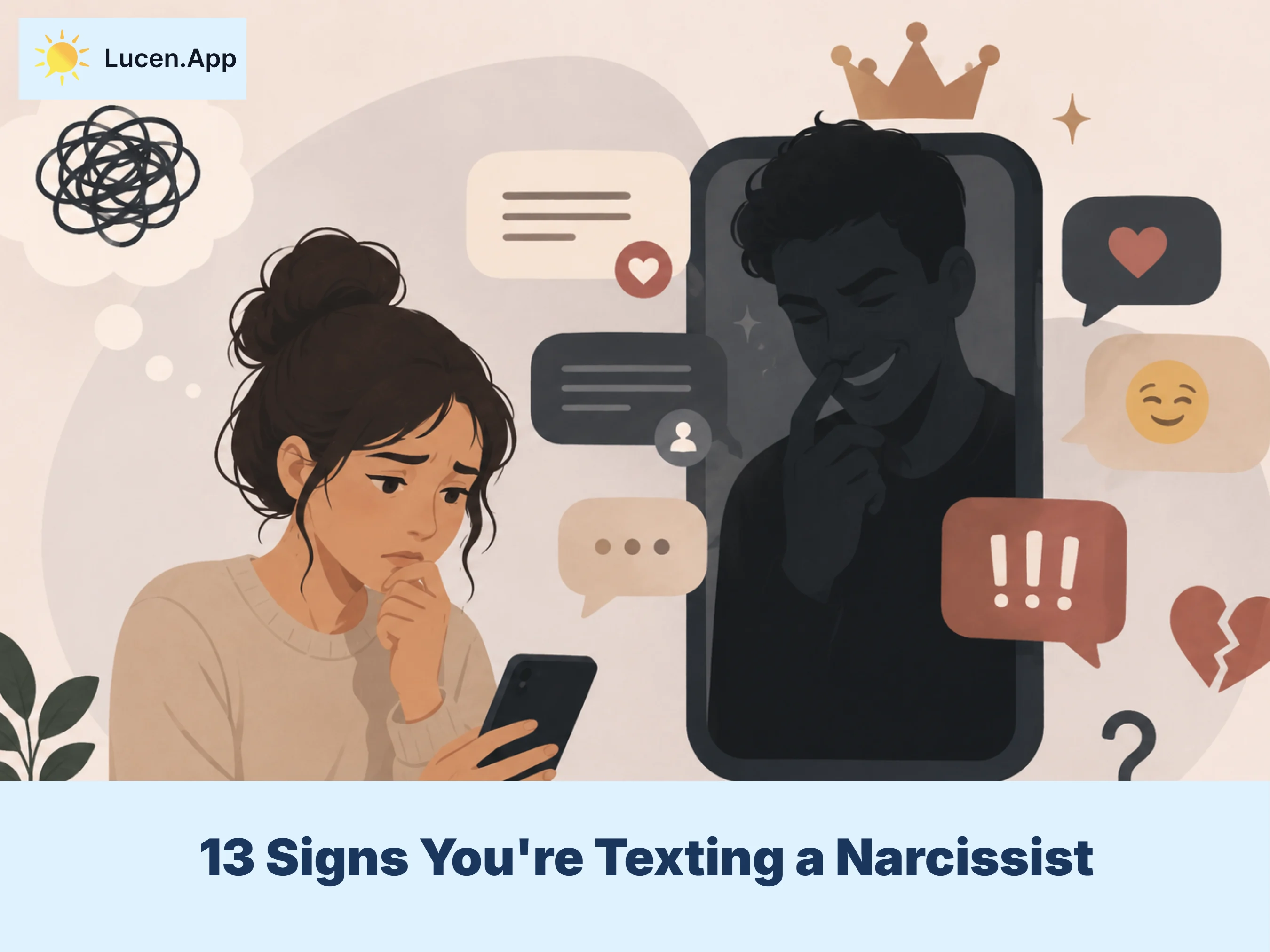
Signs of texting a narcissist often include them constantly redirecting conversations back to themselves, seeking excessive admiration, and showing little real attention to your feelings. They may also use tactics like guilt, blame-shifting, silent treatment, love bombing followed by withdrawal, or making you question what actually happened in the conversation. Over time, communication can feel one-sided, with their needs prioritized while your boundaries and emotional responses are dismissed or reframed as problems. These behaviors often appear as recurring texting patterns rather than isolated incidents.
While any single message may seem harmless, repeated patterns can reveal manipulative communication. Narcissistic texting often creates confusion, self-doubt, guilt, or emotional exhaustion by keeping the focus on their needs and maintaining control over the interaction. Recognizing these signs can help you identify unhealthy communication dynamics, set stronger boundaries, and make more informed decisions about how you engage with the relationship.
13 signs you are texting a narcissist are:
- They Turn Every Conversation Back to Themselves
- They Need Constant Admiration and Validation
- They Ignore Your Feelings Unless It Benefits Them
- They Use Guilt to Get the Response They Want
- They Make You Question What Really Happened
- They Alternate Between Attention and Distance
- They Expect Immediate Replies but Reply on Their Own Terms
- They Use Silent Treatment as Punishment
- They Love Bomb Through Texts Then Pull Away
- They Shift Blame During Every Conflict
- They Turn Boundaries Into Personal Attacks
- They Keep Conversations Focused on Their Needs
- They Reach Out Only When They Want Something
They Turn Every Conversation Back to Themselves
Conversational narcissism is a texting pattern where a narcissist consistently redirects discussions toward their own needs, achievements, or problems. No matter how the conversation begins, the focus eventually returns to them. If you share a promotion, personal challenge, or important milestone, they often respond by talking about their own experience instead of engaging with yours. This pattern limits meaningful exchange and shifts attention away from your thoughts and feelings.
Their self-focused communication appears in three ways, redirecting topics back to themselves, dismissing or minimizing your input, and dominating the conversation with lengthy stories about their own life. A narcissist may acknowledge your message briefly before steering the discussion toward their accomplishments or concerns. Over time, these texting habits can leave you feeling unheard, unimportant, and emotionally drained. The conversation becomes less about connection and more about maintaining their attention, validation, and sense of importance.
They Need Constant Admiration and Validation
A narcissist often uses texting as a source of admiration, attention, and reassurance, their sense of self-worth depends heavily on external validation, which is why many of their messages are designed to attract praise, recognition, or emotional reassurance. They may frequently talk about their achievements, seek compliments, or share stories that encourage positive reactions. Rather than using texts to build mutual connection, they often use them to reinforce their self-image and maintain a sense of importance.
A strong need for validation often leads to repetitive texting patterns. A narcissist sends follow-up messages when they do not receive the response they expect or becomes upset when their efforts go unnoticed. In some cases, they withdraw communication altogether when admiration is lacking. Over time, conversations become centered on meeting their emotional needs, leaving little room for genuine interest in your experiences, feelings, or perspective.
They Ignore Your Feelings Unless It Benefits Them
A common narcissistic texting behavior is selective emotional engagement, where they expect attention for their own concerns, achievements, and frustrations but show little interest when you share your feelings. Messages about your stress, disappointment, or personal challenges may be met with brief responses, delayed replies, or a quick shift back to topics that concern them.
However, their level of attention can change depending on the situation. If acknowledging your emotions helps them gain sympathy, avoid responsibility, maintain control, or influence the conversation, they may suddenly appear caring and supportive. This inconsistency can be confusing, as their responses are often driven by self-interest rather than genuine empathy. Over time, you may begin to notice that emotional support is offered selectively. Instead of feeling heard, conversations shift toward their priorities, leaving your emotions acknowledged only when they serve their needs.
They Use Guilt to Get the Response They Want
Guilt is often used by a narcissist as a tool to influence your responses, with messages that indirectly make you feel responsible for their emotions or circumstances rather than stating their needs directly. Messages such as "I guess I am not important to you anymore" or "After everything I've been through, this is how you treat me?" are designed to trigger guilt and pressure you into replying, apologizing, or giving them attention.
Over time, these interactions can create a sense of obligation that keeps you focused on meeting their emotional demands. Rather than addressing the actual issue, the conversation shifts toward reassuring them or relieving their distress. This tactic allows the narcissist to steer the exchange in their favor while avoiding accountability. If you frequently leave conversations feeling guilty despite doing nothing wrong, guilt-tripping may be playing a role in the dynamic.
They Make You Question What Really Happened
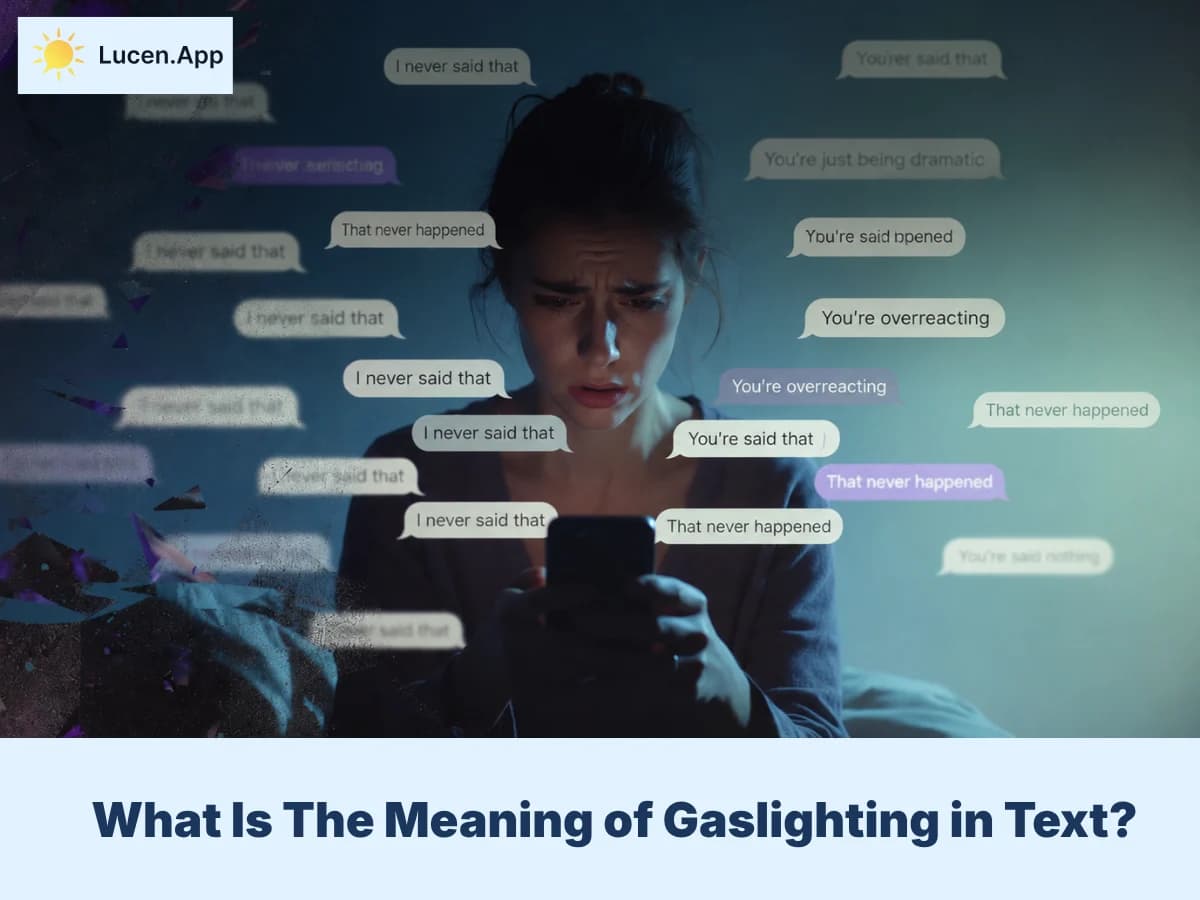
Some narcissistic texting patterns are designed to create confusion and make you question your own perception of events. They may deny things they previously said, rewrite details from earlier conversations, or dismiss your concerns with phrases such as “You’re being too sensitive” or “That never happened.” Rather than addressing the issue directly, they shift the focus to your reaction, leaving you unsure whether your feelings or memories are valid. Over time, this can make you second-guess your judgment and lose confidence in your interpretation of what occurred.
Confusion often intensifies with inconsistent communication, as they may disappear for hours without explanation and then return expecting an immediate response. At other times, they ignore your messages but become upset when you are not instantly available. These mixed signals create uncertainty and anxiety, making it harder to trust your own perspective while allowing them to maintain control of the conversation.
They Alternate Between Attention and Distance
Hot-and-cold communication is a common pattern where a narcissist alternates between strong engagement and sudden withdrawal without explanation. At times, they appear highly engaged, sending frequent messages, expressing affection, and making you feel like a priority. However, this can quickly shift into silence, distance, or emotional unavailability, leaving you confused about what changed. The unpredictability of these shifts creates ongoing uncertainty, as there is no stable pattern to rely on in their communication.
Over time, this inconsistency can strongly affect emotional balance. After periods of withdrawal, it becomes common to wait for their next message or seek reassurance that the connection is still intact. This cycle can increase anxiety and create a growing dependence on their approval. Instead of building trust or stability, the pattern keeps attention focused on their behavior, making it more difficult to set boundaries or emotionally detach from the relationship.
They Expect Immediate Replies but Reply on Their Own Terms
Narcissists often create a double standard in communication, expecting immediate replies to their messages while responding only when it suits them. They may send urgent or emotionally charged texts that demand quick attention, yet delay, ignore, or respond selectively to your messages. If you do not reply fast enough, they might withdraw, become cold, or use silence as a form of punishment. This uneven pattern keeps you anxious and constantly focused on their timing.
Such behavior is not accidental but a way to maintain control over the interaction. By controlling when and how communication happens, they shape the emotional tone of the relationship. A common extension of this pattern is the silent treatment in texting, where they cut off communication to assert dominance or provoke a reaction. Over time, this dynamic shifts attention away from mutual communication and toward managing their expectations and moods.
They Use Silent Treatment as Punishment
The silent treatment is a manipulative texting tactic used by a narcissist to punish and control others by deliberately withholding communication and expressing dissatisfaction without explanation. This emotional withdrawal creates confusion, powerlessness, and a strong need for attention in the recipient. It disrupts normal communication, leaving the person unsure whether to wait, apologize, or reach out again, while the unpredictability increases emotional tension and makes even small delays feel personal and intensified.
The narcissist uses this pattern to create uncertainty and self-doubt, often prompting repeated apologies and efforts to regain approval. This calculated silence is not accidental but a deliberate means of maintaining control and reinforcing their sense of power within the relationship. It shapes behavior by keeping the other person emotionally reactive and dependent on their responses. Recognizing this shows how silence is used for control, while love bombing is the opposite tactic used to manipulate emotions and maintain dominance.
They Love Bomb Through Texts Then Pull Away
Love bombing in texting is a manipulative tactic where a narcissist overwhelms you with excessive attention and affection to gain control. This behavior often starts with intense messages filled with compliments, declarations of special feelings, or constant check-ins that create a sense of importance and closeness. After this surge of attention, the narcissist abruptly pulls away, leaving you with sudden silence or minimal responses. This sharp withdrawal creates anxiety and confusion, making you crave their attention even more.
The cycle of intense affection followed by cold distance reinforces the narcissist’s control by grooming you for ongoing validation and emotional supply. Recognizing this pattern in texting helps identify manipulative behavior and protects you from falling deeper into their control. Once the cycle of love bombing and withdrawal has taken hold, narcissists often escalate their manipulation by shifting blame during any ensuing conflicts over text.
They Shift Blame During Every Conflict
Blame-shifting is a common narcissistic tactic in texting conflicts, where responsibility is avoided and fault is consistently redirected onto the other person. This behavior pattern allows them to avoid accountability and maintain a sense of superiority in the relationship. Common examples in text messages include phrases like “You’re creating problems where they don’t exist” or “Look at what you make me do.” These responses deflect attention from their own behavior and place the burden of the conflict on you.
Narcissists may minimize your distress, use gaslighting to make you question your perspective, or ridicule your feelings during arguments. This persistent pattern of shifting blame is central to narcissist communication and often leads to unresolved arguments, leaving the other person feeling unheard and responsible for issues they did not cause. This tendency to deflect blame seamlessly extends to how narcissists react when confronted with boundaries in texting.
They Turn Boundaries Into Personal Attacks
Setting a reasonable boundary should create clarity, but with a narcissist, it often triggers conflict instead. A simple request, such as limiting certain topics, asking for space, or refusing to engage in an argument, can be interpreted as a personal attack. Rather than respecting the boundary, they may accuse you of being selfish, controlling, or unfair. This reaction shifts the focus away from the limit you set and turns the conversation into a debate about your behavior.
The pushback can take several forms, including guilt-tripping, blame-shifting, or portraying themselves as the victim. A narcissist may dismiss your concerns, challenge your right to set boundaries, or escalate the conflict to regain control of the interaction. Over time, these responses can make you hesitant to enforce healthy limits. Recognizing this pattern helps you stay firm, communicate clearly, and avoid being drawn into unnecessary arguments.
They Keep Conversations Focused on Their Needs
Narcissists consistently keep conversations centred on their own needs and desires, rarely showing genuine interest in others. In texting, this behavior appears as a pattern where they steer topics back to themselves, avoiding questions about the other person or only pretending to care before quickly redirecting the focus. For example, if you share something personal, a narcissist might briefly acknowledge it but then shift the conversation to their achievements or problems.
By dominating the dialogue, narcissists maintain emotional distance and ensure that the recipient’s attention remains fixed on their wants and feelings rather than fostering mutual exchange. This often leaves the other person feeling unheard, overlooked, and emotionally drained, reinforcing a sense of imbalance in the interaction. Their messaging style also reflects their intent, as even initiating contact is often driven by personal gain rather than by a genuine interest in maintaining a balanced relationship.
They Reach Out Only When They Want Something
The timing of a narcissist’s messages is often revealing, as they may disappear for days or weeks without contact and then suddenly reappear when they need attention, validation, advice, or a favor. Rather than checking in to maintain a genuine connection, their messages tend to serve a specific purpose. You may notice that communication becomes frequent when they want something from you, and fades once their immediate need is met.
This pattern creates a relationship that feels conditional rather than mutual. A narcissist often expects support, reassurance, or assistance on demand while investing little effort in consistent communication. They may contact you at inconvenient times, assume you are available, or reappear after long periods of silence as though nothing had happened. Over time, this selective outreach can reveal that the interaction is driven more by personal gain and control than by genuine interest in the relationship.
What Manipulative Texting Tactics Do Narcissists Use?
Narcissists often use texting tactics such as love bombing, guilt-tripping, gaslighting, silent treatment, hot-and-cold communication, and blame-shifting to gain control and influence emotions. These behaviors create confusion, encourage self-doubt, and keep attention focused on their needs. Recognizing these patterns can help you identify manipulative communication and establish healthier boundaries in your interactions.

6 common manipulative texting tactics that narcissists use are:
- Love Bomb Early to Create Fast Attachment
- Use Guilt to Control Your Responses
- Gaslight Through Messages
- Give the Silent Treatment After Conflict
- Create Confusion Through Hot-and-Cold Communication
- Shift Blame Instead of Taking Responsibility
Love Bomb Early to Create Fast Attachment
Love bombing is a tactic where a narcissist overwhelms you with attention, compliments, and affection early in communication. Constant messages, excessive praise, and intense interest can create a false sense of closeness in a short time. This rapid emotional attachment makes it easier for them to gain trust, influence decisions, and maintain control later in the relationship.
Use Guilt to Control Your Responses
Guilt-tripping allows a narcissist to influence your behavior without making direct requests. They may send messages such as, “After everything I've done for you,” or “I guess I don't matter anymore,” to make you feel responsible for their emotions. These texts create pressure to respond, apologize, or prioritize their needs over your own.
Gaslight Through Messages
Gaslighting occurs when a narcissist denies previous statements, twists facts, or challenges your memory of events. They may claim a conversation never happened or accuse you of overreacting when you raise a concern. Over time, these messages can make you question your recollection of events and reduce confidence in your own judgment.
Give the Silent Treatment After Conflict
Instead of addressing disagreements directly, a narcissist may suddenly stop responding to messages. This deliberate silence creates uncertainty and emotional tension, often leaving you wondering what went wrong. The goal is to regain control of the interaction by making you seek their attention, approval, or forgiveness before communication resumes.
Create Confusion Through Hot-and-Cold Communication
Hot-and-cold communication involves alternating between affection and distance without explanation. A narcissist may send frequent, caring messages one day and become cold or unavailable the next. This inconsistency creates emotional uncertainty and encourages you to focus on regaining their attention, making it easier for them to maintain influence over the relationship.
Shift Blame Instead of Taking Responsibility
Blame-shifting allows a narcissist to avoid accountability during disagreements. Rather than addressing their behavior, they redirect fault onto you with statements such as, “You're too sensitive,” or “This wouldn't have happened if you acted differently.” This tactic can leave you feeling responsible for problems you did not create while protecting their sense of superiority.
What Do Narcissistic Text Messages Look Like?
Narcissistic text messages often appear as backhanded compliments, reassurance demands, fact-twisting claims, guilt-based messages, and conversations that make you apologize. These texts may look ordinary at first, but they often carry criticism, pressure, or blame beneath the surface. The pattern leaves the recipient confused, defensive, or responsible for managing the narcissist’s emotions.

- Backhanded Compliments Disguised as Praise
- Messages That Demand Reassurance
- Texts That Twist the Facts
- Messages That Create Obligation or Guilt
- Conversations That End With You Apologizing
Backhanded Compliments Disguised as Praise
Backhanded compliments sound supportive but include hidden criticism. A narcissist may text, “You look good for your age,” or “That was smart for you.” These messages mix approval with insult, making you question whether you should feel praised or hurt. The tactic allows them to undermine your confidence while appearing polite or affectionate.
Messages That Demand Reassurance
Reassurance-demanding texts place emotional responsibility on you. A narcissist may ask, “Do you still care about me?” or “Are you going to leave me?” in a repeated or urgent way. These messages pressure you to comfort them, prove loyalty, and regulate their insecurity, even when your own needs are being ignored.
Texts That Twist the Facts
Fact-twisting texts rewrite what happened to protect the narcissist’s version of events. They may deny clear agreements, change details, or claim you misunderstood something they previously said. A message like “I never promised that” can create doubt when earlier texts show otherwise. This pattern makes you question your memory and judgment.
Messages That Create Obligation or Guilt
Guilt-based messages pressure you to respond, comply, or apologize by making you feel responsible for their feelings. A narcissist may text, “I’ve done so much for you, yet you can’t even reply?” The message shifts attention away from their demand and places the emotional burden on you.
Conversations That End With You Apologizing
Some narcissistic text exchanges repeatedly end with you apologizing, even when you raised a valid concern. Through blame-shifting, guilt, or defensiveness, they redirect the issue back onto you. Over time, this pattern can make you feel responsible for restoring peace while their behavior remains unaddressed.
How Should You Respond to Narcissistic Texting?
You should set clear boundaries, stop explaining yourself repeatedly, avoid defending against every accusation, save important conversations, and evaluate whether the relationship is healthy for you. These strategies help reduce manipulation, protect your emotional well-being, and keep you focused on facts rather than reacting to attempts to create guilt, confusion, or conflict.

- Set Clear Boundaries
- Stop Explaining Yourself Repeatedly
- Avoid Defending Against Every Accusation
- Save Important Conversations
- Decide Whether the Relationship Is Healthy for You
Set Clear Boundaries
Setting clear boundaries helps you stay in control of your interactions. You can decide how quickly you will respond, which topics you are willing to discuss, and what behavior you will not tolerate. Consistently enforcing these limits reduces opportunities for manipulation and makes your expectations clear.
Stop Explaining Yourself Repeatedly
Narcissists often keep conversations going by challenging or dismissing your explanations. Repeatedly justifying your decisions can drain your energy without resolving the issue. A concise response such as “I've already explained my position” is often more effective than continuing the debate.
Avoid Defending Against Every Accusation
Not every accusation deserves a response. Narcissists may use blame or criticism to provoke a reaction and shift the conversation away from the real issue. Remaining neutral and refusing to engage with every claim helps prevent unnecessary conflict and protects your emotional energy.
Save Important Conversations
Keeping records of significant messages can provide clarity when facts are disputed. Screenshots or saved conversations help you track patterns of behavior, recall events accurately, and avoid second-guessing yourself if the discussion later becomes distorted.
Decide Whether the Relationship Is Healthy for You
Pay attention to how these interactions affect your emotional well-being. If texting consistently leaves you feeling anxious, drained, guilty, or confused, it may be time to reassess the relationship. Healthy communication should support mutual respect, not create ongoing emotional distress.
What Can Your Message Reveal About Narcissistic Communication?
Your messages can reveal cycles of love bombing and withdrawal, repeated manipulation patterns, broken promises, and red flags spread across multiple conversations. Looking at communication as a whole often provides a clearer picture than focusing on individual texts. Consistent patterns can reveal attempts to gain control, create confusion, or maintain emotional influence over time. Analyzing full chat patterns can make these cycles and inconsistencies easier to spot.
Spot Cycles of Love Bombing and Withdrawal
A common narcissistic texting pattern involves alternating between intense attention and sudden distance. You may receive constant praise, affection, or frequent messages for a period, followed by unexplained silence or emotional withdrawal. This cycle can create confusion and keep you seeking their approval.
Identify Repeated Manipulation Patterns
Manipulative tactics often become easier to recognize when they occur repeatedly. Patterns such as guilt-tripping, gaslighting, blame-shifting, or emotional pressure rarely appear in isolation. When the same behaviors continue across multiple conversations, they may indicate an ongoing attempt to control the interaction.
Compare Promises With Actual Behavior
What a narcissist says and what they do are often very different. They may make promises, offer reassurance, or apologize repeatedly without changing their behavior. Comparing their words with their actions can help you identify inconsistencies and evaluate the relationship more objectively.
Recognize Red Flags Hidden Across Conversations
Many warning signs become visible only when you review conversations over time. Repeated boundary violations, changing stories, recurring criticism, or patterns of shifting blame can reveal unhealthy communication dynamics. Looking at the overall pattern rather than isolated messages often provides the clearest insight.