_result.webp&w=3840&q=75&dpl=dpl_DmcYM65DKNssHHvask5qvpsyRCms)
What Does It Mean When She Stops Responding to Your Texts?
A noticeable drop in her texting frequency often signals a change in interest, priorities, availability, or emotional engagement, rather than being random. While a single delayed reply is rarely meaningful on its own, a consistent pattern of slower responses, shorter messages, less enthusiasm, or reduced conversational effort can indicate that the dynamic between you has changed. Recognizing these communication patterns helps you distinguish between a temporary communication gap and a genuine shift in her willingness to engage.
Understanding why she stops responding is important because it helps you interpret her texting behavior objectively rather than react emotionally to a single unanswered text message. By identifying possible reasons, recognizing warning signs, avoiding common texting mistakes, and responding appropriately, you can make informed decisions that respect both her boundaries and your self-respect, whether that means adjusting your approach, giving her space, or moving on.
10 Reasons She Stopped Responding to Your Texts
Reasons she stopped responding to your texts include a busy personal or work life, negative emotional reactions to certain messages, feeling overwhelmed by frequent texts, a perceived lack of connection, or a gradual loss of interest. Understanding these reasons helps you distinguish between temporary communication changes and genuine loss of interest, avoid making incorrect assumptions, and choose a more thoughtful and appropriate response.
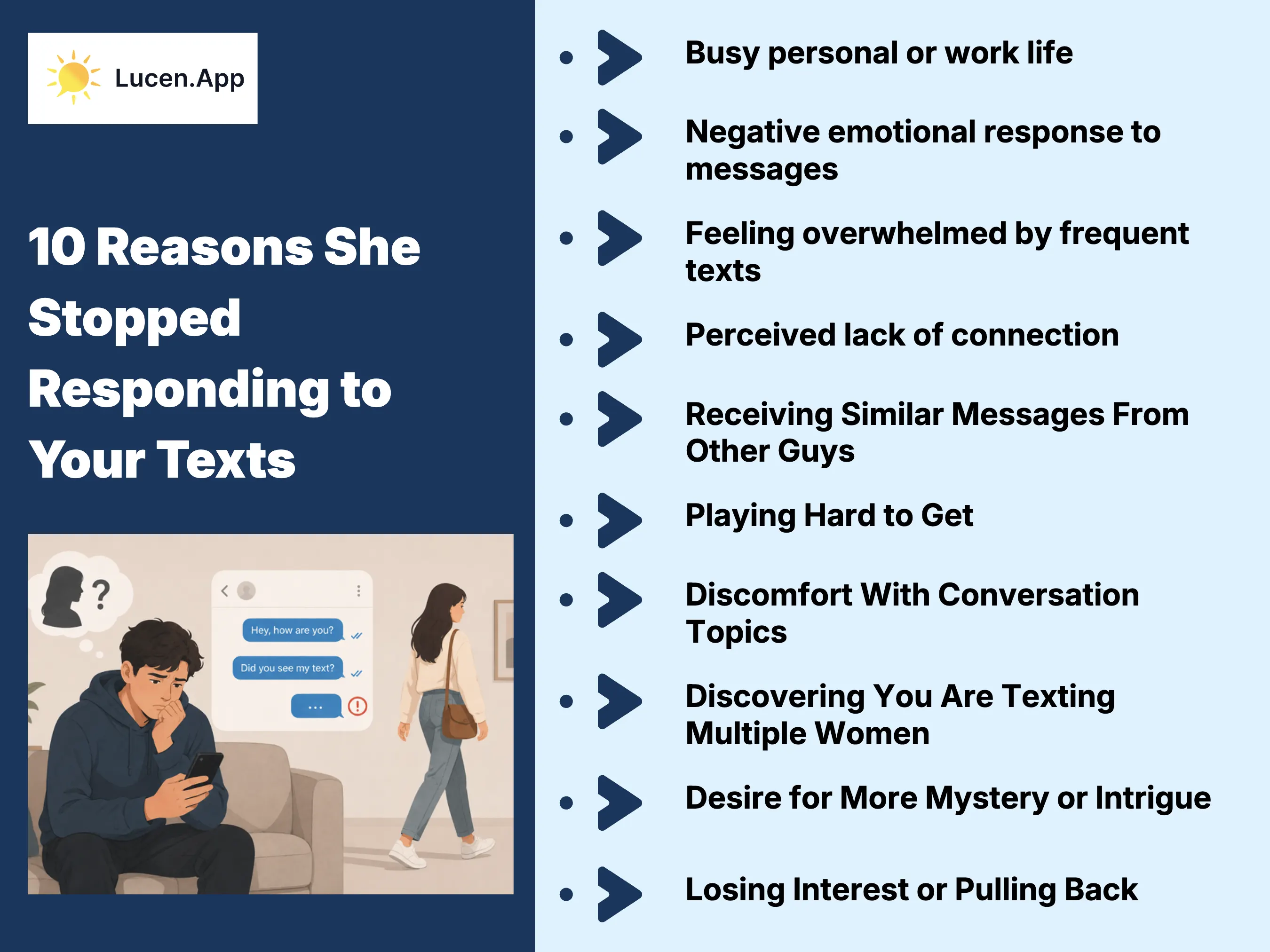
10 most common reasons she may have stopped responding to your texts are:
- Busy personal or work life: A busy personal or work life, such as Work deadlines, long shifts, meetings, exams, travel, family commitments, or unexpected personal responsibilities, can limit the time and mental energy available for conversations. In these situations, delayed replies do not necessarily indicate a loss of interest. Looking at her overall communication pattern over several days or weeks is usually more reliable than judging a single delayed response.
- Negative emotional response to messages: If a text message makes her feel hurt, misunderstood, criticized, or uncomfortable, she may choose not to reply immediately. An insensitive joke, an unresolved disagreement, excessive criticism, or a message that creates emotional pressure can prompt her to step away from the conversation until she has processed her feelings. Sometimes she may return to the conversation later, while in other cases, repeated negative interactions can reduce her motivation to continue texting.
- Feeling overwhelmed by frequent texts: Receiving numerous messages in a short period can make texting feel more like an obligation than an enjoyable conversation. Consecutive follow-up texts, repeated check-ins, or expecting immediate replies may unintentionally create pressure. If she feels overwhelmed, she may slow down her responses, reply with shorter messages, or temporarily stop responding to create more personal space. Giving conversations room to breathe often leads to more natural communication.
- Perceived lack of connection: If conversations become repetitive, predictable, or one-sided, she may gradually lose motivation to keep texting. Repeated small talk, limited shared interests, or conversations that never progress beyond surface-level topics can reduce engagement over time. A strong texting connection usually develops through genuine curiosity, balanced participation, humor, shared experiences, and meaningful discussions that keep both people interested.
- Receiving Similar Messages From Other Guys: If your messages are generic or resemble the conversations she regularly receives from others, they may struggle to capture her attention. Common greetings, repetitive compliments, or copied pickup lines often fail to create a memorable interaction. Personalized messages that reference previous conversations, shared interests, or specific experiences tend to feel more authentic and encourage stronger engagement by demonstrating genuine interest.
- Playing Hard to Get: Some people intentionally delay replies as part of their dating style or communication approach. They may believe that responding immediately reduces mystery, or that they want to gauge the other person's level of interest before investing further in the conversation. While this behavior does occur, it should not be assumed automatically. Consistently delayed responses are often better interpreted alongside other signs of interest rather than viewed in isolation.
- Discomfort With Conversation Topics: Conversations that become too personal, emotionally intense, controversial, or intrusive can make someone less comfortable continuing to text. Questions about relationships, finances, personal trauma, politics, or future commitment too early may cause hesitation. If she appears less responsive after certain topics arise, it may indicate that the discussion crossed a personal boundary or moved faster than she was comfortable with.
- Discovering You Are Texting Multiple Women: If she learns or suspects that you are simultaneously pursuing multiple romantic conversations, she may feel less valued or question your level of interest. Whether or not exclusivity has been discussed, some people prefer to invest their time in someone who appears genuinely focused on getting to know them. This perception can reduce trust and motivation to continue communicating consistently.
- Desire for More Mystery or Intrigue: Some people naturally prefer less frequent texting because they believe spacing out conversations keeps interactions more enjoyable and prevents communication from becoming repetitive. Rather than maintaining constant contact throughout the day, they may intentionally leave time between conversations to build anticipation. In these cases, slower replies reflect personal communication style rather than a lack of interest.
- Losing Interest or Pulling Back: A genuine loss of interest is one possible explanation for a noticeable decline in texting, but it is rarely inferred from a single delayed reply. It is usually reflected through a consistent pattern of shorter messages, slower responses, fewer questions, reduced enthusiasm, canceled plans, and less effort to maintain the conversation over time. When several of these behaviors occur together consistently, they may indicate increasing emotional distance or changing priorities rather than temporary busyness.
What Are the Signs She’s Losing Interest or Pulling Back in Texts?
Signs she is losing interest or pulling back in texts include longer response times, shorter or less engaging messages, unanswered texts, no initiation of conversation, fewer questions about your life, and reduced overall texting frequency. Recognizing these text patterns helps you distinguish between a temporary communication gap and a meaningful shift in her level of interest, allowing you to respond appropriately instead of making assumptions.
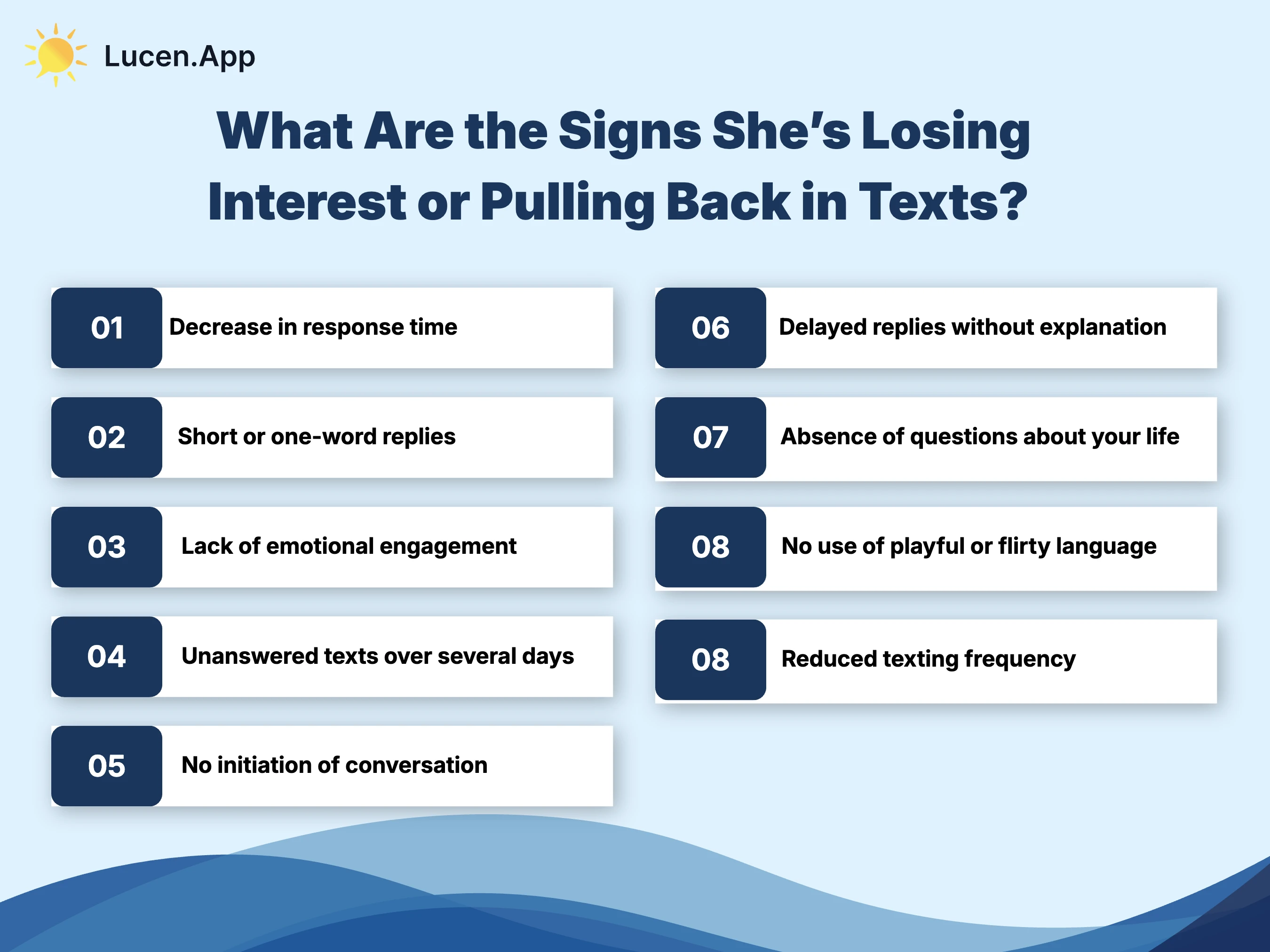
The following are the signs that she may be pulling back from the conversation:
- Decrease in response time: If she previously replied within minutes but now consistently takes several hours or even days to respond, her participation in the conversation has decreased.
- Short or one-word replies: "ok," "yeah," "fine," or "lol" often indicate lower engagement. Compared to her previous detailed responses, these brief messages show less effort to continue the conversation.
- Lack of emotional engagement: Her messages become more factual and less expressive. Responses may lose enthusiasm, warmth, emojis, humor, or excitement, making the conversation feel distant and transactional.
- Unanswered texts over several days: Unanswered texts for two to three days or longer are a stronger sign than an occasional delayed reply. Consistently leaving messages unanswered suggests a noticeable change in her communication pattern rather than a temporary delay.
- No initiation of conversation: If she never starts conversations or asks how you are anymore, the balance of communication has shifted. A relationship where only one person initiates texting often reflects declining engagement.
- Delayed replies without explanation: Repeated delays without explanation can indicate reduced communication effort. Unlike occasional delays due to genuine circumstances, this pattern becomes noticeable when slow responses occur regularly without acknowledgment.
- Absence of questions about your life: When she stops asking about your day, work, hobbies, or plans, it often shows reduced curiosity about your life. Conversations become one-sided because she no longer tries to learn more about you.
- No use of playful or flirty language: A sudden absence of teasing, affectionate nicknames, emojis, compliments, or playful jokes can signal emotional distance. Messages become neutral and formal instead of lighthearted or flirtatious.
- Reduced texting frequency: The decline rarely announces itself all at once; instead, it shows up in small shifts that are easy to miss until you look back. For example, conversations that once happened daily may gradually become every few days, with fewer messages and longer gaps between interactions.
What Mistakes Might Push Her Further Away?
The common mistakes that might push her further away include double-texting, sending emotional or guilt-inducing messages, trying to make her jealous, becoming passive-aggressive, ignoring clear signs of disinterest, etc. These behaviors can create pressure, appear insecure, and reduce the likelihood of a positive conversation, so the healthiest approach is to step back, respect her space, and match her communication level.
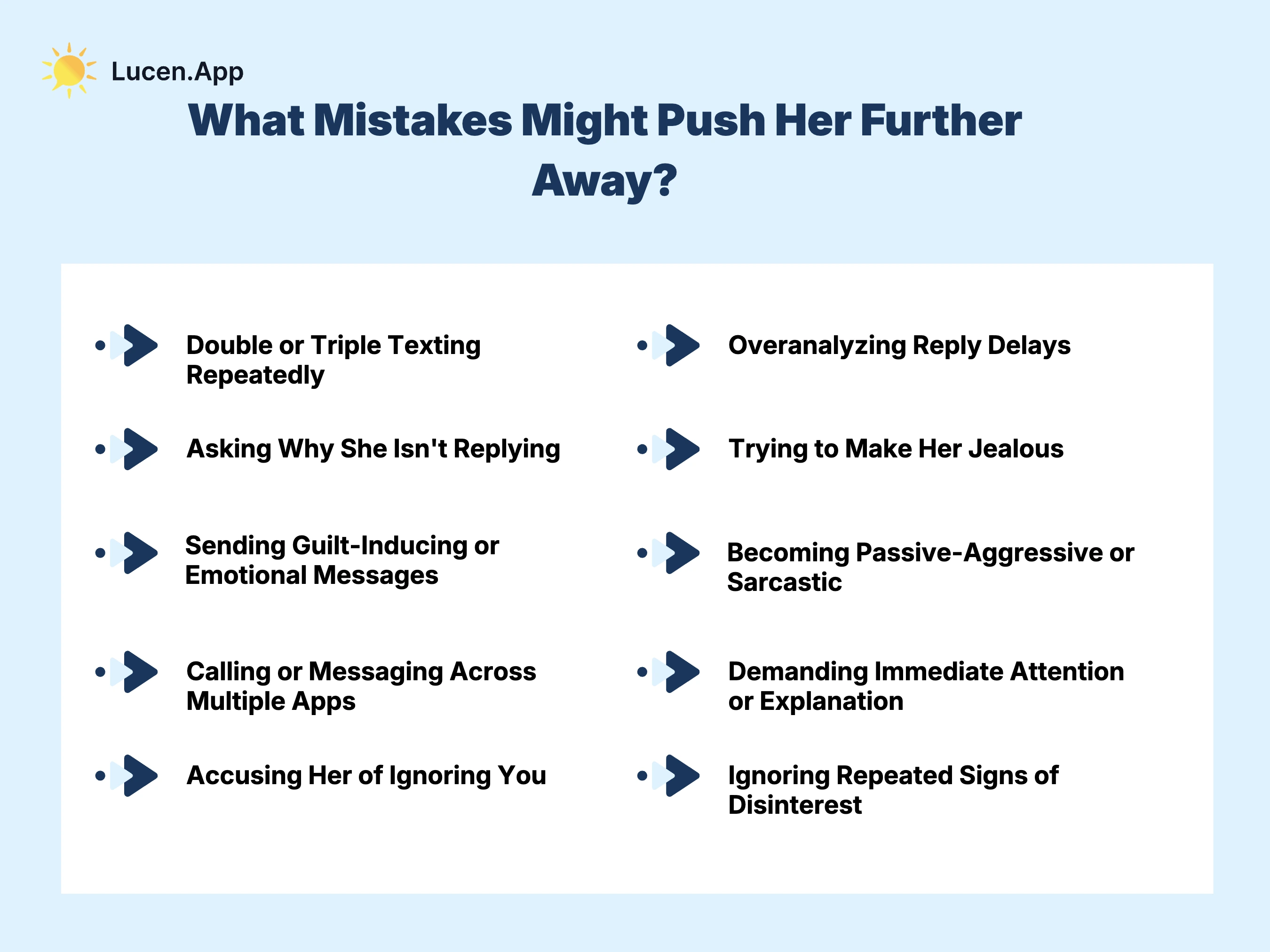
Below are some texting mistakes that commonly push someone further away:
- Double or Triple Texting Repeatedly: Sending multiple follow-up messages after she has not replied, such as "?", "Are you there?" or repeated check-ins can come across as impatient or overly eager. Rather than encouraging a response, it may create unnecessary pressure and reduce the likelihood of a positive conversation. Instead of texting too much, give her time to reply and try to match her pace and communication level.
- Asking Why She Isn't Replying: Immediately asking why she has not responded or demanding an explanation can make her feel stressed rather than encouraged to reply. If she did not respond to your last text message, give her time instead of sending messages like "Why are you ignoring me?" or "Did I do something wrong?"
- Sending Guilt-Inducing or Emotional Messages: Messages designed to make her feel guilty, blamed, or responsible for your emotions often widen the distance rather than rebuilding communication. Statements like "I guess I'm not important to you anymore" usually create discomfort rather than meaningful conversation.
- Calling or Messaging Across Multiple Apps: Texting her, then sending Instagram DMs, Snapchat messages, and phone calls after she has not responded can feel intrusive. Contacting someone across multiple platforms often appears desperate and may discourage future communication.
- Accusing Her of Ignoring You: Accusing her of deliberately ignoring your messages can make the conversation defensive and confrontational. Messages such as "You are obviously ignoring me" or "I know you saw my text" often damage trust and reduce the chance of a positive response.
- Overanalyzing Reply Delays: Constantly checking message timestamps, rereading conversations, or searching for hidden meanings in every delayed reply creates unnecessary anxiety. Focus on her overall communication pattern rather than assuming every slow response has deeper meaning.
- Trying to Make Her Jealous: Mentioning other women, posting attention-seeking content, or hinting that someone else is interested in you to provoke a reaction usually backfires. Rather than increasing attraction, it can create resentment or make her lose interest altogether.
- Becoming Passive-Aggressive or Sarcastic: Using sarcasm, indirect comments, or pointed jokes because she has not responded often pushes her further away. Respectful, honest communication is far more effective than expressing frustration through passive-aggressive messages.
- Demanding Immediate Attention or Explanation: Expecting an immediate reply or insisting she explain every delayed response places unnecessary pressure on the conversation. Respect her pace and allow her to respond when she is ready, rather than demanding instant attention.
- Ignoring Repeated Signs of Disinterest: Continuing to pursue the conversation despite consistently short replies, long response gaps, or little engagement can lead to frustration and wasted effort. Recognize these patterns early, respect her boundaries, and consider stepping back if the interest is no longer mutual.
Should You Keep Texting or Move On When She Stops Responding?
You should stop texting immediately and move on if she has not responded to multiple messages, consistently shows little or no engagement, and gives no indication that she wants to continue the conversation. Continuing to send text messages after repeated signs of disinterest often creates pressure, reduces your self-respect, and is unlikely to change the outcome. Respecting her boundaries while protecting your own emotional well-being allows you to focus your time and energy on relationships where communication and interest are mutual.
When Should You Stop Reaching Out?
Stop reaching out when the dynamic feels one-sided, emotionally draining, or repeatedly unreciprocated. If she consistently leaves your text messages unanswered, gives brief or disengaged replies, never initiates conversations, or shows no genuine interest in continuing the interaction, continuing to pursue her is unlikely to improve the situation. Recognizing these patterns allows you to respect her boundaries, protect your self-respect, and invest your time and energy in relationships where communication and effort are mutual.
What Should You Do When She Stops Responding to Your Texts?
When she stops responding to your texts, the best response is to be calm and patient, give her time, avoid sending repeated messages, and send only one respectful follow-up if enough time has passed. After that, watch her response pattern. If she starts engaging again, continue naturally. If she still has not responded or keeps showing low effort, then step back and protect your own self-respect.
.webp)
These 10 steps can help you determine the most appropriate response when communication slows.
- Give Her Enough Time to Reply: Give her 24-48 hours to reply before assuming she is ignoring you. Sometimes a text message is delayed by poor network coverage, messaging app glitches, blocked numbers, or device settings, so confirm your message was delivered and troubleshoot any technical issues before drawing conclusions.
- Assess the Overall Communication Pattern: Look at her overall communication pattern rather than focusing on a single delayed reply. Changes such as replying less often, not following back on social media, unfollowing, or interacting less online may reflect broader communication changes, but they should always be considered alongside her texting behavior.
- Reflect on Your Last Conversation: Review your last conversation for any misunderstandings, unresolved questions, or sensitive topics that may have influenced her response. Looking at the tone, context, and ending of the conversation can provide useful clues about why her texting pattern changed.
- Send One Calm and Genuine Follow-Up: If enough time has passed, send one brief, respectful follow-up message without demanding a response. A simple message such as "Hope you're doing well—just checking in" maintains clarity and respect, whereas repeated or emotional messages often create unnecessary pressure.
- Match Her Communication Effort: Match her pace, message length, and communication frequency instead of trying to carry the entire conversation. Mirroring her level of effort helps maintain balance and prevents you from appearing overly eager or uninterested.
- Respect Her Need for Space: If she is replying less often or appears less engaged, give her the space she may need instead of continuing to text. Respecting her boundaries allows communication to develop naturally while giving you time to focus on your own well-being.
- Stay Patient Instead of Jumping to Conclusions: Stay patient rather than assuming the worst after a delayed reply. Giving the situation time helps you recognize genuine communication patterns and reduces the likelihood of overreacting to isolated incidents.
- Focus on Your Own Life Instead of Waiting by the Phone: Continue investing your time in work, hobbies, friends, and personal goals instead of constantly waiting for a reply. Staying engaged in your own life reduces anxiety, supports your confidence, and prevents texting from becoming your primary focus.
- Accept What Her Response Pattern Reveals: Accept her communication pattern for what it consistently shows rather than what you hope it means. Repeated delays, minimal engagement, or continued lack of effort often provide clearer insight than isolated explanations and help guide your next decision.
- Decide Whether to Continue the Conversation: Assess her consistency, engagement, and willingness to reciprocate. If she begins responding positively and contributes equally, continue naturally. If the communication remains one-sided despite your respectful efforts, it is usually best to step back and move on.
How Can You Prevent Her From Stopping Responding to Your Texts?
The prevention that can be taken from stopping responding to your text is to provide clear intent while texting, try to match her interest level, avoid consecutive messages, respect her availability, use an AI chat analyzer, and much more. Following these communication habits helps reduce misunderstandings, encourages healthier conversations, and increases the likelihood of maintaining consistent and respectful text communication.
Here are 10 common behaviors to recognize the early signs before she stops responding:
- Text With Clear Intent: Text with a clear purpose so your messages are easy to understand and respond to. Instead of sending vague texts like "Hey" or "What's up?", send a message with context such as "How did your presentation go today?" or "Are you still free for coffee this weekend?" Clear intent shows respect for her time, encourages meaningful responses, and reduces misunderstandings as communication slows.
- Match Her Interest Level: Pay attention to her response frequency, message length, and enthusiasm. If she responds with thoughtful messages and asks questions, engage with similar energy. If she begins replying less often or with shorter texts, avoid increasing your effort to compensate, as balanced communication is healthier than one person carrying the conversation.
- Avoid Consecutive Messages: Do not send consecutive messages if she has not responded to your previous text. Sending multiple follow-ups before she has replied can make her feel pressured and may reduce the likelihood that she will respond. Giving her time to reply allows you to gauge genuine interest while avoiding the appearance of neediness or impatience.
- Respect Her Availability: Recognize that she may not always be able to respond immediately. Work, family responsibilities, travel, or personal commitments can delay replies, so avoid assuming she is ignoring you. Allowing her to reply at her own pace creates a more comfortable and respectful communication dynamic.
- Keep Conversations Engaging: Ask thoughtful questions, introduce new topics, and respond to what she shares rather than repeating the same routine exchanges. If every text message feels predictable or one-sided, interest can fade over time. Meaningful, personalized conversations are more likely to encourage consistent responses and genuine engagement.
- Notice Communication Changes Early: Notice communication changes as soon as they become consistent rather than waiting until she stops replying altogether. Longer response times, shorter messages, fewer questions, or reduced enthusiasm often appear before she completely withdraws from the conversation. Recognizing these patterns early helps you adjust your expectations and communication style before the situation worsens.
- Adapt to Her Responses: Adapt to her responses rather than continuing the same texting habits after she responds less frequently. If she begins sending shorter replies or texting less often, adjust your pace, message length, and expectations accordingly. Matching her communication style demonstrates emotional awareness and prevents you from over-pursuing the conversation.
- Don't Ignore Mixed Signals: Do not ignore mixed signals such as inconsistent replies, occasional enthusiasm followed by long periods of silence, or situations where she responds but makes little effort to continue the conversation. Looking at the overall pattern instead of isolated moments helps you decide whether to continue investing in the interaction or step back before becoming emotionally overcommitted.
- Discuss Concerns Early: Discuss concerns early if communication changes significantly and the relationship has reached a stage where an honest conversation is appropriate. Rather than assuming why she has not responded, calmly express what you have noticed and invite open communication without blame or pressure. Respectful conversations often provide more clarity than guessing her intentions.
- Use AI Chat Analyzer: Instead of overthinking every text, review your conversations by uploading screenshots or transcripts of your chats in the chat analyzer. An AI chat analyzer can identify changes such as slower responses, shorter messages, reduced engagement, shifts in tone, and conversation balance, helping you determine whether her texting habits have genuinely changed or if your perception is influenced by emotion.