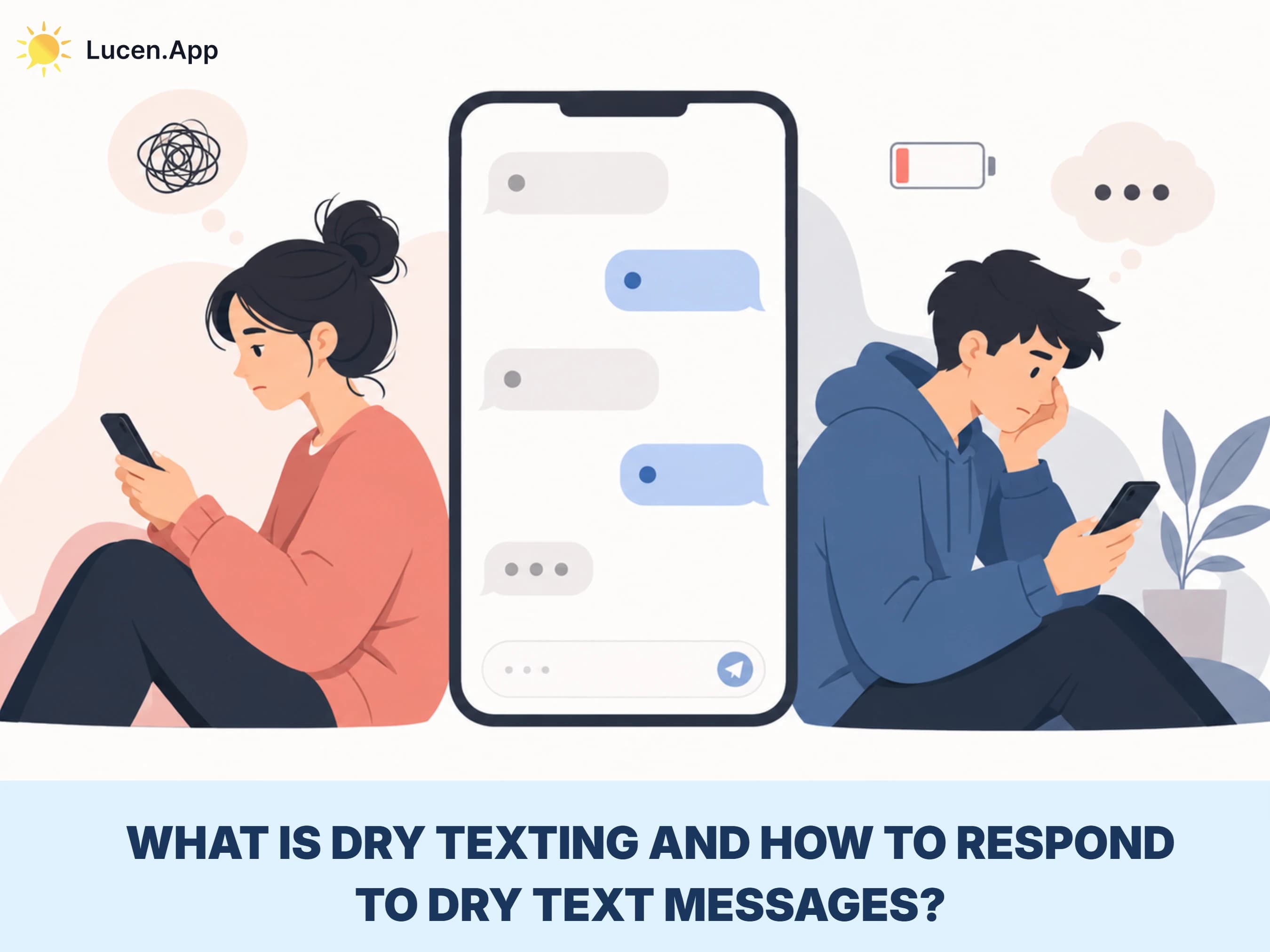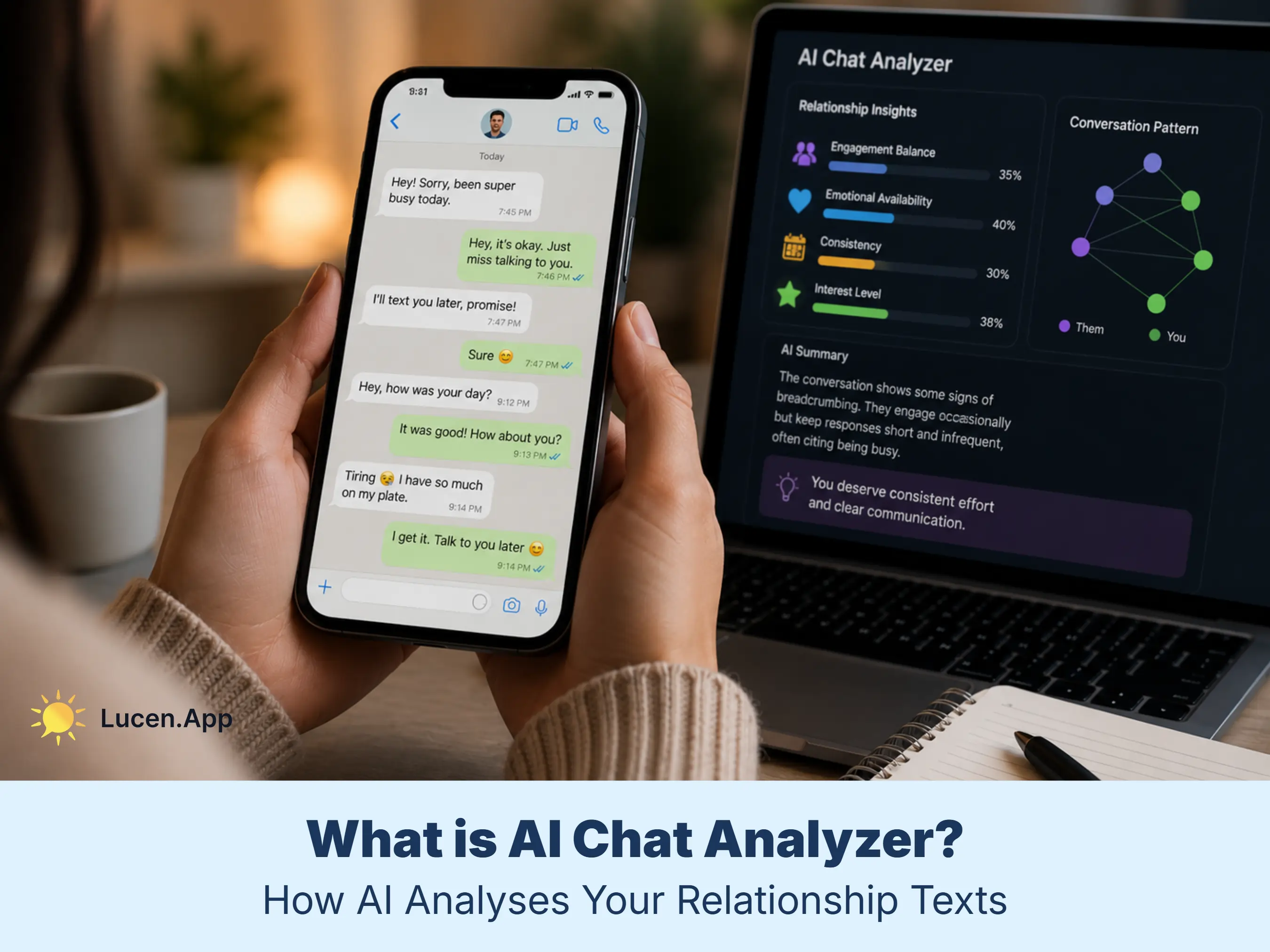
An AI chat analyzer is a tool that uses artificial intelligence and Natural Language Processing (NLP) to analyze text conversations and identify communication patterns, sentiment, tone, and intent. Instead of evaluating individual messages in isolation, AI chat analyzer analyzes entire conversation histories to understand how interactions evolve. By examining word choice, sentence structure, emojis, punctuation, response timing, and conversational context, the AI chat analyzer identifies recurring themes, emotional trends, communication gaps, and relationship dynamics.
With this in-depth analysis, users can recognize patterns such as mixed signals, compatibility indicators, conflict behaviors, and emotional availability with greater objectivity than manual interpretation. Whether analyzing WhatsApp conversations, Instagram DMs, iMessage texts, or exported chat histories, an AI chat analyzer transforms everyday relationship texts into structured insights that help users better understand their communication and interactions.
How Is AI Chat Analysis Different From Manual Relationship Text Interpretation?
AI chat analysis relies on objective conversation data, while manual interpretation depends on personal perception and emotional judgment. AI can evaluate sentiment, tone, response patterns, engagement levels, and communication trends across an entire conversation, whereas manual interpretation is more susceptible to bias, assumptions, and selective memory.
The table below compares the main differences between the two approaches:
| Comparison Factor | AI Chat Analysis | Manual Relationship Text Interpretation |
|---|---|---|
| Analysis Method | Uses data-driven algorithms to objectively evaluate conversations. | Relies on personal intuition, memory, and emotional judgment. |
| Sentiment & Tone Detection | Automatically identifies sentiment, tone, and emotional shifts across messages. | Depends on the individual's interpretation, which may vary. |
| Pattern Recognition | Detects recurring communication patterns, response times, and engagement trends over time. | Patterns may be overlooked or remembered inaccurately. |
| Objectivity | Provides consistent, data-based insights with minimal emotional bias. | Can be influenced by emotions, assumptions, or recent interactions. |
| Conversation Scope | Analyzes entire conversations to identify long-term behavioural trends. | Often focuses on individual messages or recent exchanges. |
| Decision Support | Helps users make more informed conclusions based on measurable communication data. | Conclusions are based primarily on personal perception and experience. |
How Does an AI Chat Analyzer Analyze Text Messages?
An AI chat analyzer analyzes text messages by combining sentiment analysis, tone and emotion detection, intent recognition, response time analysis, conversational balance, topic sensitivity, recurring theme extraction, and miscommunication detection. Using natural language processing (NLP) and Large Language Models (LLMs), it converts words into structured data to identify linguistic patterns, emotional cues, and conversational dynamics, enabling a deeper understanding of digital communication.
Here is how an AI chat analyzer analyzes text messages:
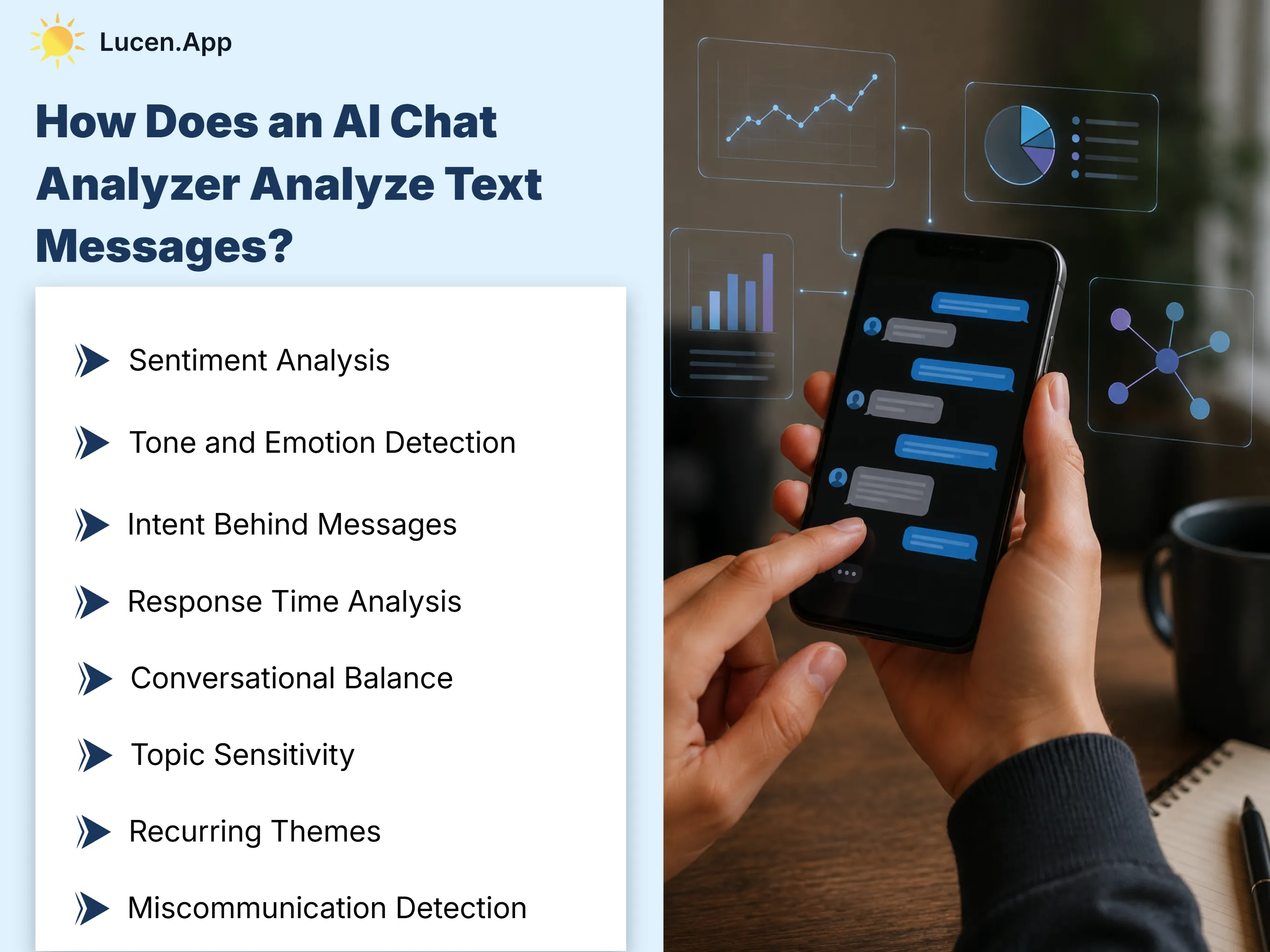
Sentiment Analysis
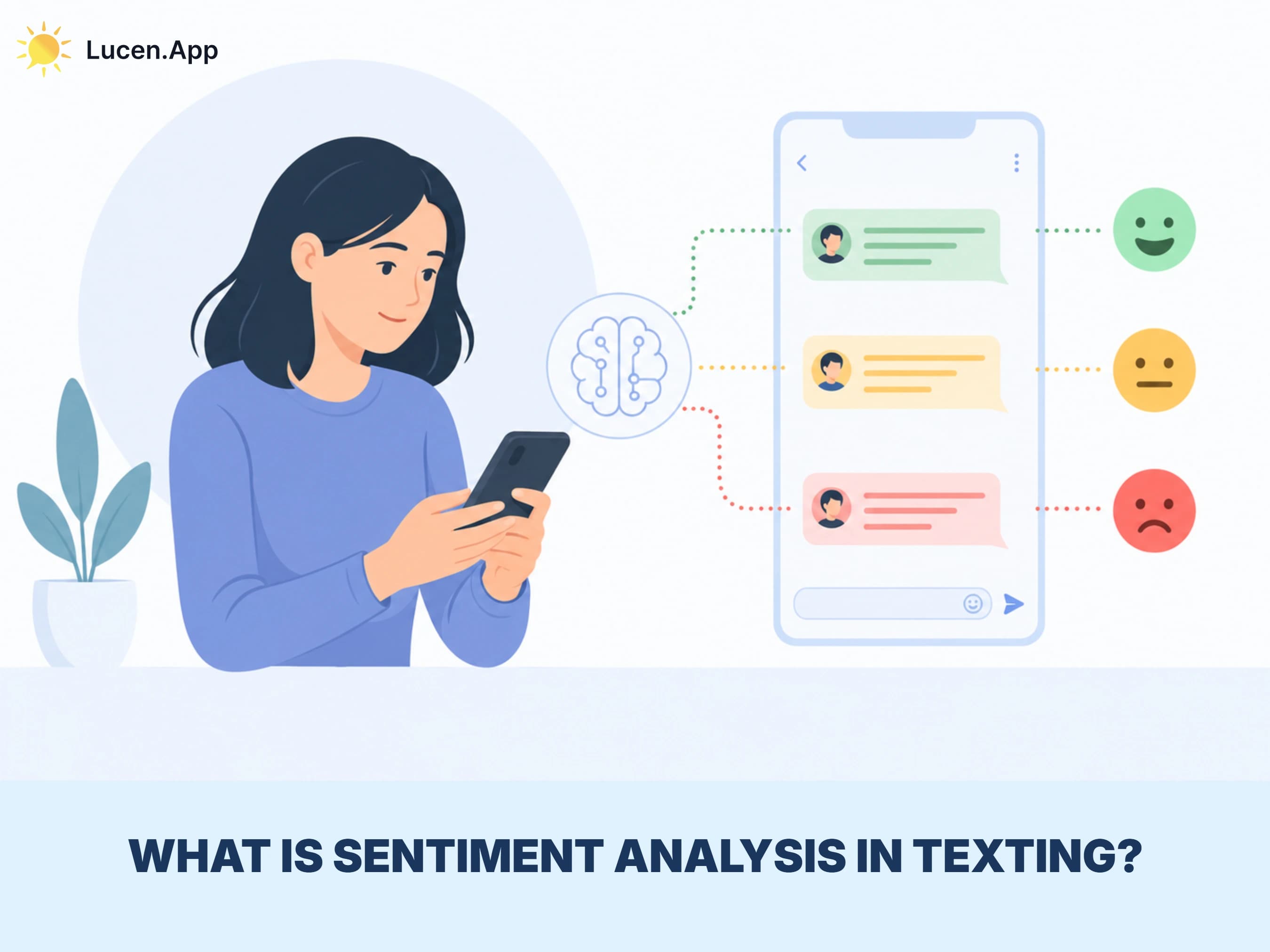
Sentiment analysis uses natural language processing, sentiment detection, and pretrained transformer models such as BERT to evaluate the emotional direction of conversations. An AI chat analyzer examines vocabulary, context, punctuation, and emojis to determine whether interactions become more positive, negative, or neutral over time. It also tracks emotional changes across entire conversations instead of relying on individual messages. This broader analysis provides a clearer understanding of overall relationship sentiment and long-term communication trends.
Tone and Emotion Detection
While sentiment analysis measures emotional polarity, tone, and emotion detection focuses on how a message is expressed. An AI chat analyzer evaluates communication style, word choice, punctuation, capitalization, emojis, and contextual language to recognize emotions such as happiness, frustration, anxiety, empathy, or sarcasm. This helps distinguish messages that may appear similar but carry different emotional meanings. Understanding these emotional cues supports a more accurate interpretation of conversations and relationship dynamics.
Intent Behind Messages
Intent recognition focuses on identifying the purpose behind a message rather than its literal wording. Using intent recognition, dependency parsing, and contextual language analysis, AI chat analyzer determines whether a message is asking a question, seeking reassurance, expressing affection, setting boundaries, apologizing, or initiating conflict. This deeper interpretation helps distinguish similar phrases that carry different meanings depending on the surrounding conversation. As a result, users gain more reliable insights into what messages are actually trying to communicate.
Response Time Analysis
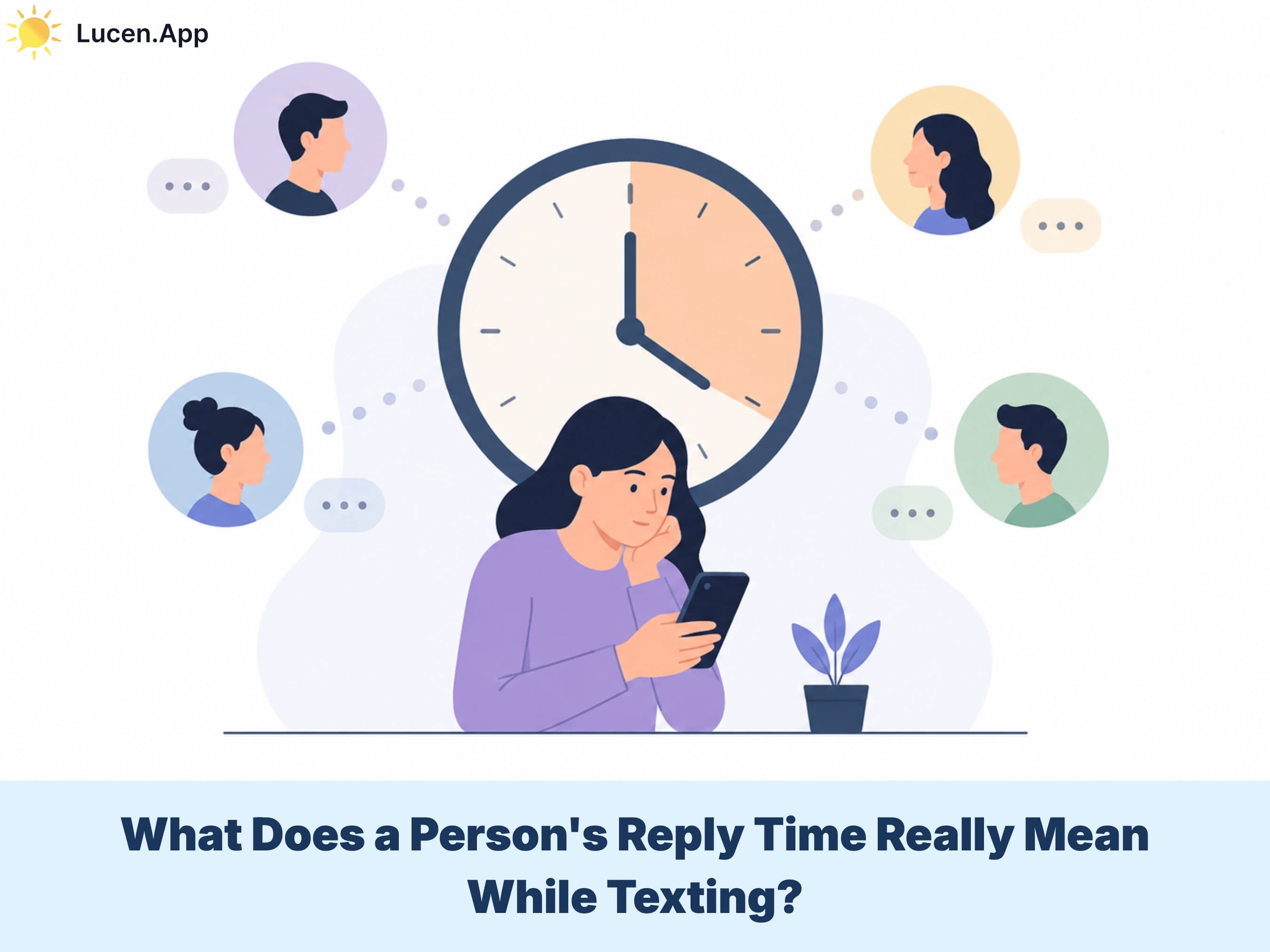
Response time analysis measures how quickly participants reply and evaluates response time patterns throughout the conversation. Instead of treating a single delayed response as meaningful, an AI chat analyzer compares the consistency, frequency, and timing of responses across message threads to identify engagement trends. This helps distinguish temporary delays from genuine changes in communication behavior. Looking at response patterns over time provides a more objective view of relationship engagement and communication consistency.
Conversational Balance
Healthy conversations usually involve balanced participation from both people. AI chat analyzer compares message counts, response lengths, conversation initiation, question frequency, and engagement metrics to identify communication imbalances. The analysis reveals whether one person consistently carries the conversation or whether both participants contribute equally over time. Recognizing these participation patterns helps users better understand mutual effort and overall conversation quality.
Topic Sensitivity
Certain conversation topics naturally trigger stronger emotional, behavioral, and oral reactions than others. Through theme extraction and contextual analysis, an AI chat analyzer identifies subjects that frequently lead to conflict, avoidance, reassurance, or increased engagement. Rather than evaluating isolated messages, it tracks how participants consistently respond whenever similar topics arise. Recognizing sensitive subjects allows users to approach future conversations with greater awareness and improved communication strategies.
Recurring Themes
AI identifies recurring themes by grouping related words, phrases, and discussion topics across entire conversations. Rather than focusing on individual messages, the AI chat analyzer extracts repeated subjects such as trust, plans, family, work, or communication concerns to generate concise summaries. Recognizing these themes provides a clearer picture of long-term relationship dynamics and shared priorities. These recurring themes provide valuable context for understanding shared priorities and long-term communication habits.
Miscommunication Detection
Small misunderstandings can gradually affect the quality of a conversation if they go unnoticed. By analyzing tone, intent, response context, and conversation flow, an AI chat analyzer identifies exchanges where messages may have been misunderstood or interpreted differently by each participant. It highlights recurring communication gaps instead of isolated incidents, making patterns easier to recognize. Detecting these misunderstandings early encourages clearer communication and helps prevent repeated relationship conflicts.
What Can an AI Chat Analyzer Reveal About Your Relationship Texts?
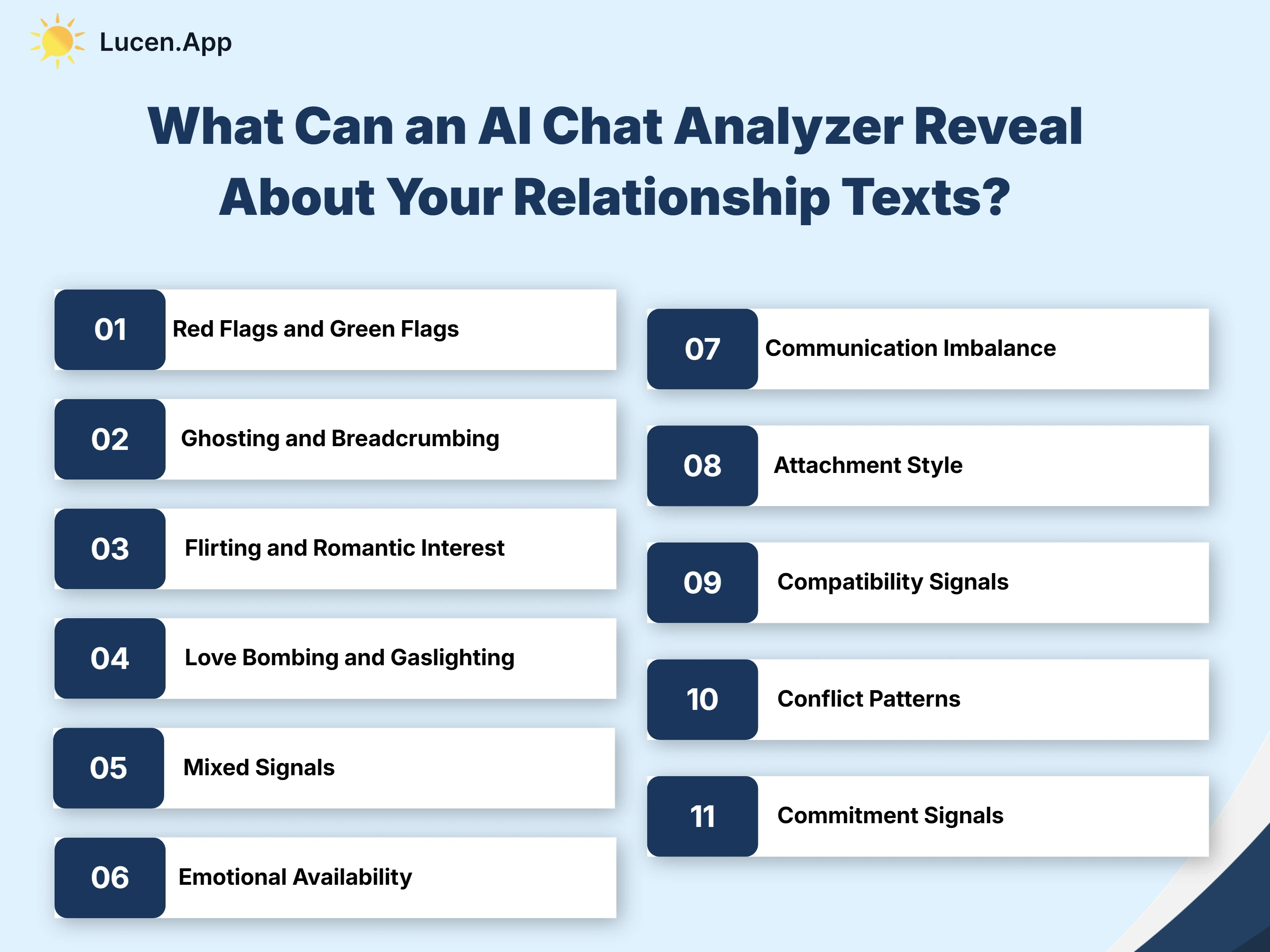
An AI chat analyzer can reveal emotional bias, recurring communication patterns that may otherwise go unnoticed, including red flags, green flags, ghosting, breadcrumbing, flirting, mixed signals, emotional availability, communication imbalance, attachment style, compatibility signals, conflict patterns, and commitment signals. Instead of relying on isolated messages, it evaluates the entire conversation to provide objective insights into the relationship based on communication behavior.
The following insights explain what an AI chat analyzer can identify and why each one matters:
Red Flags and Green Flags
These behavioral signals are identified by an AI chat analyzer through evaluation of sentiment trends, communication patterns, response consistency, and emotional tone across conversations. For example, the analysis may highlight frequent supportive messages, respectful conflict resolution, and balanced communication as green flags, while repeated criticism, dismissive language, or prolonged emotional withdrawal may be red flags. Recognizing these patterns helps users better understand their relationship dynamics and identify areas that may require attention.
Ghosting and Breadcrumbing
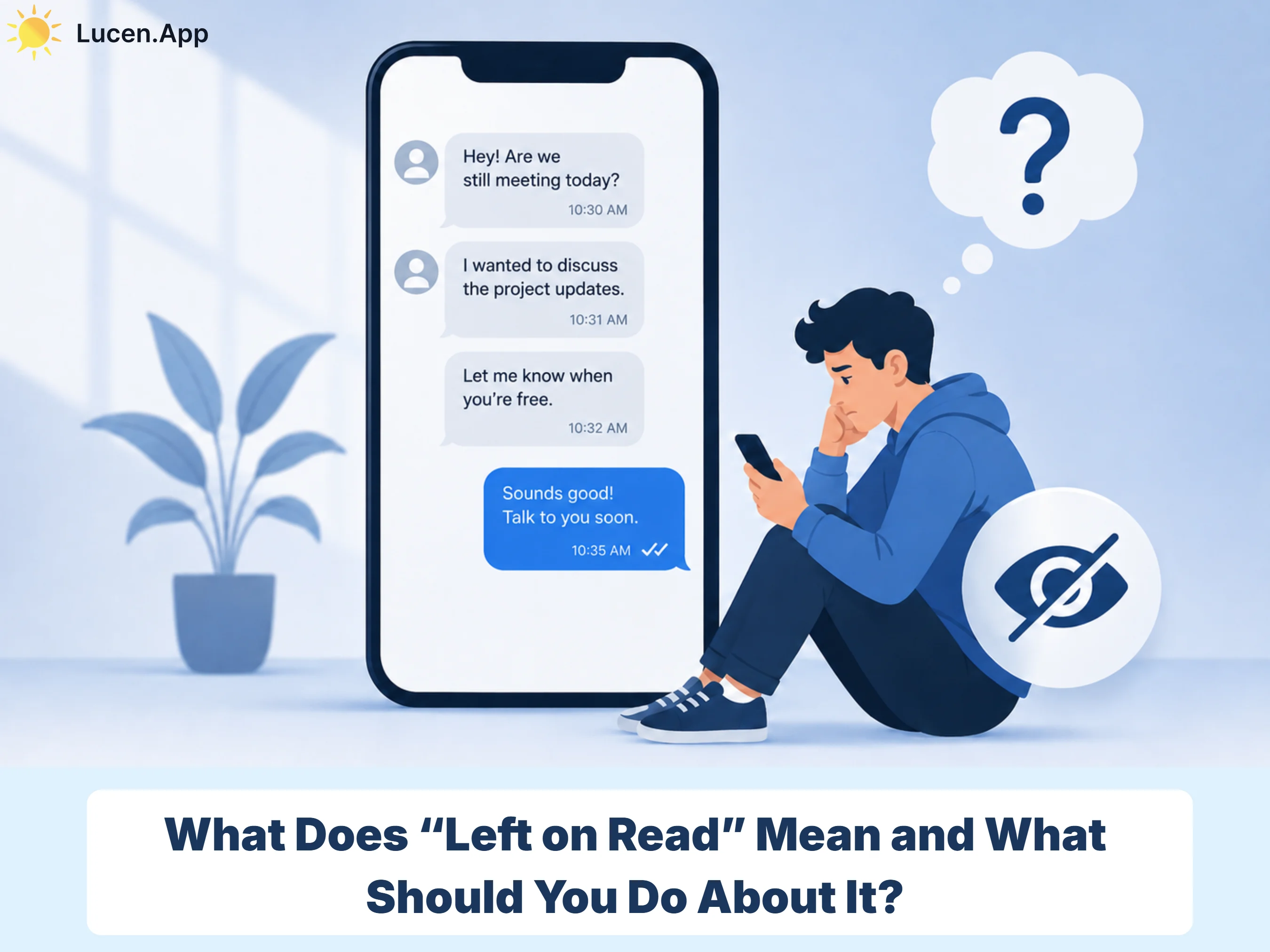
AI chat analysis evaluates response-time patterns, conversation frequency, and engagement levels to identify behavioral trends throughout the conversation. The results may reveal widening response gaps, declining communication frequency, or recurring short interactions without meaningful follow-up, providing greater clarity on long-term engagement rather than on isolated incidents. Instead of relying on assumptions, the analysis compares communication consistency over time. These insights help users recognize whether communication patterns are becoming more distant or remaining consistently engaged.
Flirting and Romantic Interest
By analyzing affectionate language, compliments, playful conversations, emojis, and recurring interaction patterns, an AI chat analyzer identifies behaviors commonly associated with flirting and romantic interest. Rather than evaluating individual messages, it examines conversations as a whole to determine whether emotional engagement, mutual responsiveness, and positive communication are increasing over time. This broader perspective reduces the chance of misinterpreting isolated exchanges. The results provide a clearer understanding of whether romantic interest is developing consistently.
Love Bombing and Gaslighting
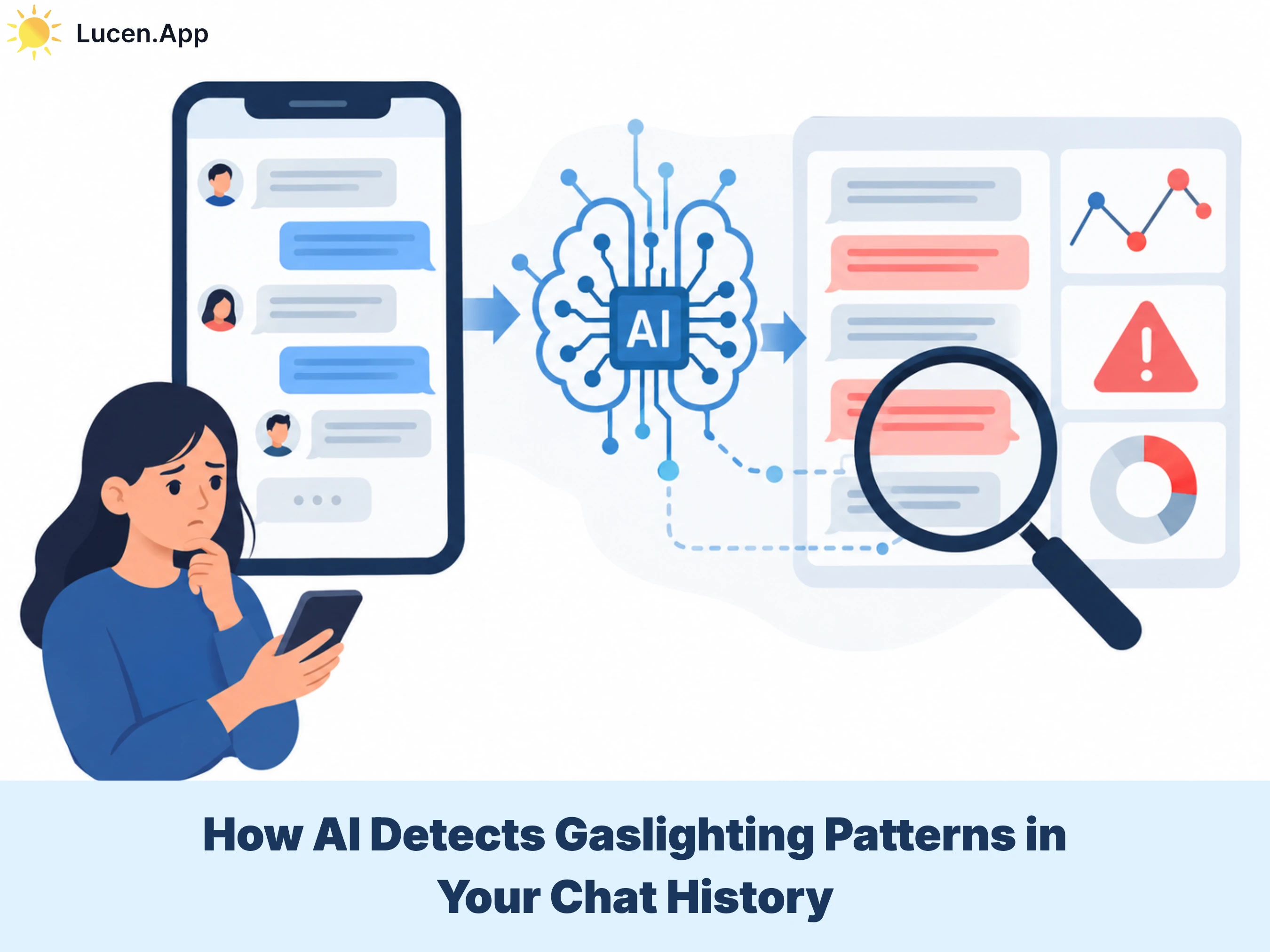
Conversation analysis can reveal recurring communication patterns that may resemble love bombing or gaslighting when viewed over an extended period. An AI chat analyzer evaluates emotional intensity, message frequency, contradictory statements, reassurance patterns, and language changes across conversations to identify recurring behavioral markers. Although it cannot diagnose abusive relationships, it can highlight communication trends that warrant closer attention. These insights encourage users to review conversations more objectively and recognize potentially unhealthy communication patterns early.
Mixed Signals
Using tone, intent, response timing, and communication consistency, an AI chat analyzer identifies contradictions that may indicate mixed signals within a relationship. For example, repeated expressions of interest followed by emotional distance, inconsistent engagement, or conflicting behaviors can be recognized as recurring communication patterns rather than isolated incidents. Looking at conversations over time provides a more balanced interpretation. This analysis helps users determine whether inconsistent communication reflects a genuine pattern or is due to temporary circumstances.
Emotional Availability
An AI chat analyzer evaluates emotional tone, response quality, reassurance, empathy, and language associated with vulnerability to identify recurring emotional behaviors. The results may reveal consistent emotional engagement, balanced support, or limited emotional expression, helping users better understand how emotions are communicated within the relationship. Instead of focusing on isolated messages, it examines long-term communication patterns. These insights provide a clearer picture of emotional openness and the overall quality of emotional connection.
Communication Imbalance
Communication patterns become clearer when participation is measured over time. An AI chat analyzer compares message frequency, conversation initiation, response length, question patterns, and engagement metrics to determine whether one person consistently carries the conversation or whether interactions remain balanced. The analysis highlights recurring participation trends rather than isolated conversations. Understanding these patterns helps users assess mutual effort and identify opportunities for healthier communication.
Attachment Style
An AI chat analyzer may identify communication patterns commonly associated with attachment styles, such as secure, anxious, avoidant, or disorganized behaviors. Rather than assigning a psychological diagnosis, it evaluates recurring response behaviors, reassurance-seeking tendencies, emotional expression, communication consistency, and interaction habits across conversations. The analysis focuses on observable communication trends instead of personality labels. These insights encourage greater self-awareness and help users better understand how attachment-related behaviors may influence relationship communication.
Compatibility Signals
Strong relationships often display consistent communication habits, mutual responsiveness, and shared emotional engagement over time. An AI chat analyzer evaluates conversation quality, emotional reciprocity, shared interests, conflict resolution, and engagement consistency to identify relationship strengths and recurring challenges. Rather than focusing on isolated interactions, it assesses long-term communication patterns that contribute to compatibility. This broader analysis helps users better understand the strengths and potential challenges within their relationship.
Conflict Patterns
By analyzing sentiment, emotional tone, criticism, defensiveness, and recurring themes in the conversation, an AI chat analyzer identifies how conflicts typically develop and resolve over time. The analysis may reveal repeated communication cycles, escalating emotional language, avoidance behaviors, or constructive problem-solving patterns that influence relationship health. Looking at multiple disagreements provides a more accurate picture than reviewing individual arguments. These insights help users recognize recurring conflict patterns and improve future communication.
Commitment Signals
Long-term relationship investment is often reflected through consistent communication behaviors, which is why an AI chat analyzer evaluates discussions about future plans, communication consistency, emotional support, and ongoing participation across conversations. The analysis may identify recurring references to shared goals, dependable engagement, and reliable communication habits, indicating relationship stability. It emphasizes sustained behaviors rather than isolated statements. These patterns help users better understand the level of long-term commitment reflected in their conversations.
What Types of Messages Can an AI Chat Analyzer Analyze?
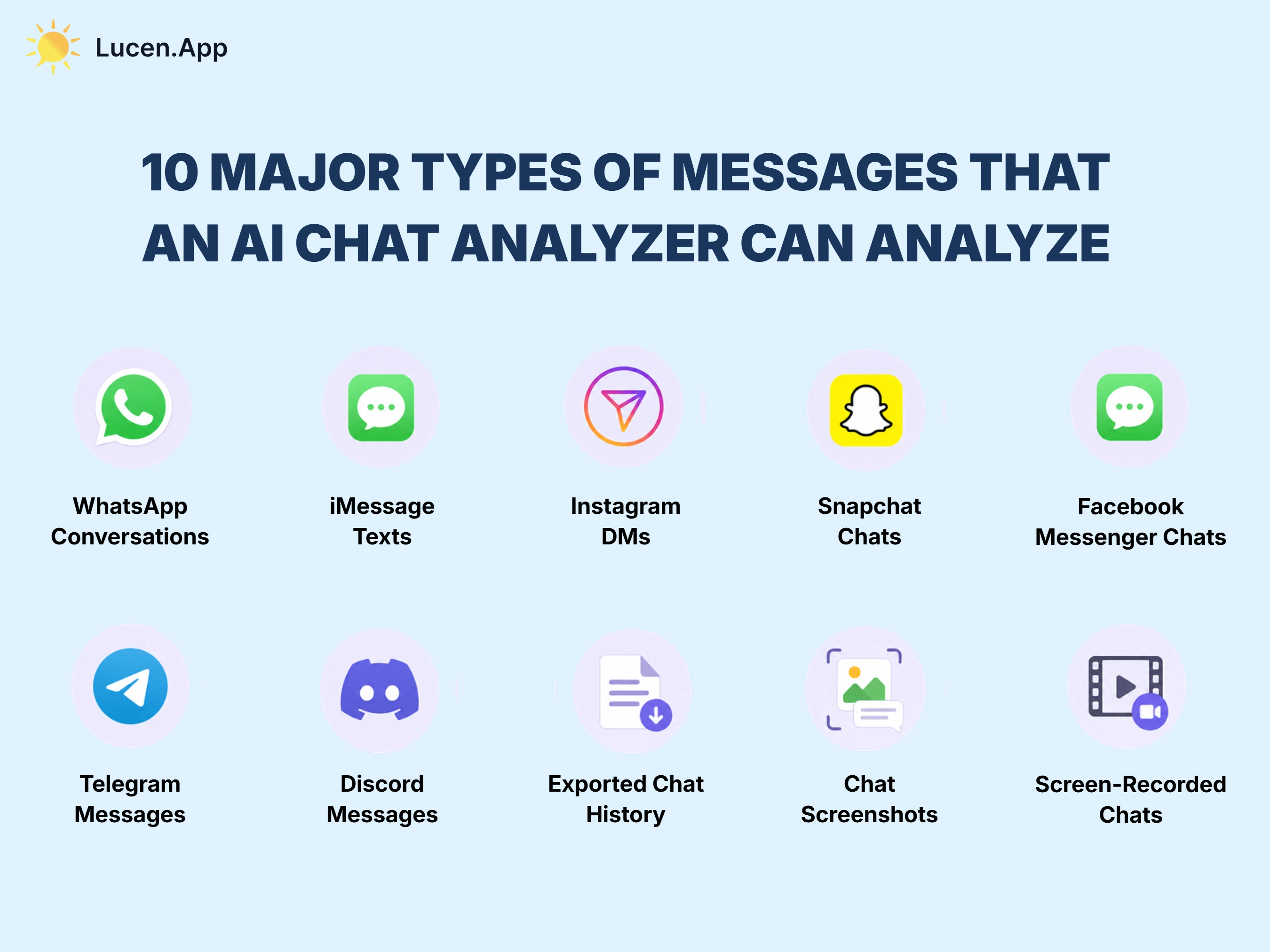
An AI chat analyzer can analyze WhatsApp conversations, exported chat histories of Instagram, Snapchat, Telegram, Messenger, and also screen recordings of it. Richer conversation history and preserved context enable the analyzer to generate more accurate and meaningful insights, regardless of where the messages originated. Although each platform stores conversations differently, the AI uses the same core technologies, including AI and natural language processing (NLP), to analyze text messages for sentiment, tone, intent, communication patterns, and relationship dynamics.
10 major types of messages that an AI chat analyzer can analyze are:
WhatsApp Conversations
An AI chat analyzer evaluates WhatsApp-exported conversations by examining message threads, emojis, voice note references, and media captions to identify sentiment, emotional tone, response patterns, recurring themes, and long-term communication trends across individual or group chats. This provides a clearer understanding of communication habits and relationship dynamics over time.
iMessage Texts
When you export iMessage chats, the conversation retains the message order, timestamps, reactions, and attachments, which provide valuable context. An AI chat analyzer uses this information to evaluate communication patterns, emotional shifts, response timing, and interaction consistency. These insights help users better understand long-term communication behaviors and relationship trends.
Instagram DMs
An AI chat analyzer examines Instagram-reported chats and DMs by evaluating direct messages, reactions, shared posts, and media references to identify tone, intent, flirting patterns, emotional engagement, and recurring communication behaviors. It considers the surrounding conversation rather than isolated messages. This creates a more complete picture of ongoing relationship interactions.
Snapchat Chats
Even temporary conversations can reveal meaningful communication patterns when preserved through screenshots or exported chats. An AI chat analyzer evaluates message content, response behavior, emotional tone, and conversational context to identify long-term trends instead of isolated interactions. This helps users recognize recurring communication behaviors with greater confidence.
Facebook Messenger Chats
Facebook Messenger conversations often include personal chats, group discussions, reactions, and shared media across lengthy message threads. AI chat analysis examines these conversations to identify sentiment trends, recurring topics, communication balance, and relationship dynamics over time. The results provide valuable insights into long-term communication consistency and engagement.
Telegram Messages
Conversations in Telegram often include individual chats, private groups, and channels with extensive message history. An AI chat analyzer processes Telegram messages to evaluate emotional tone, engagement levels, recurring themes in discussion, and communication consistency. This long-term analysis helps identify meaningful behavioral patterns and conversation trends over time.
Discord Messages
Discord conversations often span private messages, communities, and topic-based channels involving multiple participants. AI chat analysis evaluates message threads, response patterns, conversation flow, and recurring themes to distinguish individual communication behaviors and sentiment indicators. This provides greater context when interpreting complex or ongoing discussions.
Exported Chat History
One of the most complete data sources is the exported chat history, which provides AI analysis by preserving chronological message order and timestamps. This allows an AI chat analyzer to process full conversation transcripts, identify long-term communication patterns, and generate more comprehensive relationship insights than shorter message samples. This improves the reliability of the overall analysis.
Chat Screenshots
When chat exports are unavailable, screenshots still provide valuable conversation data. Using optical character recognition (OCR), an AI chat analyzer extracts visible text, then evaluates tone, emotion, intent, and conversational context from the captured messages. This allows meaningful analysis even from partial conversation records.
Screen-Recorded Chats
An AI chat analyzer reconstructs conversations from screen-recorded chats by extracting text from video frames, preserving message order, and analyzing communication patterns, emotional tone, and recurring themes throughout the discussion. This helps maintain context across longer conversations for more accurate analysis.
How Accurate Is an AI Chat Analyzer?
An AI chat analyzer is highly accurate at identifying communication patterns, sentiment, tone, intent, and recurring themes when it has sufficient conversational context. Modern AI-powered analysis tools use natural language processing (NLP), transformer models, and machine learning to evaluate text messages beyond individual words by considering conversation flow, response timing, emotional tone, and contextual relationships. The accuracy of the AI chat analysis improves with longer chat histories because larger datasets provide more reliable sentiment trends, communication patterns, and relationship dynamics.
Is a Dedicated AI Chat Analyzer Better Than ChatGPT?
Yes, a dedicated AI chat analyzer is better than ChatGPT because it is built specifically for conversation analysis. It automatically evaluates sentiment, tone, intent, response patterns, and relationship dynamics across entire conversations, often supporting chat exports and structured reports. ChatGPT can analyze text messages when prompted, but it is a general-purpose AI designed for brainstorming, writing, coding, research, and many other tasks rather than specialized AI chat analysis.
How Can You Use an AI Chat Analyzer to Improve Relationships?
An AI chat analyzer helps improve relationships by identifying communication patterns, emotional trends, and recurring behaviours that may be difficult to recognize during everyday conversations. By analyzing sentiment, tone, intent, response patterns, and relationship dynamics, it provides objective insights that can help users communicate more effectively, resolve recurring issues, and build healthier communication habits.
Below are some practical ways you can use an AI chat analyzer to improve relationships:
- Understand Communication Gaps: An AI chat analyzer identifies recurring communication gaps by detecting delayed responses, unanswered questions, abrupt topic changes, or one-sided conversations. Highlighting where conversations consistently lose clarity or engagement helps users understand why communication breaks down and where small adjustments can improve mutual understanding.
- Resolve Misunderstandings: An AI chat analyzer examines the context surrounding messages rather than interpreting them individually. By comparing tone, intent, and conversational flow, it identifies messages that may have been misunderstood due to ambiguous wording, sarcasm, or missing context. This allows users to revisit conversations with greater clarity before assumptions escalate into larger conflicts.
- Validate Feelings: Through sentiment analysis and emotion detection, AI chat analyzer identifies moments of appreciation, frustration, reassurance, or emotional distance throughout a conversation. Seeing these emotional patterns helps users acknowledge both their own feelings and their partner's communication style, making discussions more empathetic and constructive.
- Improve Conversation Quality: An AI chat analyzer evaluates communication habits, including response length, question frequency, emotional balance, and conversational engagement. By highlighting patterns such as short replies, recurring misunderstandings, or limited participation, it provides practical insights that encourage clearer, more meaningful conversations.
- Recognize Unhealthy Patterns: An AI chat analyzer can identify recurring behaviours such as criticism, defensiveness, inconsistent communication, emotional withdrawal, or mixed signals across multiple conversations. Rather than focusing on isolated incidents, it reveals long-term patterns that may affect relationship satisfaction and encourages users to address them proactively.
- Build Better Communication Habits: By tracking communication patterns over time, AI chat analyzer helps users measure improvements in responsiveness, emotional expression, and conversational balance. These insights make it easier to replace ineffective habits with more consistent, respectful, and empathetic communication.
- Prepare for Difficult Conversations: Review previous conversations with the AI chat analyzer to identify recurring points of disagreement, emotionally sensitive topics, and communication styles that produce more productive outcomes. Users can approach important discussions with greater awareness of past interactions and avoid repeating ineffective communication patterns.
- Track Relationship Progress: AI chat analyzer compares conversations over weeks or months to identify changes in sentiment trends, emotional engagement, response consistency, and communication quality. This long-term perspective helps users determine whether communication is improving, remaining stable, or becoming less constructive.
- Strengthen Emotional Connection: By identifying positive interactions such as appreciation, encouragement, active engagement, and supportive language, AI chat analyzer highlights behaviours that strengthen emotional connection. Recognizing these positive communication patterns encourages users to reinforce habits that build trust and relationship satisfaction.
- Support Long-Distance Relationships: For long-distance couples, an AI chat analyzer tracks communication frequency, response-time patterns, emotional consistency, and engagement across conversations, helping partners maintain balanced communication and identify changes that may require attention despite the physical distance.
Who Should Use a Chat Analyzer?
A chat analyzer is useful for couples, friends, dating partners, long-distance partners, individuals seeking communication insights, relationship coaches, and therapists because it helps them better understand conversations and identify communication patterns. Whether using an AI-powered chat analyzer or an AI relationship chat analyzer, users can gain objective insights that support clearer communication, identify recurring behaviors, and make more informed decisions based on conversation history.
Here is the list of individuals who should use a chat analyzer:
- Couples: An AI chat analyzer can help couples review communication patterns, identify recurring misunderstandings, and recognize both healthy and unhealthy interaction habits. These insights help partners improve communication, resolve conflicts more effectively, and build stronger emotional connections over time.
- Friends: Conversations can be analyzed using an AI chat analyzer to better understand communication styles, identify mixed signals, and recognize changes in engagement or emotional tone. This helps strengthen friendships by encouraging clearer and more balanced communication.
- People in Long-Distance Relationships: Long-distance partners can use an AI chat analyzer to monitor communication frequency, response consistency, emotional engagement, and conversation quality across time. These insights help maintain healthy communication despite physical distance and identify changes that may require attention.
- Dating Partners: People who are getting to know each other can use an AI chat analyzer to identify flirting patterns, communication consistency, emotional availability, and compatibility signals. This provides a clearer understanding of how the relationship is developing through ongoing conversations.
- Individuals Seeking Communication Insights: Anyone who wants to improve their personal communication can use an AI chat analyzer to identify recurring habits, understand emotional responses, and pinpoint ways to make conversations more effective and meaningful.
- Relationship Coaches: They can use conversation analysis to identify recurring communication patterns, emotional trends, and interaction challenges before coaching sessions. These structured insights support more focused discussions and personalized communication strategies.
- Therapists: An AI chat analyzer can help therapists organize conversations for discussion by generating conversation summaries and identifying communication patterns shared by clients, enabling a better understanding of relationship interactions and recurring themes. But it should complement, not replace, professional clinical assessment and therapeutic judgment.
_result.webp&w=3840&q=75&dpl=dpl_DmcYM65DKNssHHvask5qvpsyRCms)