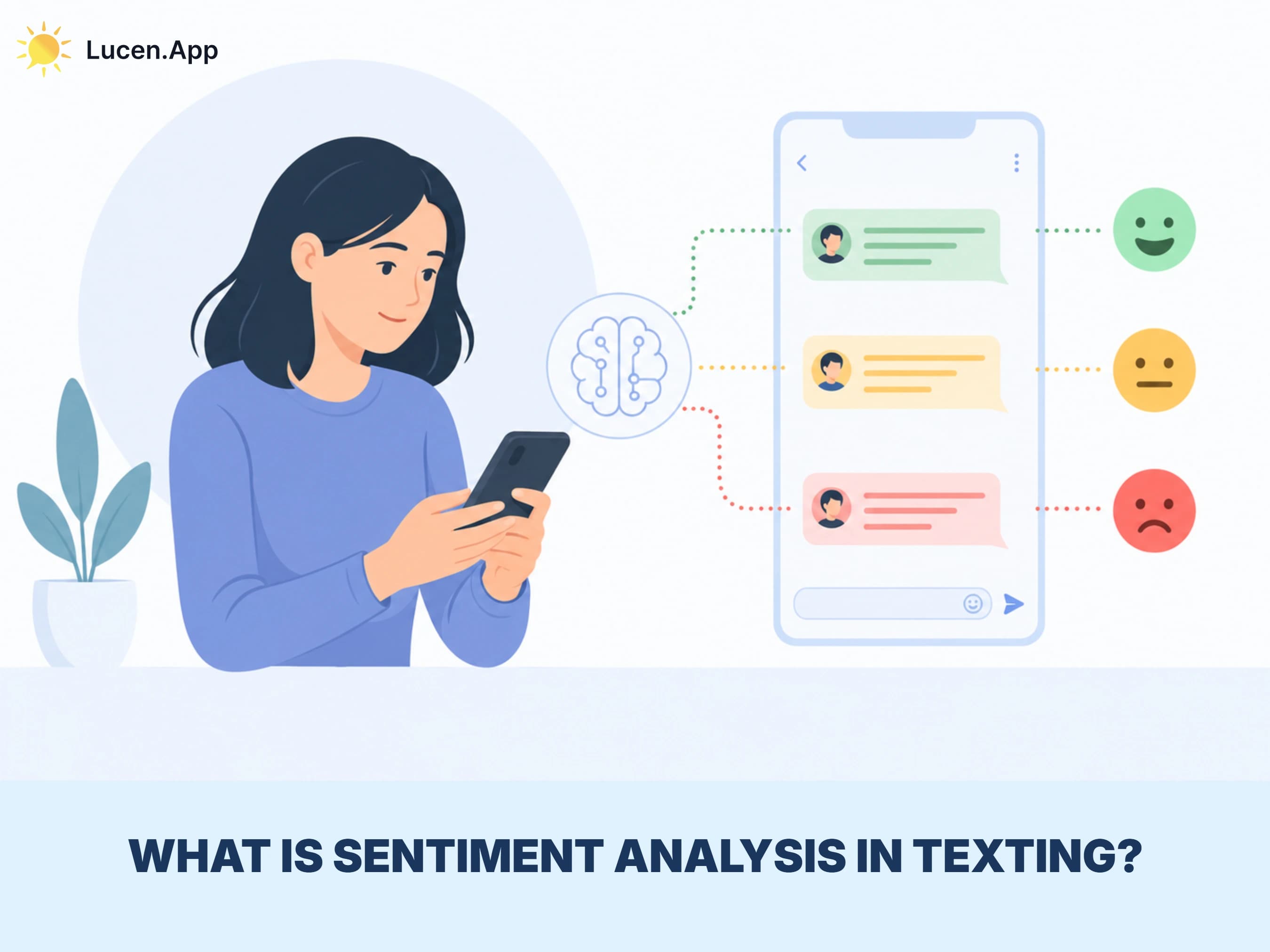
Sentiment analysis in texting is the process of using Artificial Intelligence (AI), Natural Language Processing (NLP), and machine learning to identify the emotional tone, intent, and attitude expressed in text messages. It examines word choice, tone, emojis, punctuation, conversational context, and communication patterns to classify messages as positive, negative, or neutral and generate a sentiment score.
Advanced models can also detect emotions such as joy, anger, sadness, and fear, recognize mixed sentiment, and measure emotional intensity. Beyond individual messages, sentiment analysis evaluates entire conversations to uncover emotional trends, relationship dynamics, communication consistency, and potential red flags.
These insights support a wide range of applications, including customer support, social media monitoring, market research, workplace communication, healthcare, education, and dating conversations. Although sentiment analysis provides valuable context for interpreting digital communication, it works best when combined with conversational context and behavioral patterns, helping users better understand emotions, intent, and relationships in text-based interactions.
How Does AI Perform Sentiment Analysis in Text Messages?
AI performs sentiment analysis on text messages using natural language processing (NLP) and Machine Learning (ML) to evaluate the emotional tone, intent, and attitude expressed in the text. The process is explained below:
- Collect the Text Data: The AI gathers text messages or conversations for analysis from messaging platforms, chat logs, or other digital communication sources.
- Preprocess the Text: The system cleans and standardizes the text by removing unnecessary characters, correcting spelling, converting text to a consistent format, and eliminating irrelevant words to improve text analysis accuracy.
- Process the Language: Using natural language processing (NLP), the AI tokenizes the text, identifies important words and phrases, understands grammar, and evaluates contextual relationships that influence sentiment.
- Analyze Sentiment Patterns: Machine learning models compare the processed text with patterns learned from large datasets, including social media posts and chat conversations, to recognize emotional cues and language nuances.
- Generate a Sentiment Score: The AI performs sentiment analysis by assigning a sentiment score that classifies the message as positive, negative, or neutral, helping users interpret emotional tone and communication patterns.
Text Preprocessing
Text processing is the initial stage of sentiment analysis, where AI prepares a text message for accurate emotional interpretation. It cleans the text by removing unnecessary punctuation, converting words to lowercase, correcting spelling errors, and eliminating common stop words that do not contribute to sentiment. The system also standardizes abbreviations, slang, and contractions to create a consistent format for analysis. This preparation enables the sentiment analysis model to identify sentiment-bearing words and assign a more accurate positive, negative, or neutral sentiment score.
Tokenization and Language Processing
AI divides each text message into smaller units, called tokens, which may represent words, subwords, or characters. This structured format allows sentiment analysis models to process unstructured text efficiently. Using Natural Language Processing (NLP), the system examines grammar, sentence structure, word relationships, and context to identify sentiment-bearing words and phrases. By combining token-level analysis with contextual understanding, AI can accurately classify messages as positive, negative, or neutral and generate a reliable sentiment score. Libraries such as NLTK and spaCy commonly support this process.
Emotion Detection
Beyond identifying whether a message is positive, negative, or neutral, sentiment analysis can detect specific emotions such as joy, anger, sadness, fear, or surprise. AI uses Natural Language Processing (NLP) and machine learning to evaluate emotional words, phrases, and contextual cues that reveal how the sender feels. By recognizing these emotions alongside the overall sentiment score, the system provides deeper insights into the emotional state behind a text message, making conversation analysis more accurate and meaningful.
Intent Recognition
AI chat analyzer goes beyond analyzing emotional tone by identifying the purpose behind a text message. During sentiment analysis, it examines word choice, sentence structure, and conversational context to determine whether the sender is asking a question, making a request, expressing concern, offering support, or showing interest. Recognizing intent alongside the sentiment score helps distinguish messages that share similar emotions but convey different meanings, resulting in more accurate interpretation and a clearer understanding of the sender's communication goals.
Context Understanding
The meaning of a text message often depends on the surrounding conversation rather than the words alone. While sentiment analysis, AI examines previous messages, topic continuity, and relationships among participants to interpret emotional tone more accurately. This contextual understanding helps distinguish messages with similar wording but different meanings. For example, a short reply like "Fine" may indicate agreement, frustration, or sarcasm, depending on the earlier conversation, thereby yielding a more reliable sentiment score.
Sentiment Classification
The final stage of sentiment analysis assigns a sentiment label to each text message based on its emotional tone and contextual meaning. After evaluating linguistic features, contextual cues, and detected emotions, AI classifies the message as positive, negative, or neutral and generates a sentiment score that reflects its overall polarity. Some advanced models can also identify mixed sentiment or measure emotional intensity, providing a more detailed understanding of how emotions are expressed throughout a conversation.
What Types of Sentiment Can AI Detect in Text Messages?
The types of sentiment that AI can detect in text messages are positive, negative, neutral, emotional, and mixed sentiments. Instead of simply labeling a message as good or bad, sentiment analysis classifies it into categories that reflect both the direction and strength of the expressed emotion. These classifications help users better interpret communication, recognize emotional patterns, and understand the intent behind digital conversations.
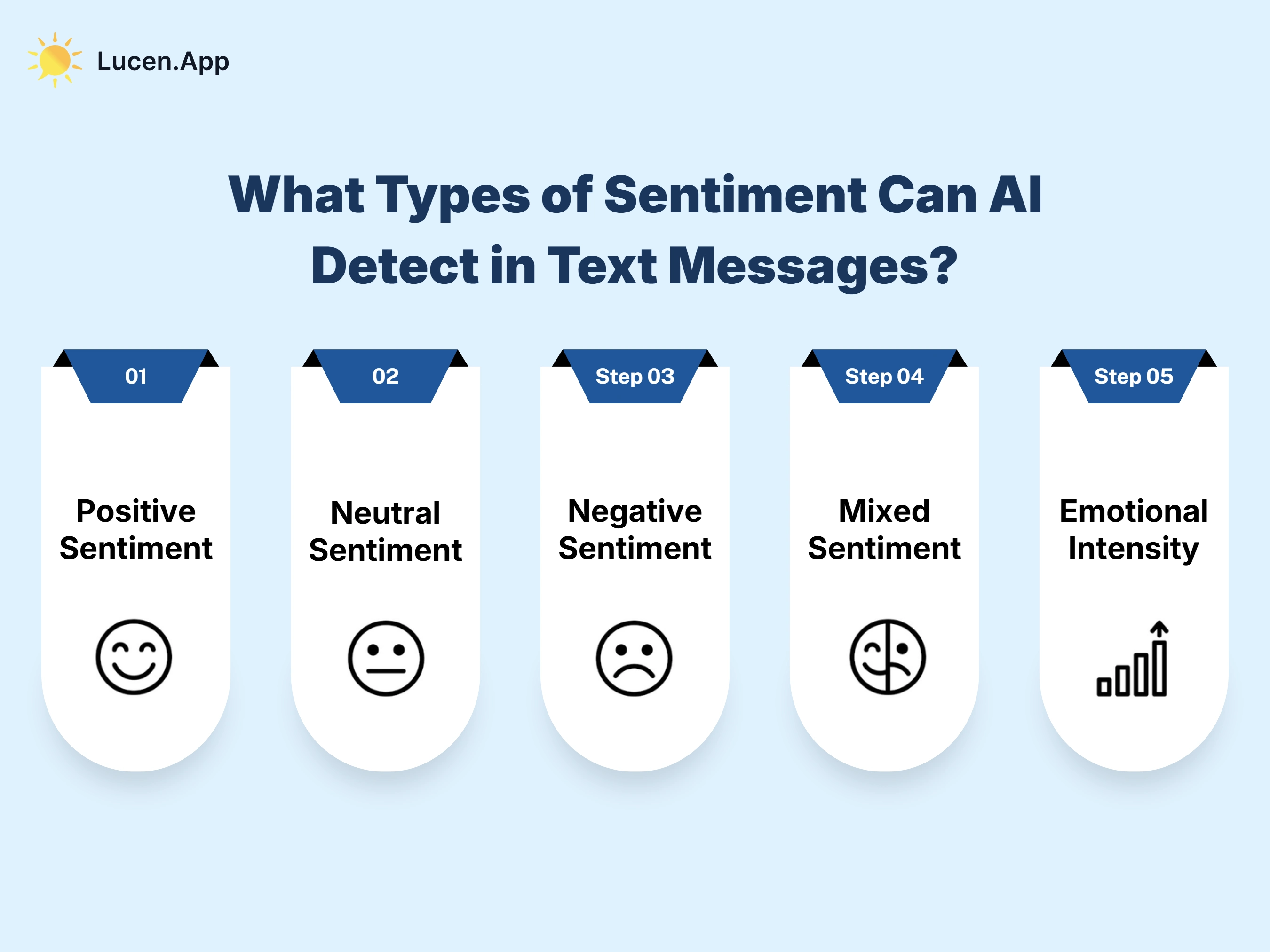
The 5 types of Sentiment are explained below:
- Positive Sentiment: Positive sentiment reflects messages that express happiness, appreciation, encouragement, or approval. Detecting positive sentiment helps identify supportive, friendly, or interested communication. For example, a message like "I'm really excited to see you tonight!" conveys enthusiasm and optimism.
- Neutral Sentiment: Neutral sentiment includes messages that communicate information without expressing a strong emotional tone. Identifying neutral sentiment helps distinguish factual statements from emotionally charged conversations. For example, "I'll meet you at 6 PM" communicates information without indicating positive or negative feelings.
- Negative Sentiment: Messages that express frustration, disappointment, criticism, or dissatisfaction. Recognizing negative sentiment helps identify potential misunderstandings, conflicts, or emotional distress. For example, "I'm disappointed that you didn't call" clearly conveys a negative emotional response.
- Mixed Sentiment: Mixed sentiment occurs when a message contains both positive and negative emotions simultaneously. Detecting mixed sentiment provides a more accurate understanding of complex conversations where emotions are not entirely one-sided. For example, "I enjoyed spending time with you, but I wish you had been more honest" expresses appreciation alongside disappointment.
- Emotional Intensity: Emotional intensity measures how strongly an emotion is expressed, regardless of whether the sentiment is positive, negative, or neutral. AI evaluates indicators such as emotionally charged words, capitalization, repeated punctuation, and expressive language to determine the strength of the emotion. For example, "I am SO happy!!!" conveys stronger emotional intensity than "I'm happy."
What Texting Signals Does AI Use During Sentiment Analysis?
AI uses texting signals such as word choice, emojis, punctuation, tone, language, conversation context, and more. Instead of evaluating individual words alone, sentiment analysis examines how language is written, the surrounding conversation, and communication behaviors to generate a more accurate sentiment score.
Here are some of the texting signals used by AI during Sentiment Analysis:
- Word Choice: Analyzes emotionally significant words, adjectives, adverbs, and degree modifiers such as "very" or "slightly," as different words carry different emotional weight. Evaluating word choice helps sentiment analysis distinguish whether a message expresses positive, negative, or neutral sentiment and measure how strongly that emotion is conveyed. For example, "I'm extremely happy" indicates stronger positive sentiment than "I'm happy."
- Tone and Language Style: It evaluates sentence structure, writing style, slang, formality, and expressions because the same words can convey different emotions depending on how they are written. Analyzing tone and language style helps sentiment analysis recognize emotional intent, identify sarcasm or informal language, and reduce incorrect sentiment classification.
- Emojis and Punctuation: AI chat analyzer interprets emojis, emoticons, exclamation marks, question marks, and ellipses because they often reinforce or alter the emotional meaning of a message. These visual and stylistic cues help sentiment analysis measure emotional intensity and more accurately understand the sender's mood. For example, "That's great :smiley:" expresses a warmer emotion than "That's great..." despite using the same words.
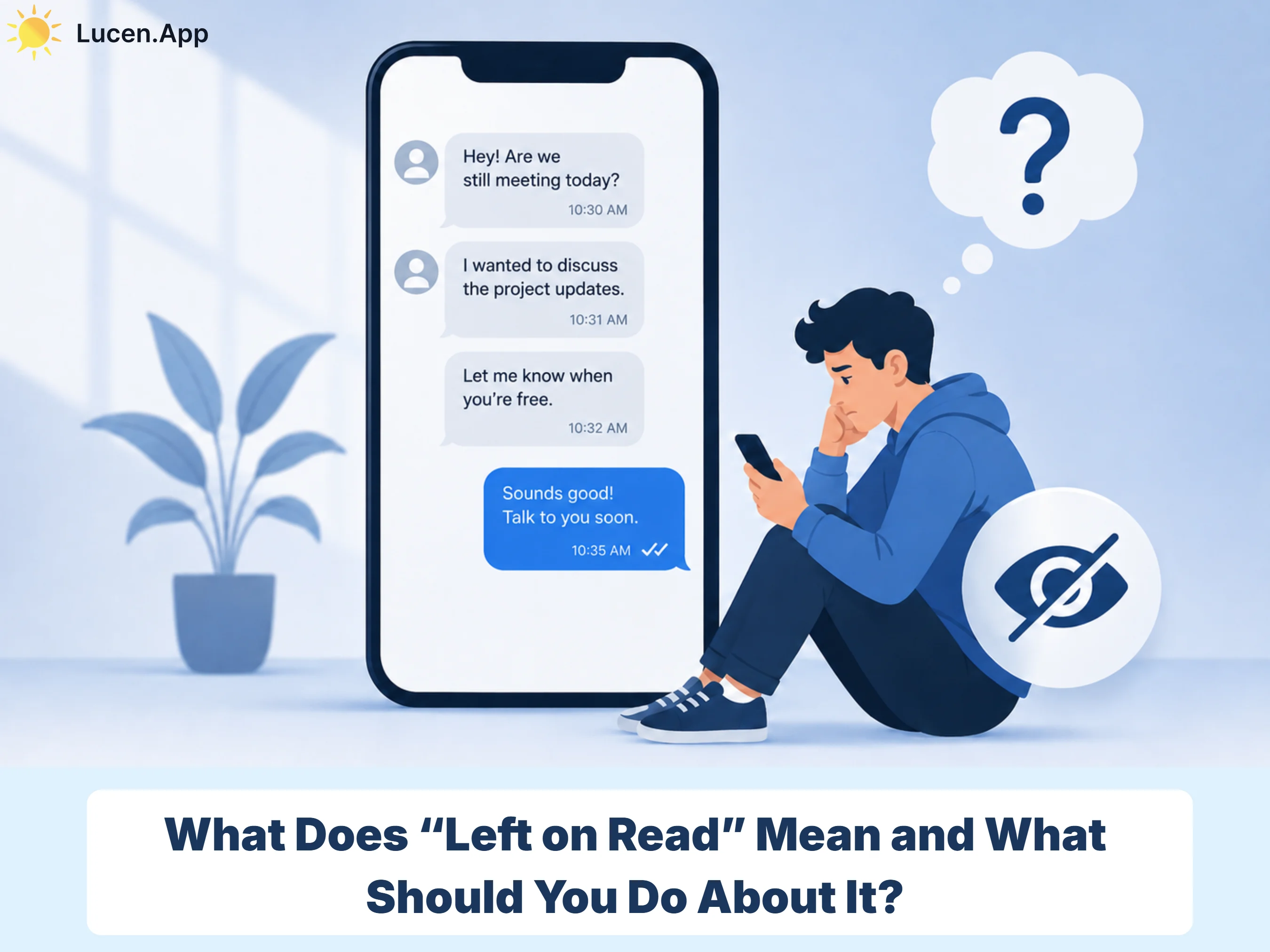
- Response Timing: AI considers how quickly or slowly someone replies because response patterns can provide additional context about engagement, hesitation, urgency, or disinterest. While timing alone cannot determine sentiment, combining it with textual signals helps sentiment analysis produce a more informed interpretation of the conversation.
- Conversation Context: An AI chat analyzer reviews previous messages, topic continuity, and the flow of the conversation, as the meaning of a text often depends on what was said earlier. Considering conversation history allows sentiment analysis to interpret ambiguous messages more accurately and avoid misclassifying responses that cannot be understood in isolation.
- Recurring Communication Patterns: AI chat analyzer identifies repeated behaviors, such as consistently positive language, increasing negativity, or gradual shifts in tone, because emotions often develop over multiple conversations rather than a single message. Tracking these long-term patterns enables sentiment analysis to detect changes in communication style, identify emerging emotional trends, and provide more reliable insights than evaluating isolated texts.
What Are the Common Use Cases of Sentiment Analysis in Texting?
Common use cases for sentiment analysis in texting include customer support messages, social media monitoring, brand mentions, and market research. Sentiment analysis helps organizations and individuals understand the emotional tone behind text-based communication.
Some of the common use cases are listed and explained below:
- Customer Support Messages: Businesses use sentiment analysis to detect customer emotions such as frustration, satisfaction, or urgency in support conversations. This allows AI to prioritize critical inquiries, route tickets to the appropriate teams, and help support agents respond more effectively.
- Social Media Monitoring: Companies analyze posts, comments, and direct messages to understand public opinion about their brand, products, or campaigns. Monitoring sentiment helps identify emerging trends, measure audience reactions, and respond quickly to negative feedback.
- Product Reviews and Feedback: Organizations evaluate customer reviews and feedback to determine how people feel about specific product features or services. These insights help identify recurring issues, recognize customer preferences, and guide product improvements.
- Workplace and Team Chats: Organizations use sentiment analysis to monitor communication across internal messaging platforms and assess team morale, employee engagement, and collaboration. Detecting shifts in sentiment can help identify workplace concerns, burnout, or communication challenges before they escalate.
- Brand Mentions: AI scans online conversations for references to a company's brand and evaluates the sentiment behind those mentions. Understanding whether discussions are positive, negative, or neutral helps businesses manage their reputation and respond proactively to public feedback.
- Health Care and Crisis Intervention: Healthcare providers apply sentiment analysis to patient feedback, clinical communications, and crisis support conversations to identify emotional distress, monitor patient experiences, and recognize individuals who may require immediate attention or intervention.
- Education & Feedback: Educational institutions analyze student messages, discussion forums, and feedback to measure engagement, identify confusion or frustration, and tailor learning support based on students' emotional responses throughout the learning process.
- Market Research: Businesses analyze customer opinions from surveys, social media posts, and online reviews to understand consumer attitudes and market trends. These insights support product development, campaign evaluation, and strategic business decisions.
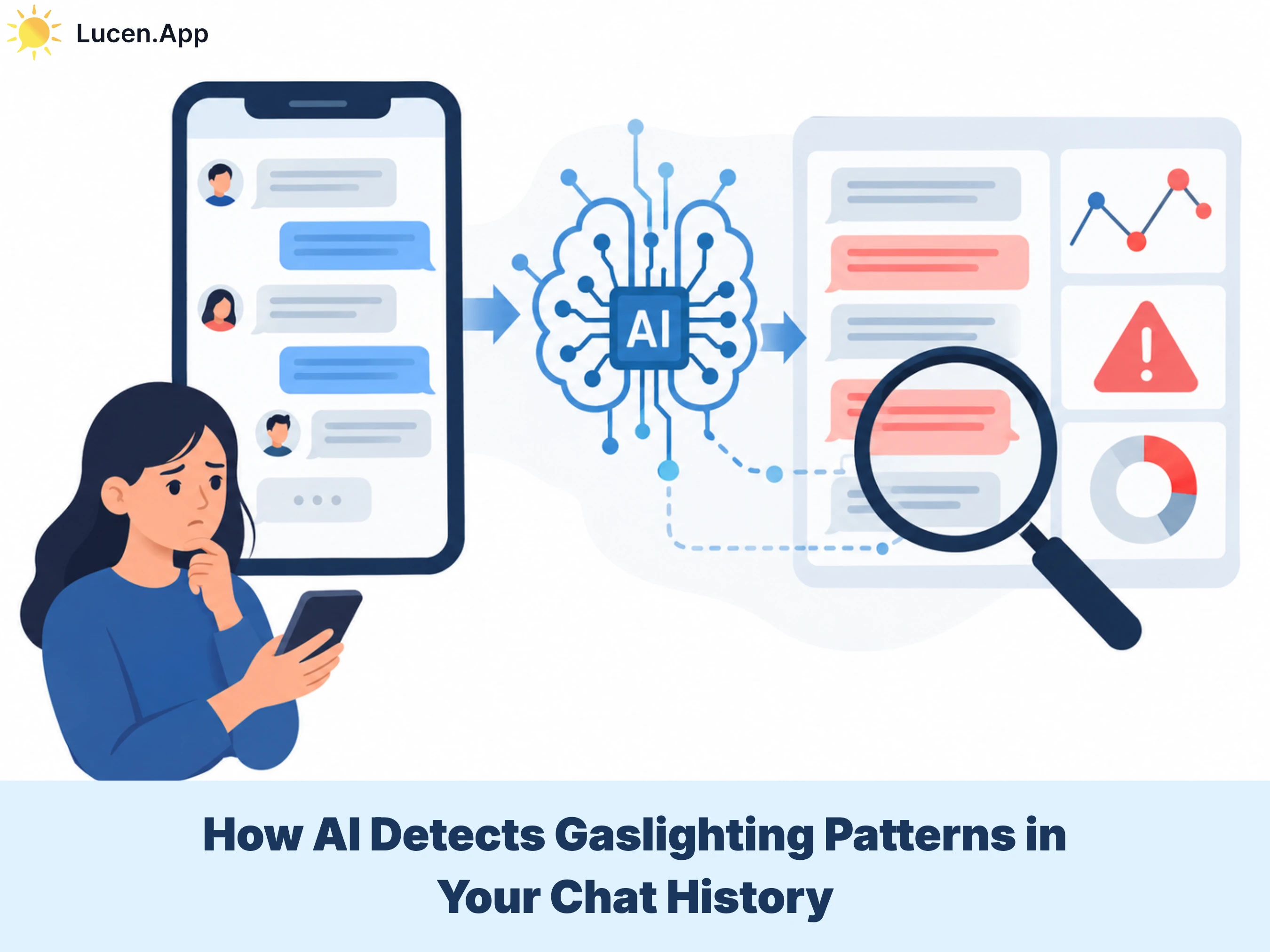
- Dating and Relationship Texts: AI analyzes conversations to identify emotional tone, interest levels, communication consistency, and potential red flags in relationships. By tracking sentiment patterns over time, users can gain deeper insights into relationship dynamics and better understand how communication evolves.
How Can Sentiment Analysis Help Understand Dating and Relationship Texts?
Sentiment analysis helps interpret dating and relationship texts by evaluating the emotional tone, communication patterns, and sentiment score of each message over time. It performs text analysis to classify conversations as positive, negative, or neutral, making it easier to identify interest, affection, frustration, or emotional distance. By tracking changes in sentiment across multiple conversations, AI can reveal shifts in mood, detect recurring communication patterns, and highlight potential mixed signals or red flags. These insights help users better understand relationship dynamics, recognize communication trends, and make more informed decisions about their interactions.
Why Is Sentiment Analysis Alone Not Enough for Relationship Texting?
Sentiment Analysis alone is not enough for relationship texting because conversations often include subtle language such as sarcasm, humor, shared experiences, and conflicting emotions that a sentiment score alone may overlook.
- Sarcasm, Irony, and Humor: Text containing sarcasm and irony often expresses the opposite of its literal meaning, making it difficult for sentiment analysis to interpret correctly. For example, "Great, just what I needed!" may appear positive based on word choice but actually convey frustration or annoyance.
- Negation: Words such as "not," "never," and "hardly" can completely reverse the meaning of a sentence. For example, "I'm not upset" carries a different sentiment than "I'm upset," while "not bad" often expresses a positive opinion despite containing a negative word.
- Multipolarity: A single message can convey multiple emotions simultaneously, making it difficult to assign a single sentiment label. For example, "I'm excited to see you, but I'm also nervous" expresses both positive and negative emotions, requiring AI to recognize mixed sentiment rather than relying on a single polarity score.
- Context Dependency: The emotional meaning of a message often depends on previous conversations, shared experiences, or relationship history. A reply such as "Fine." could indicate agreement, disappointment, or sarcasm depending on the surrounding context, making conversation history essential for accurate interpretation.
- Subjectivity and Bias: Personal opinions, cultural differences, and biases in training data can influence how AI interprets emotions. People may express the same feeling in different ways, while AI models trained on limited datasets may misclassify certain expressions or communication styles. Considering subjectivity and reducing bias helps produce more reliable relationship insights.
Can an AI Chat Analyzer Perform Sentiment Analysis on Text Messages?
Yes, an AI chat analyzer can perform sentiment analysis on text messages by using Natural Language Processing (NLP) and machine learning to evaluate the emotional tone, intent, and communication patterns within a conversation. Instead of analyzing messages individually, it examines both single texts and entire conversation histories to generate a sentiment score and classify messages as positive, negative, or neutral. By combining text analysis with contextual understanding, an AI chat analyzer can identify emotional trends, detect changes in sentiment over time, and provide deeper insights into how conversations evolve. These capabilities make it useful for interpreting relationship dynamics, identifying recurring communication patterns, and understanding the overall emotional direction of text-based interactions.
What Types of Text Conversations Can an AI Chat Analyzer Review?
An AI chat analyzer can review text conversations from platforms such as WhatsApp, iMessage, Instagram, Messenger, Telegram, and dating apps, provided the conversations are shared with the tool. Using sentiment analysis and text analysis, it evaluates one-on-one chats, dating conversations, relationship messages, and ongoing communication threads to identify positive, negative, or neutral sentiment.
Beyond assigning a sentiment score, the AI chat analyzer can assess emotional tone, compatibility, interest levels, communication consistency, potential red flags, ghosting risk, and even suggest context-aware responses, helping users better understand the dynamics of their conversations.
How Does AI Chat Analyzer Analyze Entire Conversations?
An AI chat analyzer evaluates entire conversations by combining Natural Language Processing (NLP) with Large Language Models (LLMs) to understand both individual messages and the overall flow of communication. It tracks the sequence of messages to preserve context, maps emotional changes over time through sentiment analysis, measures conversation balance by comparing participation and response patterns, and identifies recurring behaviors such as defensiveness, avoidance, or mixed signals.
What Relationship Insights Can AI Chat Analyzer Support?
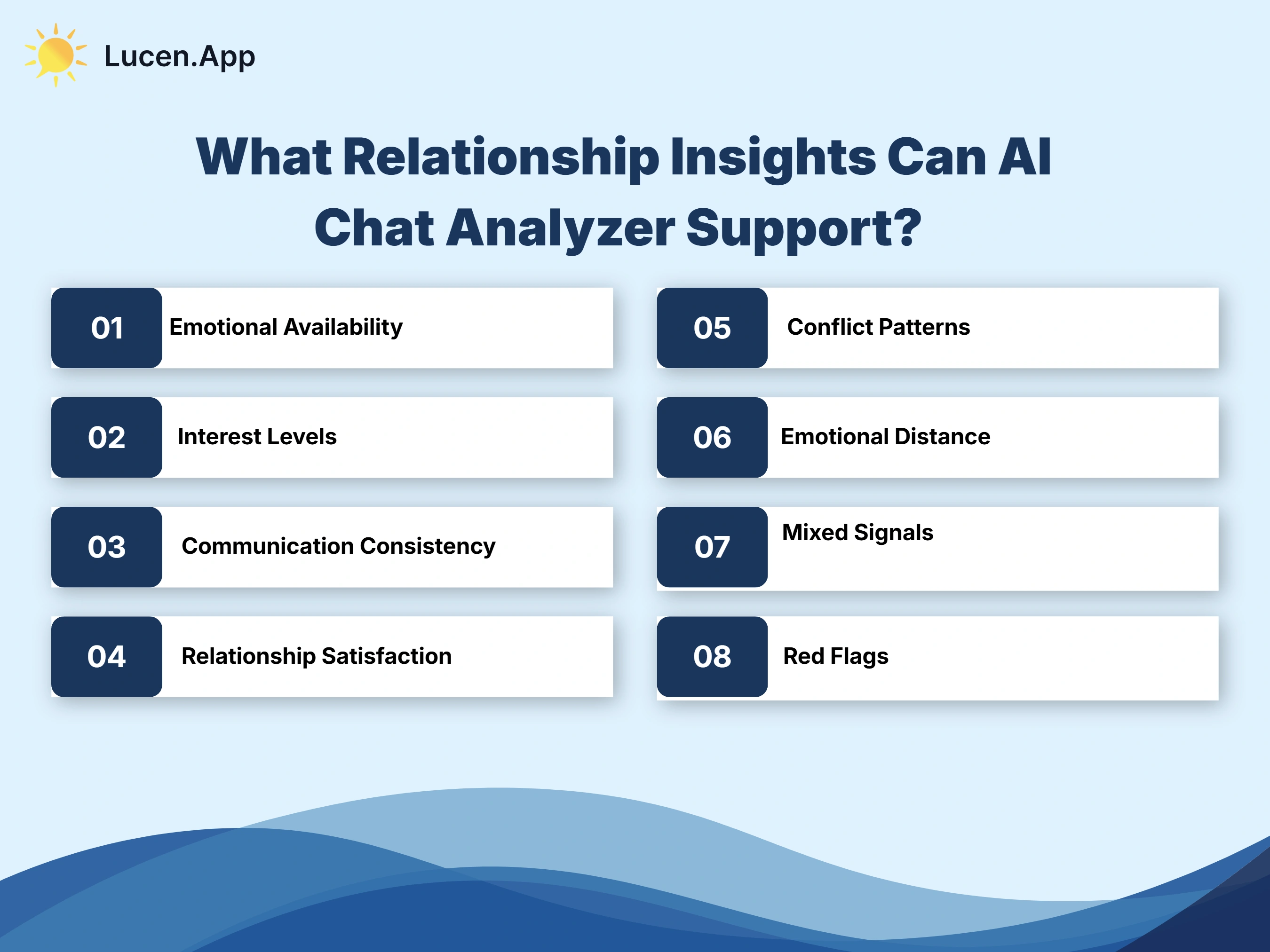
The Relationship Insights that AI Chat Analyzer supports include emotional availability, interest levels, communication consistency, relationship satisfaction, and more. It examines emotional trends, response patterns, and language patterns throughout a conversation to help users better understand how a relationship is developing.
- Emotional Availability: A chat analyzer identifies signs of emotional openness by analyzing how often someone expresses feelings, responds empathetically, or engages in meaningful conversations. Consistent warmth and emotional expression often indicate greater emotional availability.
- Interest Levels: The analyzer measures engagement through positive language, response frequency, question-asking, and conversational enthusiasm. These patterns help determine whether interest is increasing, declining, or remaining consistent over time.
- Communication Consistency: AI tracks how regularly both people communicate and whether response patterns remain stable. Sudden changes in messaging frequency or tone may indicate shifts in engagement or communication habits.
- Relationship Satisfaction: Positive language, appreciation, supportive responses, and respectful interactions can reflect overall satisfaction in the relationship. Sentiment analysis evaluates these indicators to identify long-term emotional trends.
- Conflict Patterns: The analyzer detects recurring disagreements, criticism, defensive language, or escalating negative sentiment. Recognizing these patterns helps users understand how conflicts develop and whether they are becoming more frequent.
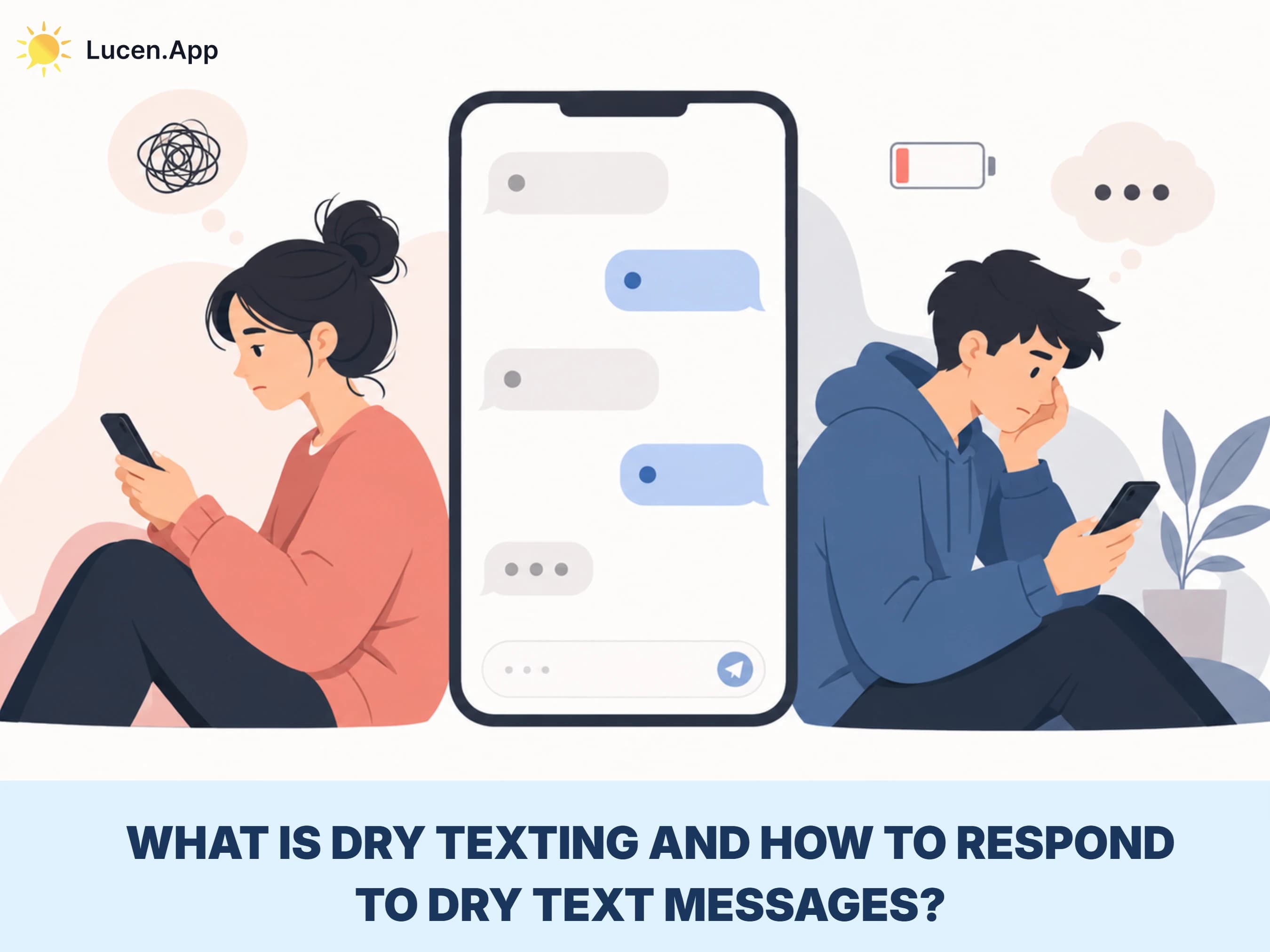
- Emotional Distance: Short replies, reduced engagement, delayed responses, and limited emotional expression may suggest increasing emotional distance. AI identifies these communication changes to highlight potential disconnection.
- Mixed Signals: AI recognizes inconsistent behaviors, such as alternating between affectionate and distant messages or sudden shifts in emotional tone. Detecting these mixed signals or conflicting patterns helps explain uncertain or confusing communication.
- Red Flags: The analyzer highlights behaviors that may indicate unhealthy communication, including controlling language, repeated criticism, manipulation, hostility, or abrupt withdrawal. Identifying these patterns early helps users recognize potential relationship concerns before they become more significant.
When Should You Use an AI Chat Analyzer for Text Messages?
You should use an AI Chat Analyzer when you want to clarify mixed signals, identify potential red flags, and understand relationship dynamics in your text conversations. By performing sentiment analysis and text analysis, an AI Chat Analyzer evaluates the emotional tone, generates a sentiment score, and identifies trends that may not be obvious from individual messages.
An AI chat analyzer is particularly useful when you want to:
- Clarify mixed signals by identifying conflicting emotions or inconsistent communication patterns.
- Monitor communication consistency to understand changes in engagement, responsiveness, and emotional tone over time.
- Identify potential red flags such as recurring conflict, emotional distance, controlling language, or negative communication patterns.
- Understand relationship dynamics by evaluating interest levels, emotional availability, and overall conversation trends across an entire chat history.

_result.webp&w=3840&q=75&dpl=dpl_DmcYM65DKNssHHvask5qvpsyRCms)