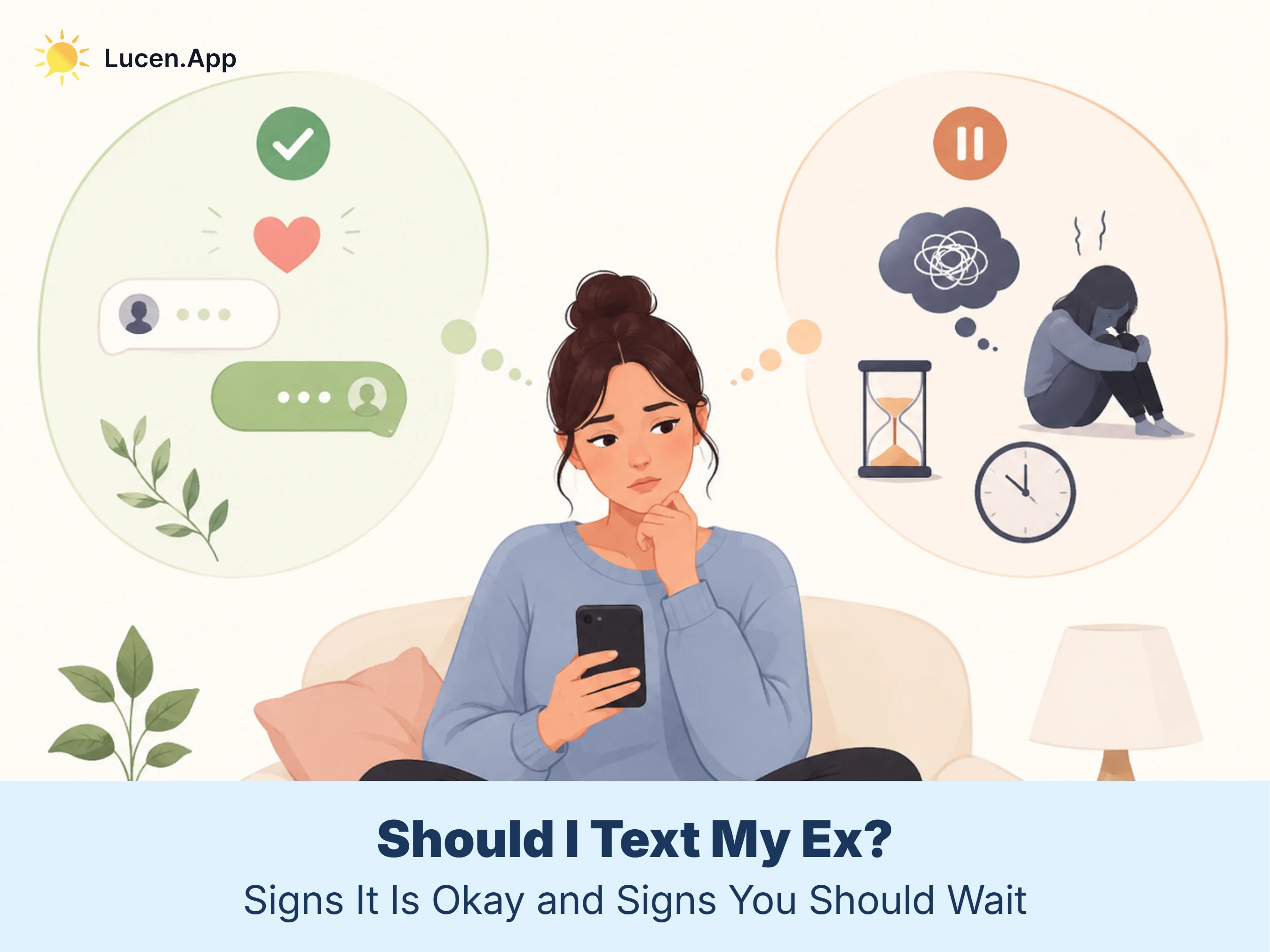
No, you should not text your ex in most situations, especially if you are feeling emotional, seeking validation, hoping for reconciliation, or struggling to move on. The urge to reach out is often driven by loneliness, nostalgia, unanswered questions, or a desire for reassurance rather than a genuine need for communication. Acting on those feelings can reopen old wounds, disrupt healing, and create emotional setbacks that make it harder to move forward. These patterns are discussed throughout the article, including common motives, emotional triggers, and situations where contact may do more harm than good.
That said, there are situations where texting may be appropriate. A respectful breakup, a practical reason for contact, a completed no-contact period, genuine emotional detachment, or a pre-existing friendship can create healthier conditions for communication. Before sending a message, assess your motives, respect any boundaries your ex has set, and make sure you can accept silence, rejection, or a neutral response. If you are uncertain, waiting is usually the safer and healthier choice.
Why Does Texting Your Ex Feel So Hard to Decide?
Deciding whether to text your ex feels difficult because the decision is rarely about the message itself, as it is often influenced by conflicting emotions, past relationship experiences, and uncertainty about what might happen next. After a breakup, the urge to reconnect can compete with the need to protect your emotional well-being, making even a simple text feel like a significant decision.
5 emotional and psychological factors that make it hard to text your ex are:
- Attachment vs. self-protection: Part of you may want comfort, familiarity, or connection, while another part wants to avoid further disappointment or emotional pain.
- Fear of rejection: The possibility of being ignored, rejected, or receiving a cold response can make reaching out feel risky.
- Reopening old wounds: A text message can bring back unresolved feelings, past arguments, or memories that interrupt your healing process.
- Need for connection: Loneliness, nostalgia, boredom, or the absence of shared routines can create a strong urge to reconnect, even when contact may not be beneficial.
- Uncertainty of the outcome: You cannot control how your ex will respond, making the decision emotionally challenging and difficult to predict.
Why Do You Actually Want to Text Your Ex?
You may want to text your ex because you miss them emotionally, want closure, hope to reconnect, seek a casual check-in, or feel lonely in a weak moment. In many cases, the urge reflects a subconscious craving for emotional relief or validation rather than a clear reason to restart contact. Identifying the motive helps you decide whether texting supports healing or reopens old feelings.
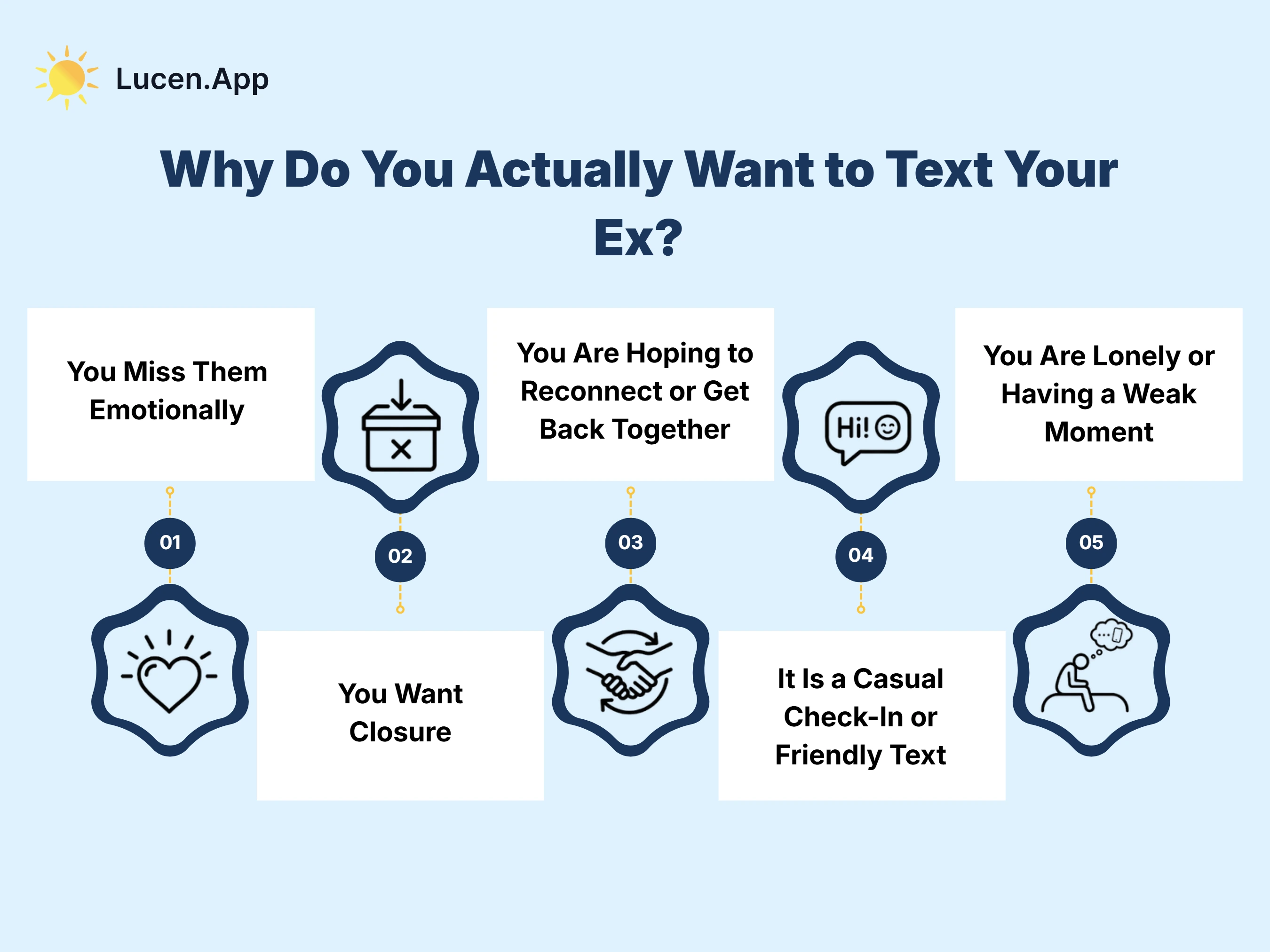
Below are 5 reasons why you actually want to text your ex:
- You Miss Them Emotionally
- You Want Closure
- You Are Hoping to Reconnect or Get Back Together
- It Is a Casual Check-In or Friendly Text
- You Are Lonely or Having a Weak Moment
You Miss Them Emotionally
Missing an ex can create a strong urge to reconnect and text them, especially after a recent breakup. Familiar routines, shared memories, and emotional attachment often make contact feel comforting. Before sending a text, consider whether you genuinely miss the person or simply miss the connection, companionship, and sense of familiarity the relationship once provided.
You Want Closure
Many people consider texting an ex to gain closure after unanswered questions or an unresolved ending. While seeking clarity is understandable, closure rarely comes from a single conversation. Before reaching out, ask whether a text will genuinely help you move forward or simply reopen emotions you are still working through.
You Are Hoping to Reconnect or Get Back Together
Wanting to rebuild the relationship is one of the most common reasons people text an ex. If reconciliation is your goal, assess whether the issues that caused the breakup have changed and whether both people are emotionally ready to reconnect. Reaching out from loneliness, regret, or nostalgia often creates false hope and can complicate your healing process.
It Is a Casual Check-In or Friendly Text
Many people want to send a casual text simply to see how their ex is doing or restart communication. While this may seem harmless, a friendly message can create confusion if either person still has romantic expectations. A casual check-in is usually appropriate only when enough time has passed and both people have genuinely moved forward.
You Are Lonely or Having a Weak Moment
Loneliness, boredom, stress, or a difficult day can make texting an ex feel like the easiest source of comfort. In many cases, the urge reflects a temporary emotional need rather than a genuine desire to reconnect. Taking time to evaluate your feelings can prevent decisions driven by short-term emotions.
When Is It Okay to Text Your Ex?
Text your ex only if the breakup ended respectfully, you have a practical reason to reach out, enough time has passed, you can handle any response, or a genuine friendship existed before the relationship. In most cases, you should wait until you have completed a 30- to 90-day no-contact period. This time helps both people heal, gain perspective, and communicate without emotional dependence or unrealistic expectations.
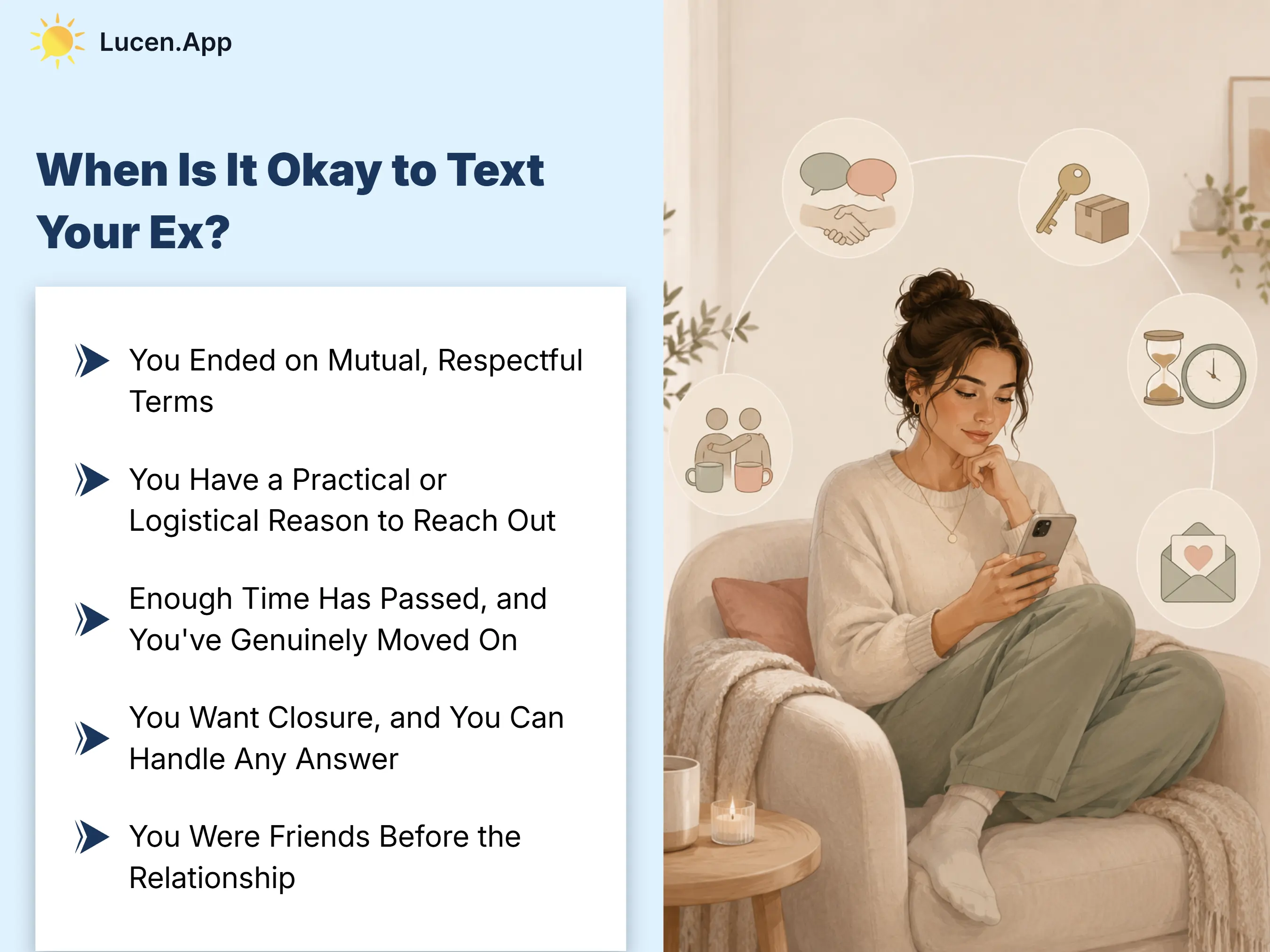
Texting your ex may be appropriate in the following situations:
You Ended on Mutual, Respectful Terms
You should think about texting your ex only when the breakup ended respectfully and sufficient time has passed for emotional processing. A respectful ending often reduces the risk of conflict, but your intentions should still be clear. Reach out only when you can accept any response without expecting reconciliation or emotional reassurance.
You Have a Practical or Logistical Reason to Reach Out
Texting an ex is appropriate when you need to discuss practical matters such as returning belongings, shared finances, co-parenting responsibilities, or other unresolved obligations. Keep the conversation brief, direct, and focused on the specific issue. Avoid using logistical reasons as an opportunity to restart emotional conversations or test their interest.
Enough Time Has Passed, and You've Genuinely Moved On
Consider reaching out to your ex only after enough time has passed, and you no longer feel emotionally attached to the outcome. If you can send a message without expecting reconciliation, validation, or reassurance, communication may be appropriate. Honest self-assessment is important because unresolved feelings can quickly turn a simple text into an emotional setback.
You Want Closure, and You Can Handle Any Answer
If you choose to text your ex for closure, make sure you are prepared for every possible response, including silence. Closure rarely comes from a single conversation, and your ex may not provide the answers you hope to receive. Reach out only if your goal is understanding rather than validation, reconciliation, or emotional relief.
You Were Friends Before the Relationship
Texting your ex may be appropriate if a genuine friendship existed before the relationship and you both have had enough time to move forward. A friendship is more likely to work when neither person is holding onto romantic expectations or hoping for reconciliation. Before reaching out, make sure your intention is to rebuild the friendship rather than revisit the relationship.
When Should You Not Text Your Ex?
You should not text your ex if you are still emotionally affected by the breakup, seeking validation, ignoring their request for space, acting out of loneliness, revisiting a relationship marked by repeated hurt, or navigating a new relationship. In these situations, contact often creates emotional setbacks rather than meaningful progress. Giving yourself time, respecting boundaries, and addressing your emotions first usually leads to healthier decisions and stronger emotional recovery.
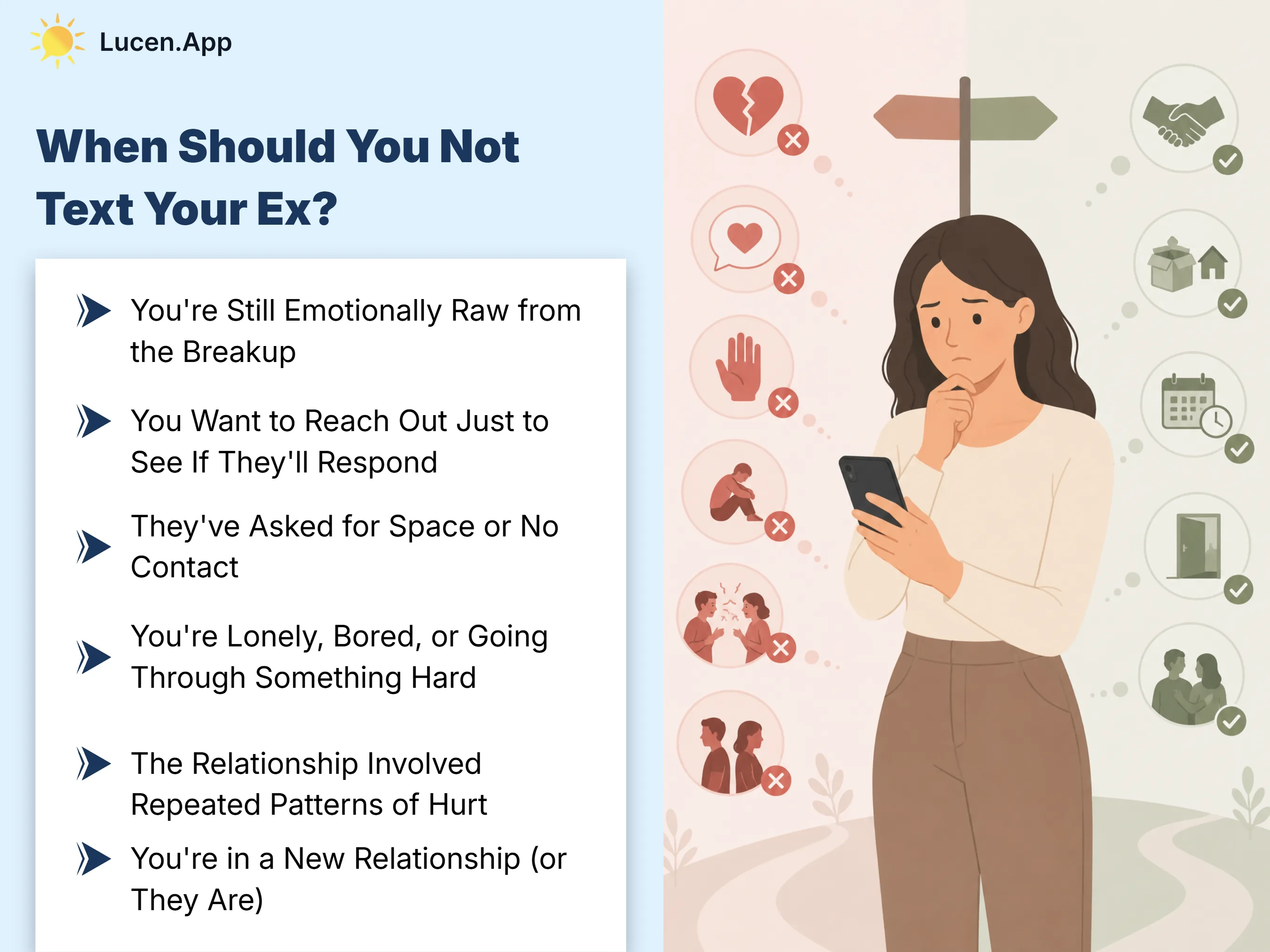
Do not text your ex in the following situations:
You're Still Emotionally Raw from the Breakup
Texting your ex should be avoided when the breakup still feels fresh and emotionally overwhelming. Strong emotions can lead to impulsive messages, unrealistic expectations, and renewed emotional pain. Instead of reaching out, give yourself time to process the loss and regain emotional stability. Decisions made during intense emotional periods rarely support long-term healing or recovery.
You Want to Reach Out Just to See If They'll Respond
Avoid texting your ex when your main goal is to check whether you still have their attention or emotional interest. Sending a message for this reason places your emotional well-being in their hands and can create unnecessary anxiety. If they do not respond, the experience can increase disappointment and self-doubt. Focus on your own well-being instead of seeking emotional confirmation.
They've Asked for Space or No Contact
Avoid contacting your ex if they have clearly requested space or a period of no contact. Respecting their boundaries demonstrates emotional maturity and allows both people time to heal. Ignoring this request can create tension, damage trust, and make future communication more difficult. Give them the distance they have explicitly asked for.
You're Lonely, Bored, or Going Through Something Hard
Do not text your ex when loneliness, boredom, stress, or a difficult situation is driving the urge. In these moments, you may be seeking comfort rather than genuine connection. While reaching out can provide temporary relief, it often delays healing and reinforces emotional dependence. Address the underlying emotion before deciding to make contact.
The Relationship Involved Repeated Patterns of Hurt
It is best not to text your ex if the relationship was defined by recurring conflict, emotional pain, or unhealthy patterns. Reopening communication can revive unresolved issues and pull you back into dynamics that harmed your well-being. Prioritize healing and self-reflection instead. In most cases, maintaining distance is healthier than revisiting a relationship that repeatedly caused hurt.
You're in a New Relationship (or They Are)
Refrain from texting your ex when you or they are in a new relationship unless communication is strictly necessary for practical reasons. Reaching out can create confusion, mixed signals, or tension for current partners. Respecting the boundaries of new relationships helps build trust and allows everyone involved to move forward with greater clarity.
Should You Text Your Ex Who Dumped You?
No, you should not text an ex who ended the relationship unless your reason is clear, respectful, and emotionally neutral. Being dumped can intensify the urge to reach out because rejection often leaves unanswered questions, lingering hope, or a need for reassurance. Texting from that emotional state can delay healing, reinforce attachment, and increase emotional dependence on their response.
Before sending a message, reflect on why the breakup happened, whether you are truly ready for contact, and what you realistically expect from the conversation. Also consider whether your ex has asked for space or whether reopening communication would bring unresolved pain back rather than provide clarity. If the relationship involved repeated hurt, conflict, or broken trust, reaching out may restart unhealthy cycles. Only proceed if you can accept any outcome without it affecting your emotional stability or self-worth.
Should You Text Your Ex After No Contact?
No, you should not text your ex immediately after completing a no-contact period. The purpose of no contact, whether it lasts 30, 45, or 90 days, is to create space for healing, emotional clarity, and personal growth, rather than to serve as a countdown to reconnect. Reaching out too soon can reignite old feelings, create false hope, and disrupt the progress you have made.
Before sending a message, evaluate your emotional state and motivation. Consider texting only if you feel fully healed, have no expectations about their response, and are prepared to accept any outcome, including rejection or silence. If you are still hoping a text will lead to reconciliation, validation, or closure, it is usually better to wait. Contact should come from acceptance and clarity, not emotional need or lingering attachment.
Should You Respond When Your Ex Texts You?
No, you do not have to respond when your ex texts you, as it depends on your emotional state, the purpose of the message, and your personal boundaries. If you are still healing from the breakup, trying to move on, or following a no-contact rule, replying may reopen old wounds and slow your progress. It is usually best not to respond to vague messages, late-night check-ins, guilt-tripping comments, or texts that appear designed to test whether you are still available.
You can consider responding when the message is respectful, necessary, and aligned with your well-being. Practical matters involving shared responsibilities, property, finances, pets, or children may require communication. A reply may also be appropriate if enough time has passed and you feel emotionally neutral. Keep your response brief, clear, and free from expectations, resentment, or attempts to restart the relationship.
How Should You Text Your Ex If You Decide to Reach Out?
If you decide to reach out to an ex, keep the text short, casual, and low-pressure, and avoid emotional or heavy statements. Focus on a clear, neutral purpose rather than expressing feelings or revisiting the past. Be prepared for any outcome, including no response, and treat silence as a valid answer. This approach keeps communication simple, reduces emotional pressure, and helps maintain healthy boundaries.
Here is how you should text your ex if you decide to reach out:
Keep It Short and Low-Stakes
Keep your message short, neutral, and easy to respond to, as a simple check-in or practical question is often more appropriate than a lengthy explanation. Brief messages reduce emotional pressure and help avoid misunderstandings. The goal is to open communication respectfully, not to revisit the relationship or force a deeper conversation.
Don't Lead with Emotion
Avoid opening with statements about loneliness, regret, heartbreak, or how much you miss them. Emotional messages can create pressure and signal unresolved feelings, making the conversation uncomfortable for both people. Instead, focus on a clear and neutral purpose. This approach supports healthier communication and respects both your boundaries and theirs.
Be Ready for Silence and Be Okay With It
Accept that your ex may choose not to respond, and view that outcome as a valid response rather than a personal rejection. Sending a message should not depend on receiving a reply. Being emotionally prepared for silence helps protect your well-being, reduces disappointment, and prevents the urge to send additional messages seeking attention or reassurance.
Know What You'll Say If They Respond
Think ahead about how you will respond before sending the first message. Preparing for positive, negative, or neutral replies helps you stay calm and avoid emotional reactions. Keep your responses respectful, measured, and consistent with your original purpose. Having a plan in place makes it easier to maintain healthy boundaries throughout the conversation.
Should You Call Your Ex Instead of Texting?
No, you should not call your ex unless the situation is urgent, complex, or cannot be handled effectively through text. If you need time to think, texting is usually the better option because it allows for more thoughtful communication. Avoid calling when emotions are high or when your goal is to force a response. In most cases, texting creates less pressure, respects boundaries, and reduces the risk of emotional misunderstandings.
Call your ex if:
- There is an emergency or time-sensitive situation.
- You share responsibilities involving children, pets, property, or finances.
- The issue is complex and difficult to explain through text.
- Immediate clarification is needed to avoid misunderstandings.
Text your ex if:
- You need time to think before responding.
- The conversation is brief or practical.
- You want to maintain emotional boundaries.
- The matter is not urgent and can wait for a response.
- You are unsure whether a conversation is necessary and want a lower-pressure form of communication.
How Can Chat Analysis Help You Decide Before Texting Your Ex?
Chat analysis helps you make a more informed decision before reaching out to your ex by separating facts from emotions. When considering texting an ex, feelings like loneliness, nostalgia, curiosity, or hope can cloud judgment. Reviewing past conversations helps you identify communication patterns, unresolved conflicts, and relationship dynamics that may not be clear in the moment. This objective view can show whether reconnecting supports your well-being or risks reopening old emotional wounds.
It can also reveal one-sided effort, unhealthy communication cycles, and emotional triggers that shaped the relationship. Using a chat analyzer to review message frequency, response times, balance of effort, and conflict patterns can help you spot whether you often initiate contact or invest more emotionally. Understanding these patterns encourages more self-aware, thoughtful decision-making rather than acting on impulse, driven by temporary emotions or longing.