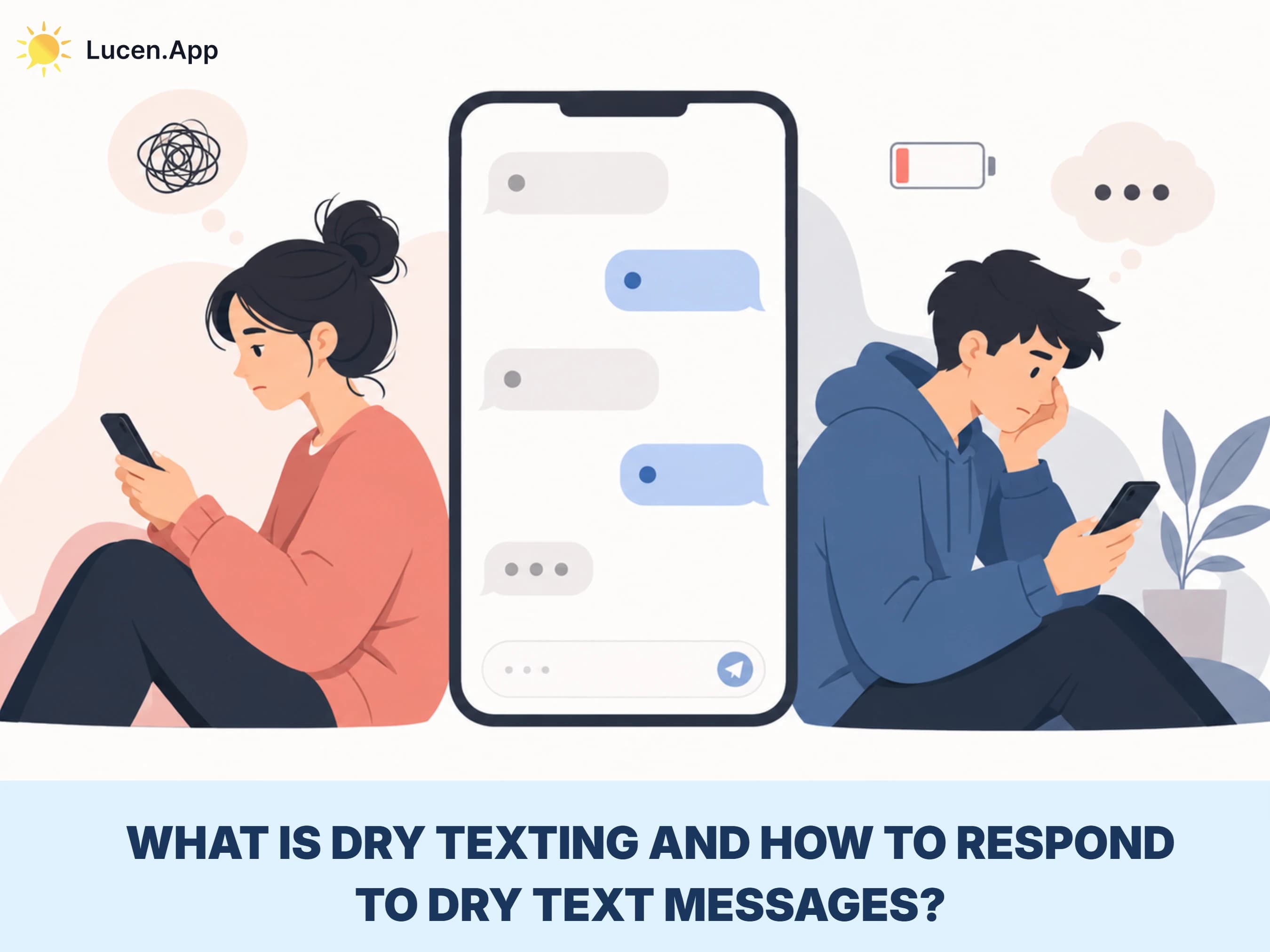
Dry texting is a communication style in which someone consistently sends short, low-effort messages, making conversations difficult to maintain. While an occasional one-word reply is completely normal, repeatedly responding with messages like "ok," "yeah," or "k" without adding context, emotion, or follow-up questions can leave the other person feeling ignored or responsible for carrying the entire conversation.
At the same time, dry texting does not automatically mean someone has lost interest. Factors such as a busy schedule, stress, personality differences, and individual texting habits can all influence how people communicate over text.
A single dry text rarely tells the whole story because texting habits are shaped by context, personality, and communication style. Understanding the common signs, examples, underlying reasons, and communication patterns behind dry texting makes it easier to respond appropriately, avoid unnecessary misunderstandings, and build more balanced, engaging conversations.
What Is Dry Texting?
Dry texting is a communication style where someone sends short, low-effort messages that make conversations difficult to continue. Rather than judging a single reply, dry texting is identified by a consistent pattern of minimal engagement across multiple messages. Common signs include one-word answers, generic acknowledgments, brief responses, and a lack of follow-up questions or emotional cues that keep conversations moving.
Unlike someone who simply prefers concise texting, a dry texter repeatedly contributes very little to the discussion. A naturally brief texter may still ask questions, share opinions, and show genuine interest, whereas dry texting often leaves the other person carrying the conversation. This difference is why dry texting is associated with low engagement and stalled conversations rather than message length alone.
What Are The Common Signs of Dry Texting?
The most common signs of dry texting include one-word replies, single-letter responses, short yes-or-no answers, generic acknowledgments, emoji-only messages, delayed but brief replies, no follow-up questions, one-sided conversation effort, and replies that ignore the context. These texting patterns often make conversations feel forced because they provide little opportunity for the other person to respond or keep the discussion moving.
12 common signs of dry texting are:
One-word or minimal replies
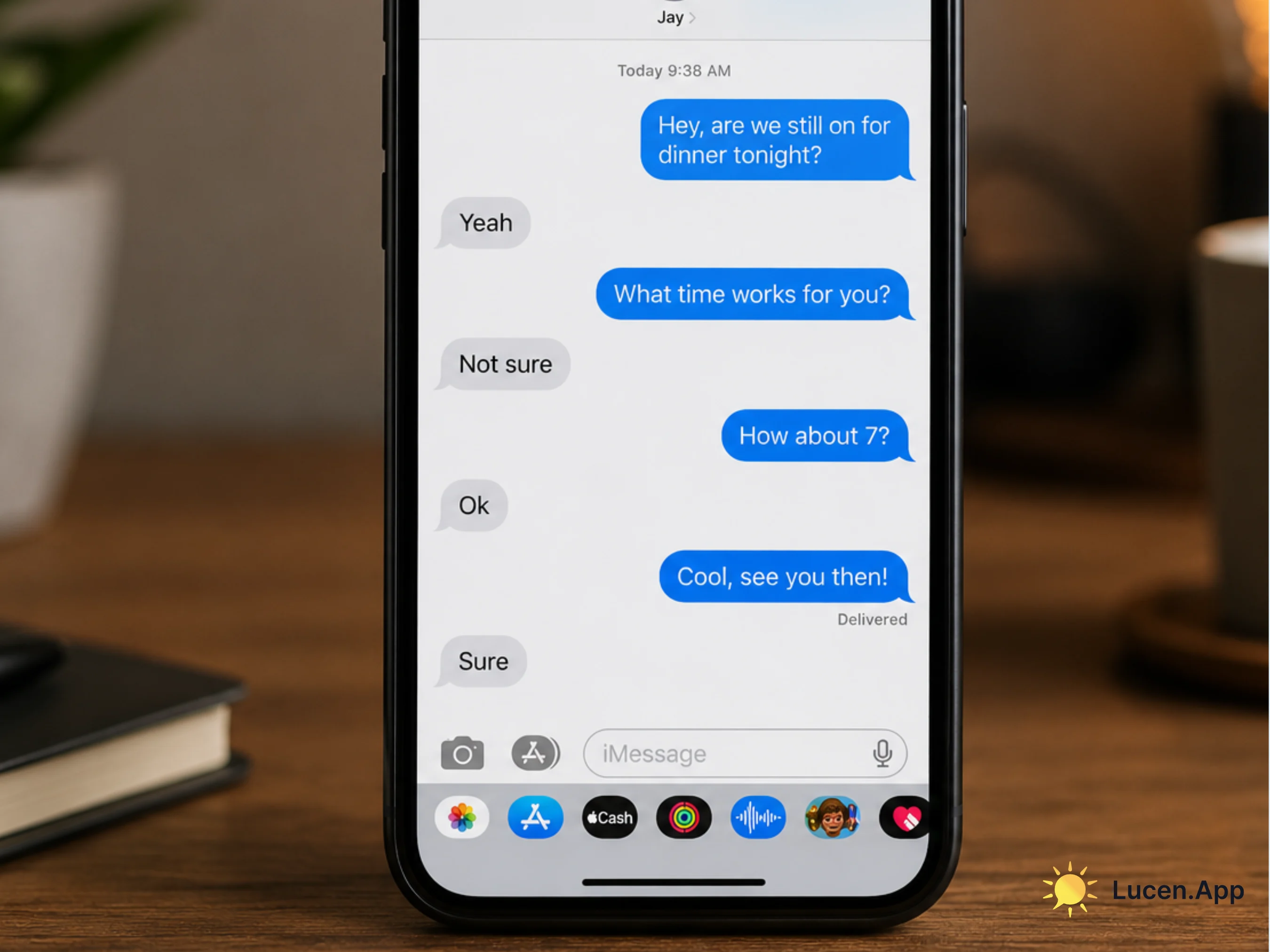
Replying with only one or two words often signals low conversational effort because it gives the other person very little to respond to. Text messages like "ok," "yeah," "fine," or "sure" answer the question but rarely add context, opinions, or new information. Since these replies do not create another direction for the discussion, the recipient has to think of the next question or topic. Over time, this texting pattern can make conversations feel one-sided and leave the impression that the sender is uninterested, distracted, or emotionally unavailable.
Single-letter replies
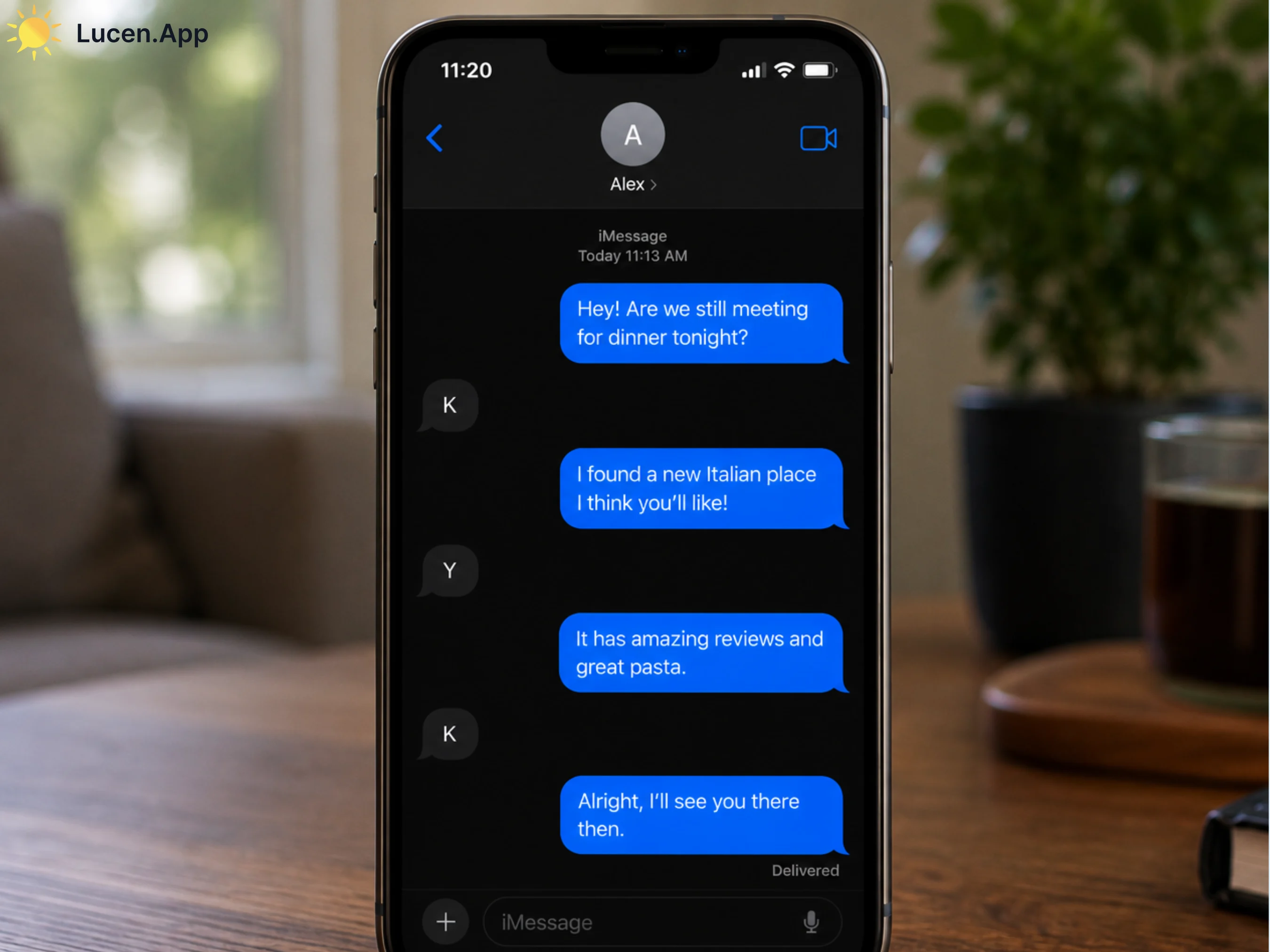
Using a single letter, such as "K" or "Y," is one of the briefest forms of dry texting and often communicates minimal investment in the conversation. While the sender may simply be in a hurry, these replies can easily come across as abrupt because they acknowledge the message without adding any personality or engagement. Since single-letter responses rarely invite a reply, they often naturally end the conversation and are widely recognized as a classic example of dry texting.
Short yes-or-no answers
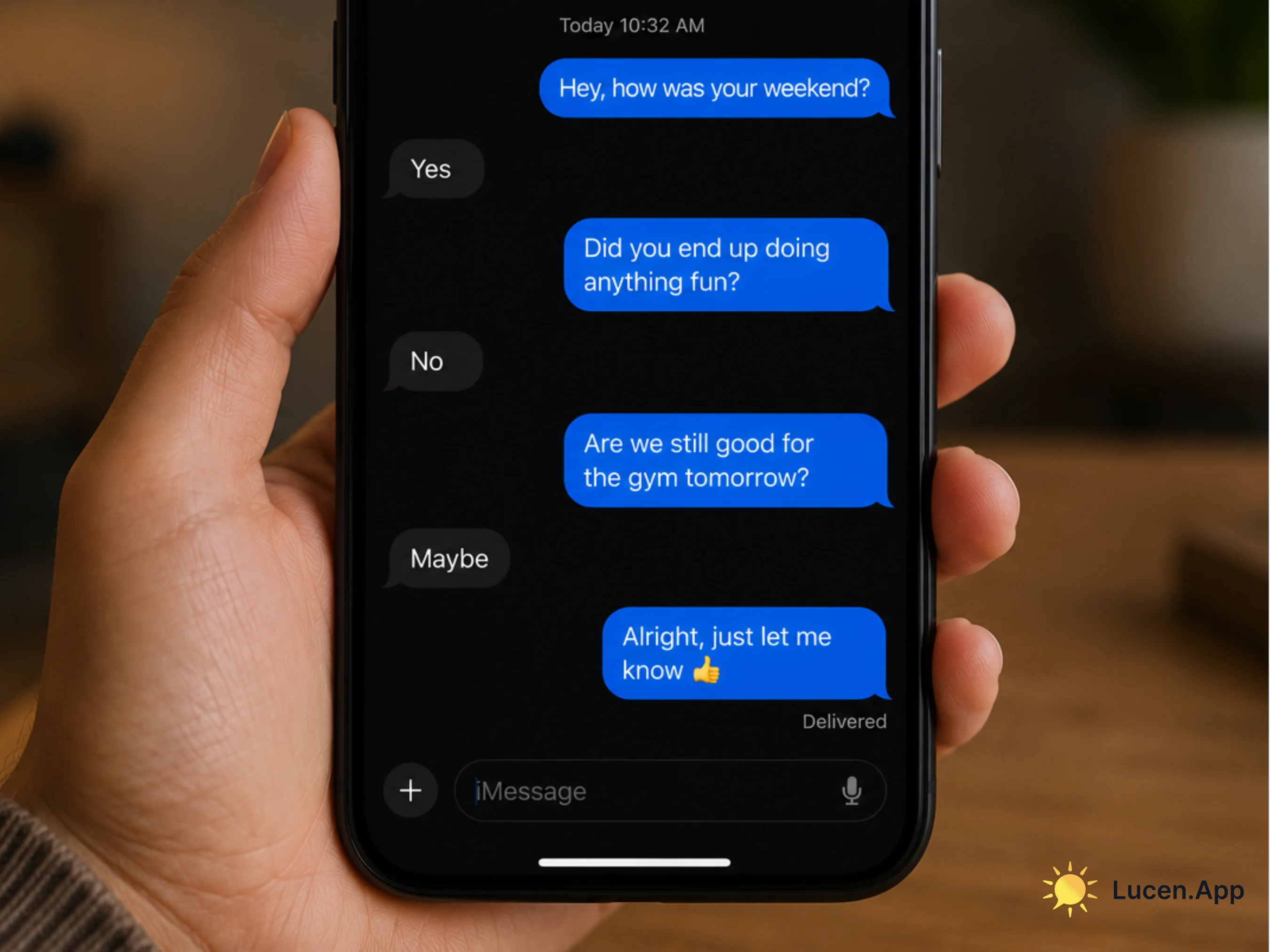
Answering with only "yes," "no," or "maybe" provides a direct response but does little to keep the conversation moving. Instead of expanding on the answer or offering additional details, the sender leaves the recipient with no clear way to continue the discussion. For example, replying "yes" to "Did you enjoy the movie?" ends the exchange much faster than explaining what was enjoyable about it. When this becomes a repeated habit, conversations often lose depth and engagement.
Generic acknowledgments
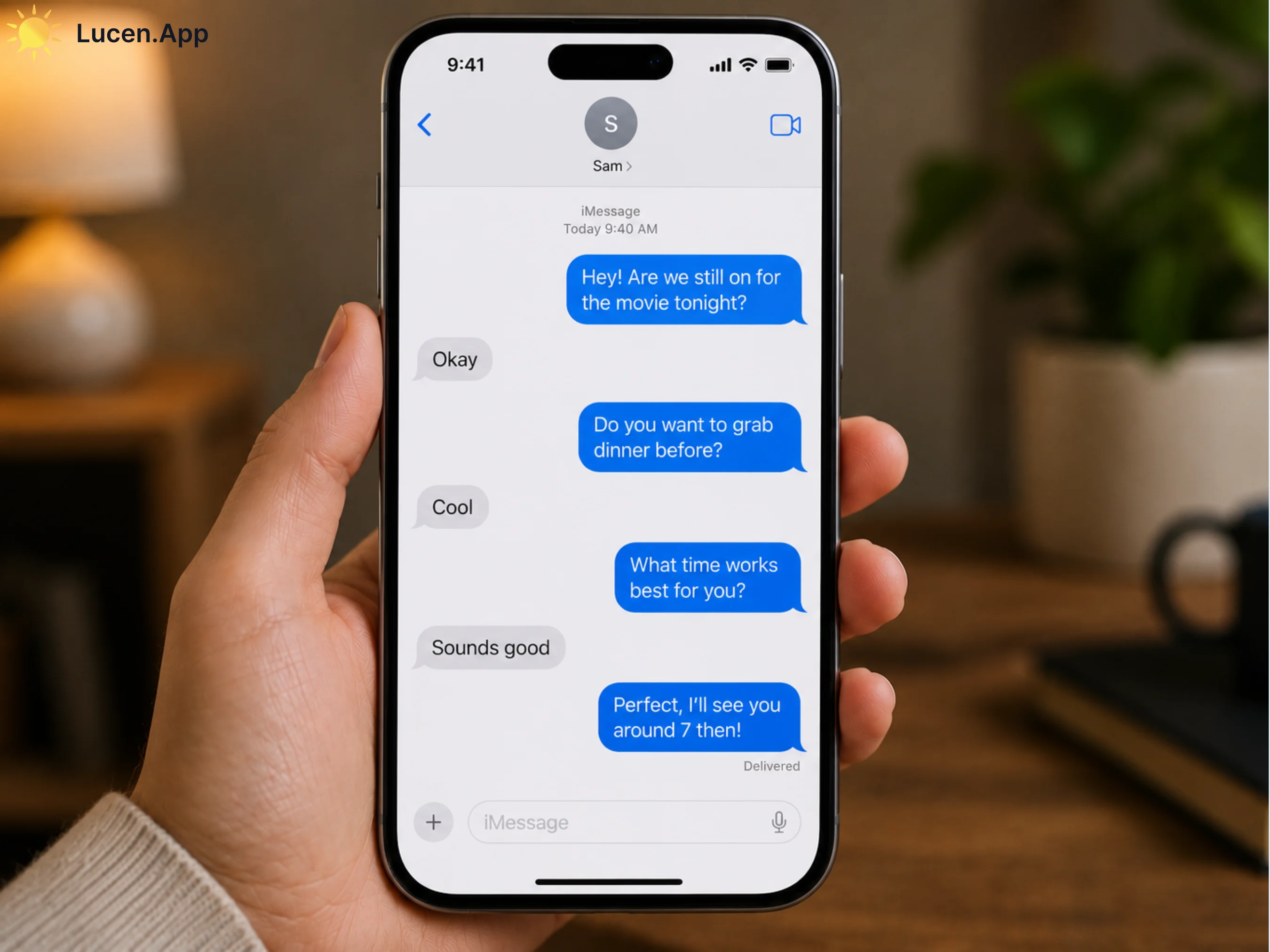
Simple acknowledgments such as "got it," "okay," "cool," or "sounds good" confirm that a message has been read without contributing anything meaningful in return. These responses are perfectly normal when used occasionally, especially to acknowledge instructions or plans. The problem arises when they become the default reply throughout a conversation because they neither express an opinion nor encourage further discussion. This repetitive pattern can make texting feel mechanical instead of conversational.
Emoji-only responses
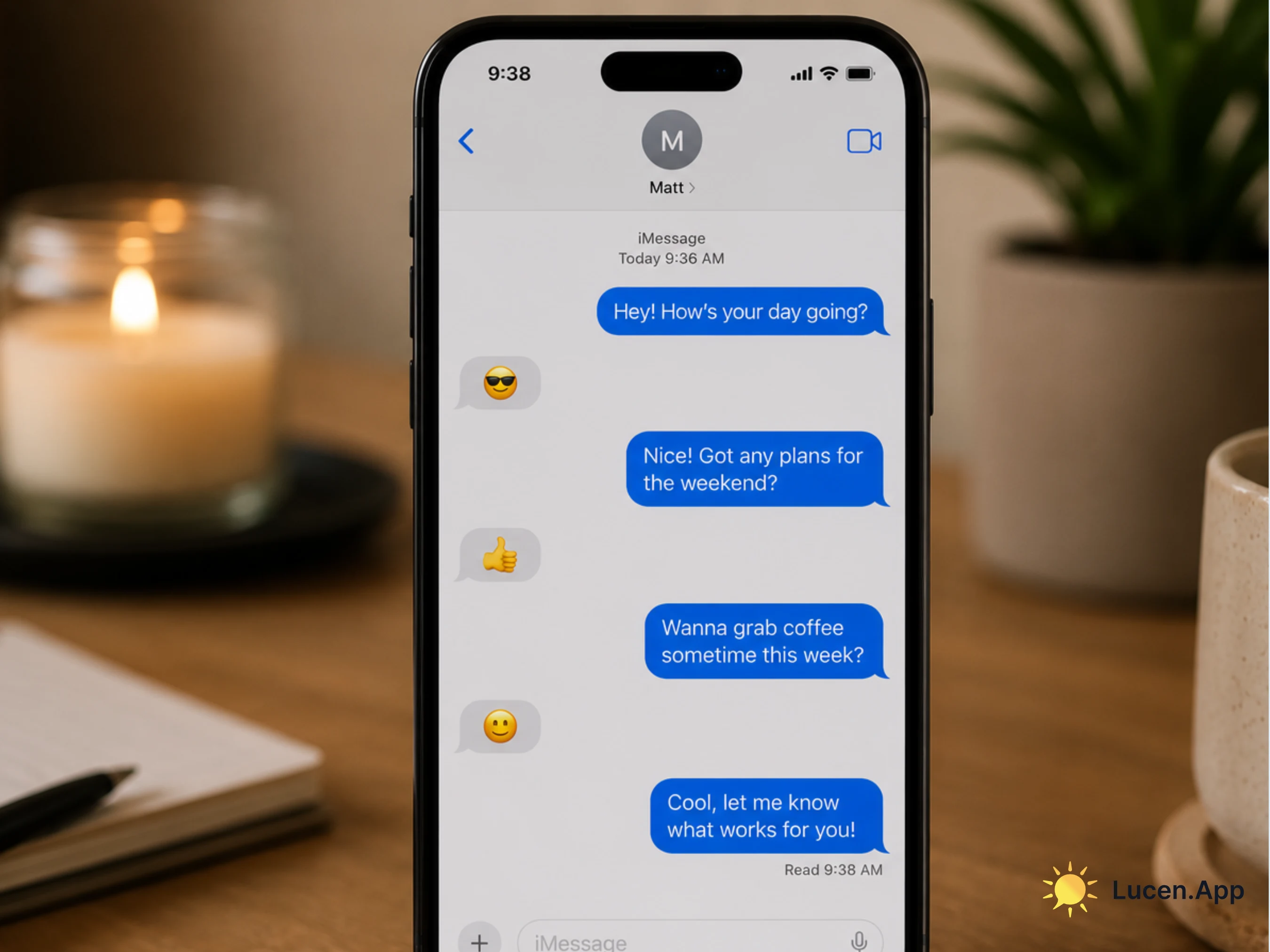
Responding with only an emoji may communicate a basic reaction, but it rarely provides enough information to keep a conversation flowing. An emoji can acknowledge a message, express agreement, or react to something funny, yet it leaves the recipient with little to build on. While emojis work well alongside written responses, relying on them alone repeatedly often creates the impression of low effort and limited interest in continuing the conversation.
Delayed but brief replies
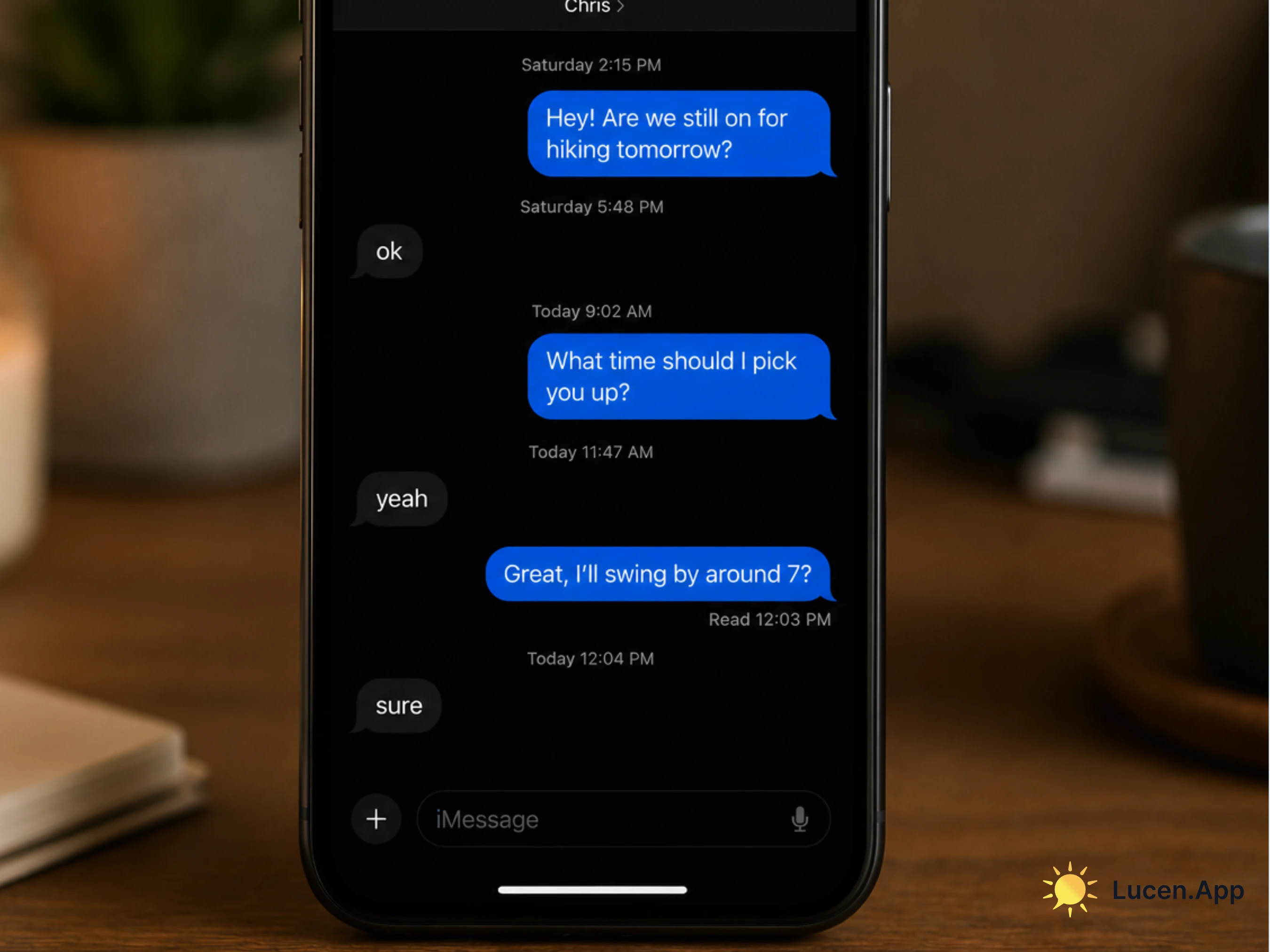
Taking hours to reply does not automatically mean someone is dry texting because people often get busy with work, school, or personal commitments. The concern arises when a delayed response is followed by a brief message such as "ok," "yeah," or "sure" that provides no explanation or follow-up. The combination of long response times and minimal engagement can make conversations feel disconnected and leave the other person wondering whether the interaction is still important.
No follow-up questions
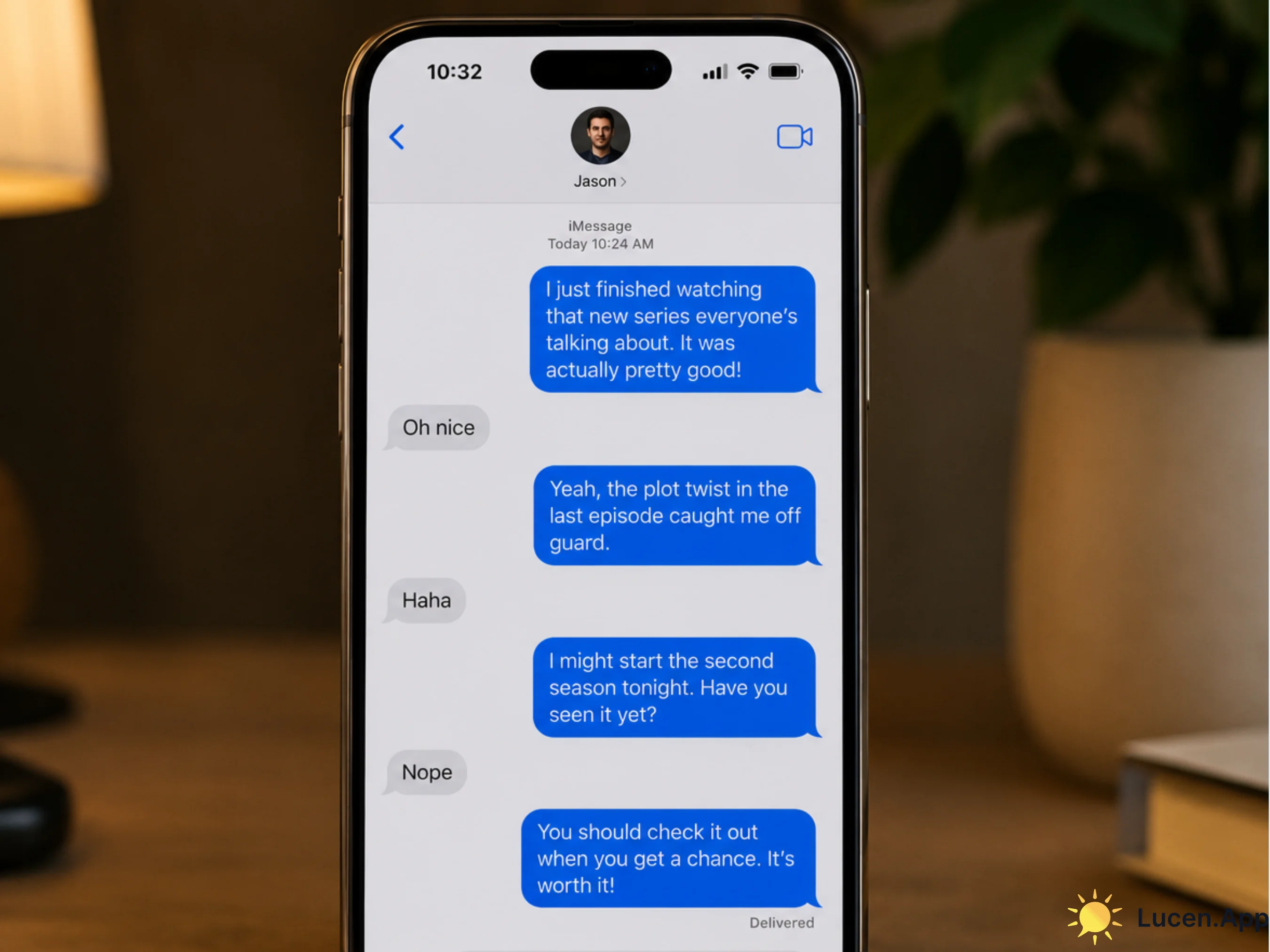
Showing curiosity is one of the easiest ways to keep a conversation alive, which is why the absence of follow-up questions is a common sign of dry texting. Even after receiving detailed messages or personal stories, a dry texter often replies without asking anything in return. This forces one person to keep introducing new topics while the other simply responds. Over time, the exchange becomes unbalanced because only one participant is actively investing in the conversation.
One-sided effort
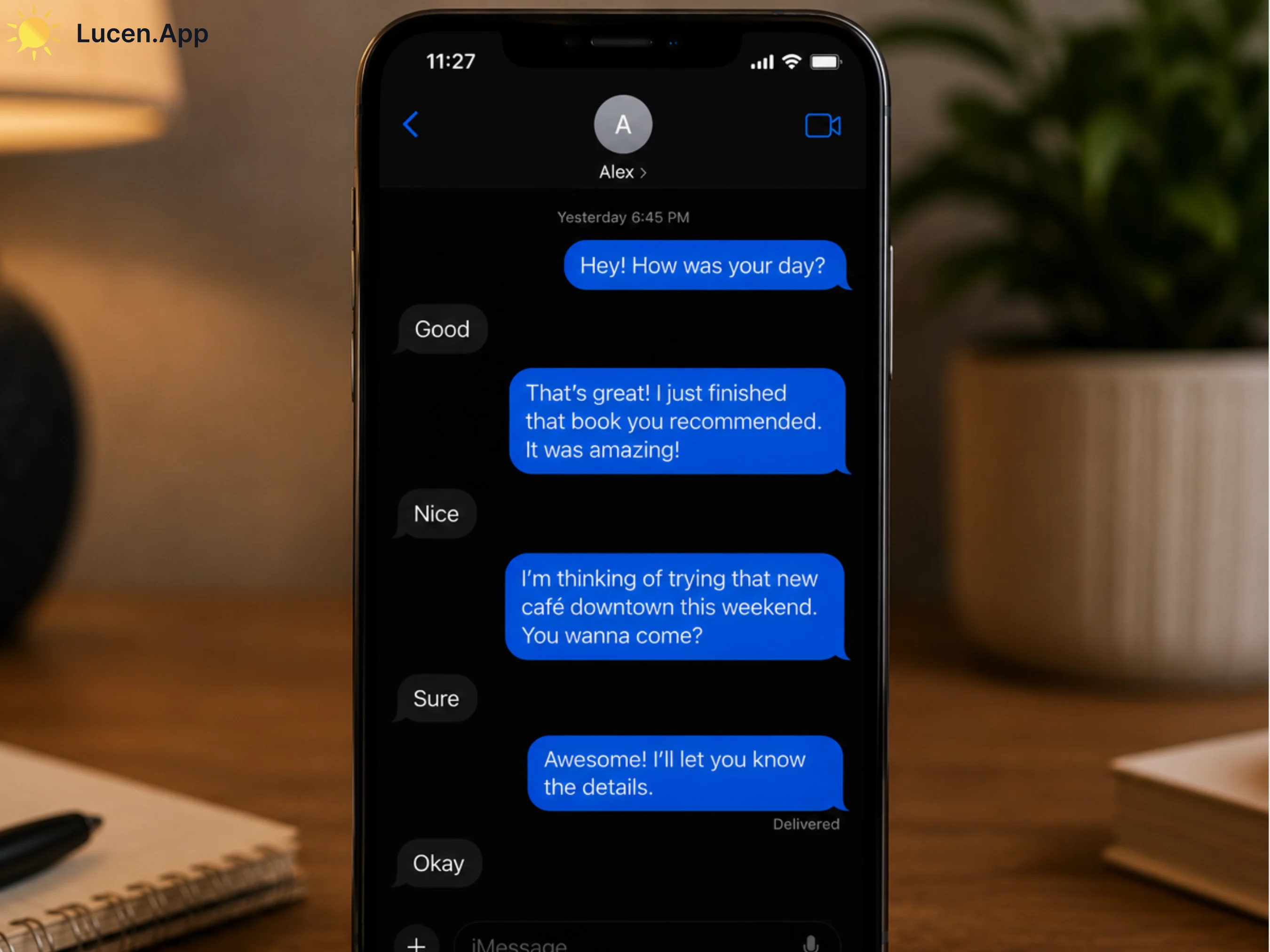
A conversation becomes one-sided when only one person consistently starts topics, asks questions, and keeps the discussion moving. The other participant contributes only short replies without making an effort to continue the interaction. This imbalance gradually creates frustration because meaningful conversations rely on mutual participation. When one person repeatedly carries the entire exchange, the conversation often loses its natural rhythm and eventually fades.
Replies that ignore context or topics
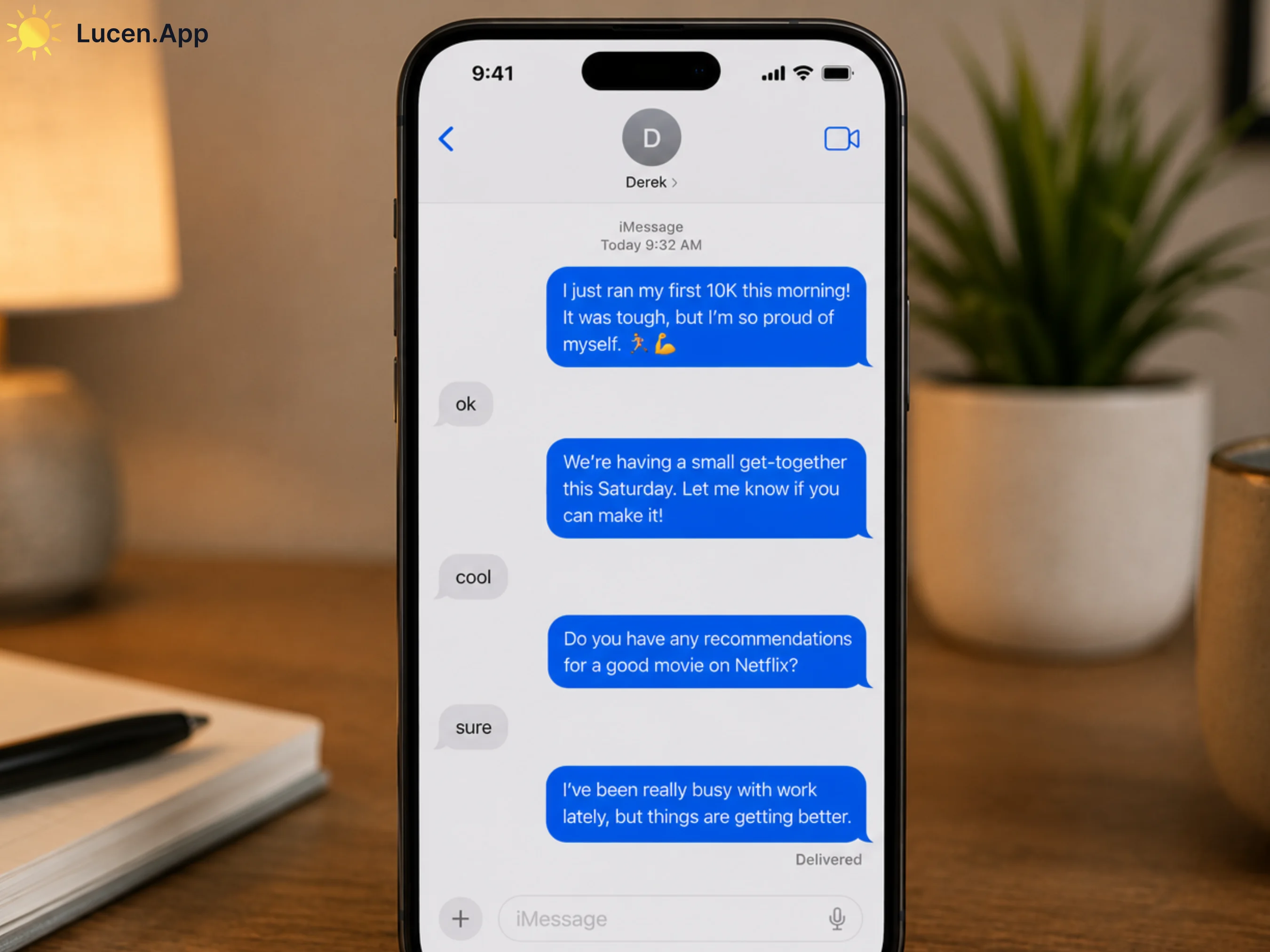
Ignoring the context of a message makes conversations feel disconnected because the response does not acknowledge what was actually said. For example, replying "ok" after someone shares an exciting achievement or overlooking a question entirely can make the sender feel unheard. These responses suggest that little attention was given to the message, making the interaction seem less personal and reducing the quality of the conversation.
Vague or indifferent replies
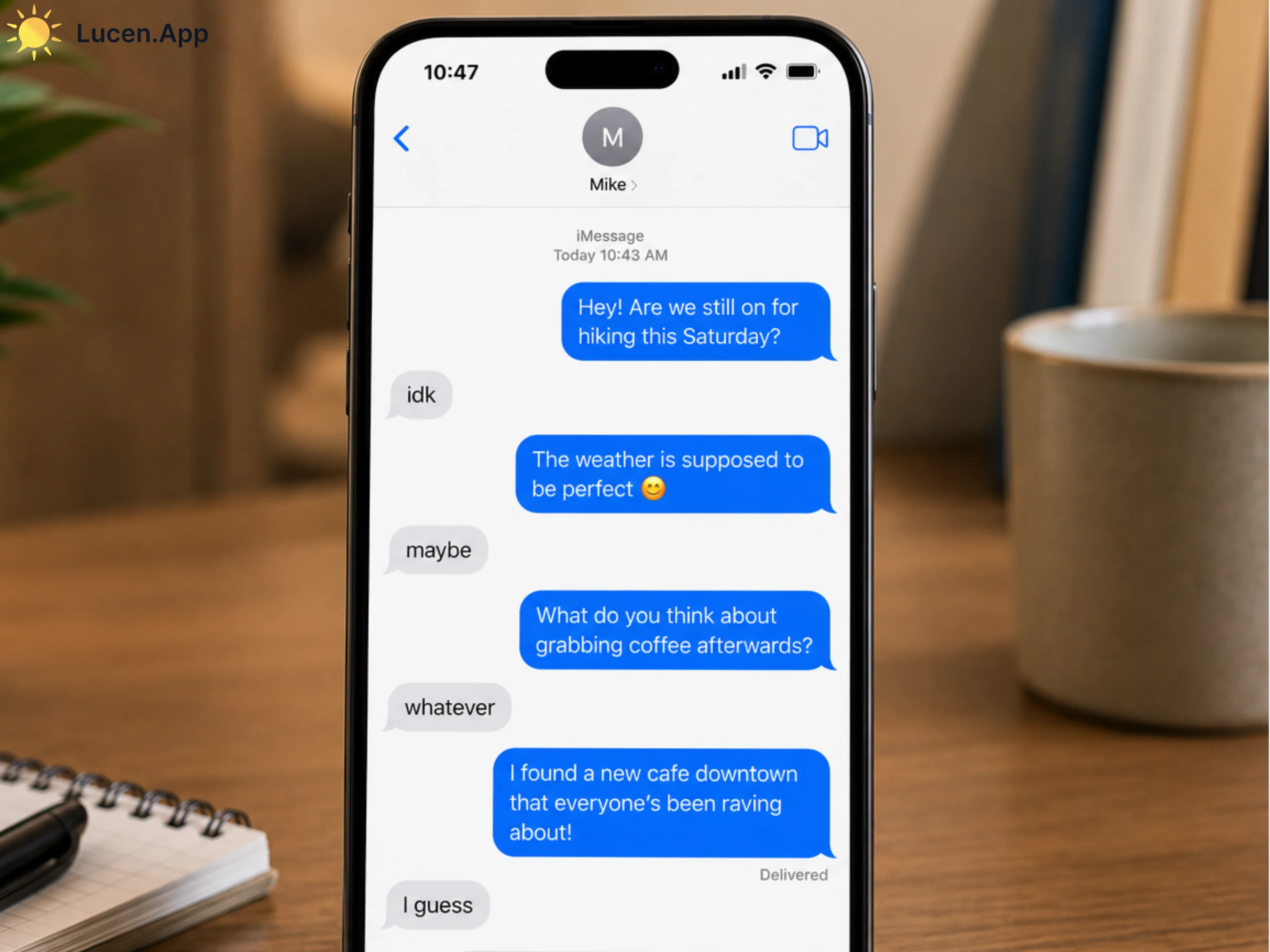
Replies such as "idk," "whatever," "maybe," or "I guess" reveal very little about what the sender actually thinks or feels. Instead of expressing a clear opinion, these responses leave the conversation uncertain, with no obvious direction for how to continue. When used repeatedly, vague replies can signal hesitation, emotional distance, or a lack of interest, making it difficult to build a meaningful discussion.
Flat tone
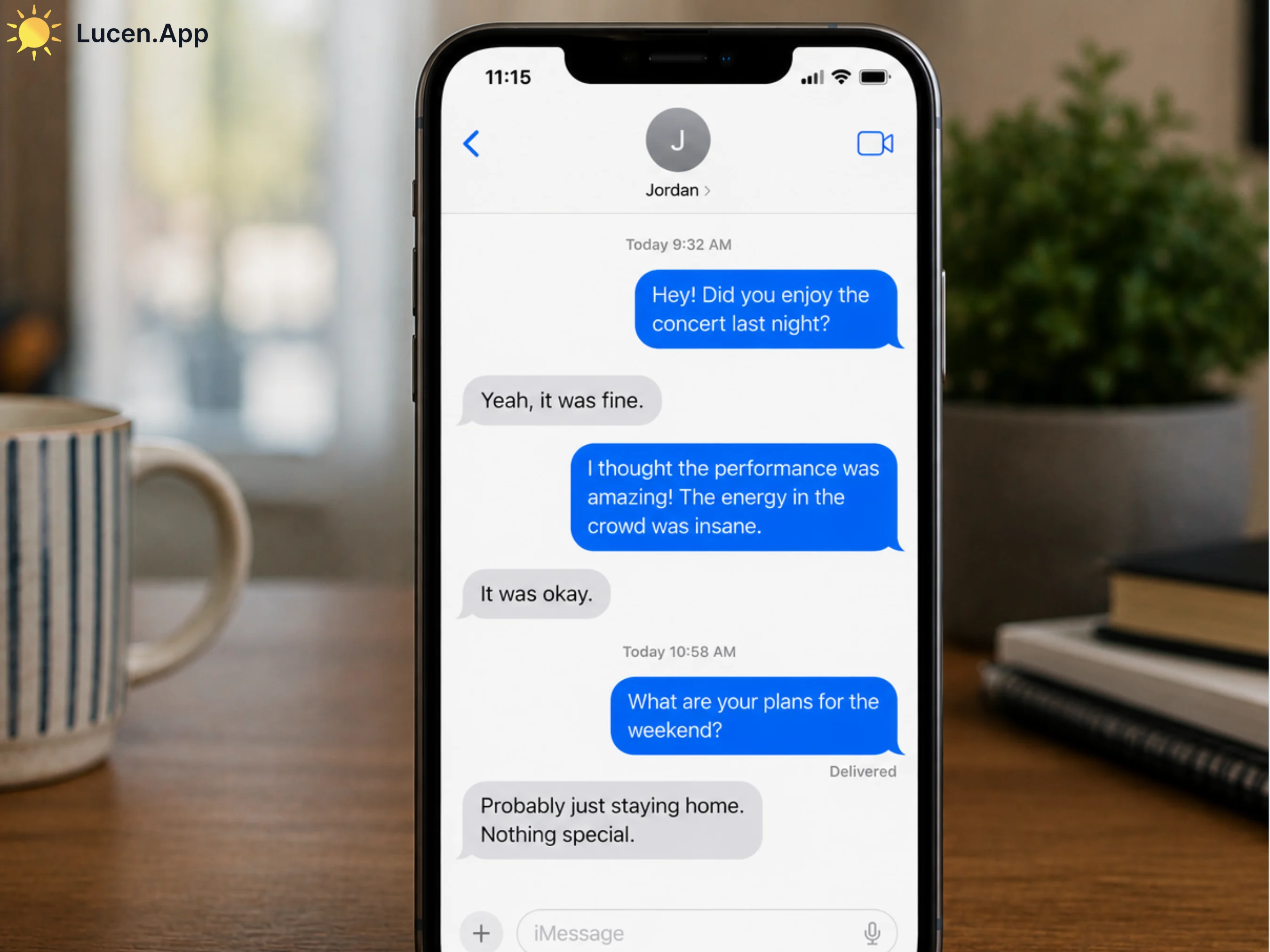
A conversation can feel dry even when the replies are longer if they consistently lack emotion, enthusiasm, or personality. Messages written in a neutral tone without expressive language, reactions, or variation often make interactions seem cold and formal. Since texting relies heavily on wording to convey emotion, a consistently flat tone can make it harder for the other person to understand genuine interest or excitement.
Conversation-ending messages
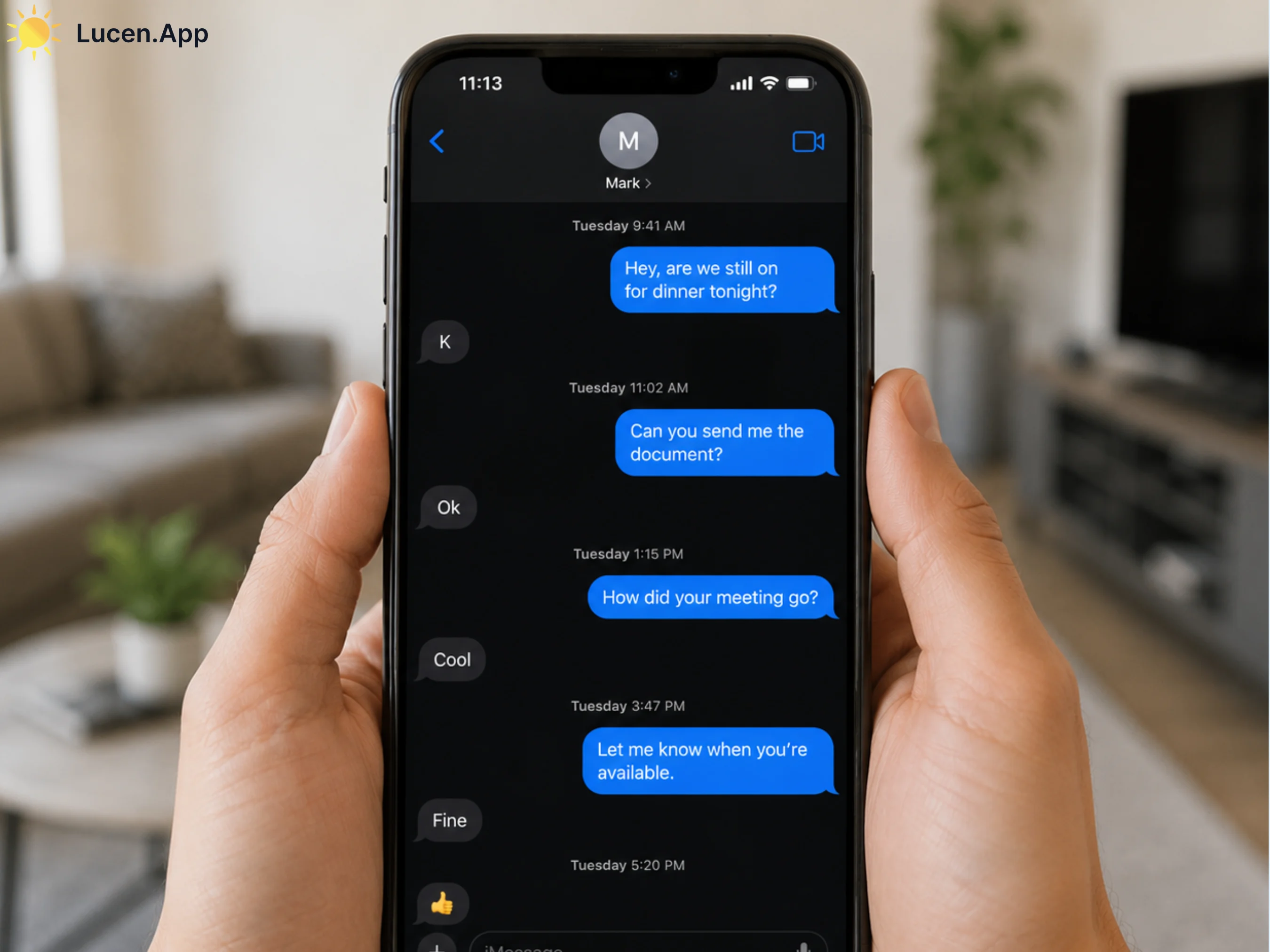
Some responses naturally bring a conversation to a stop because they leave no clear opportunity for the other person to continue. Messages such as "K," "Ok," "Cool," "Fine," or a single emoji acknowledge what was said but rarely invite another exchange. Used occasionally, they are harmless. Used repeatedly, they become a strong indicator of dry texting because they consistently end the flow of conversation instead of encouraging it.
What Are Common Examples of Dry Texting?
Common examples of dry texting include "K," "Ok," "Yeah," "Sure," "Fine," "Cool," "Lol," "Haha," "Maybe," "I guess," "Idk," "Nothing much," "Same," "If you say so," and emoji-only replies, all of which can make conversations feel less engaging when used repeatedly. Although these responses are not always negative on their own, consistently relying on them provides little for the other person to respond to, making the conversation feel one-sided or stalled.
Here are the 15 common examples of dry texting:
- "K": Often considered the driest text reply, "K" acknowledges a message with the least possible effort. Although it simply means okay, reducing a response to a single letter can make it feel abrupt or dismissive, especially during an active conversation. Since it provides no emotion, context, or follow-up, the recipient has little to respond to. While close friends may use it casually, repeatedly replying with K often signals disengagement or a desire to end the conversation.
- "Ok": Although it confirms that a message has been understood, "Ok" can become a dry reply when it consistently replaces meaningful conversation. It acknowledges what was said without adding an opinion, asking a question, or advancing the discussion. Used occasionally, it is perfectly natural. Used repeatedly, it can make conversations feel transactional because the other person is left to introduce the next topic.
- "Yeah": As a standalone response, "Yeah" communicates agreement but rarely adds enough information to keep the conversation flowing. It answers the immediate question without sharing thoughts, experiences, or additional details that encourage further discussion. When almost every reply follows this pattern, the conversation can feel one-sided, with only one person making an effort to sustain the interaction.
- "Sure": Used on its own, "Sure" expresses agreement without revealing much enthusiasm or personal interest. While it confirms willingness, it does little to show how the sender actually feels about the topic. Adding a brief explanation or comment creates a more engaging exchange, whereas relying on "Sure" alone throughout a conversation often contributes to a low-effort texting style.
- "Fine": Depending on the context, "Fine" can sound neutral, reluctant, or emotionally distant, even when it answers the message. Unlike responses that explain how someone feels, it offers little emotional clarity or conversational value. If this becomes the default reply to different topics, it can make the interaction feel cold and discourage the other person from continuing the discussion.
- "Cool": In casual conversations, "Cool" acknowledges what was said but rarely creates an opportunity to continue talking. It works well as a quick reaction to good news or confirmed plans, yet using it as the only response throughout a chat adds little substance. Without another comment or question, conversations often lose momentum after this type of reply.
- "Lol": Originally used to show genuine laughter, "Lol" has gradually become a filler response in many text conversations. On its own, it reacts to a message without contributing a new thought or continuing the topic. Although it softens the tone and feels friendlier than a simple "Ok," repeatedly replying with only "Lol" can still make conversations stall because there is nothing else to build on.
- "Haha": Rather than continuing the discussion, "Haha" often serves as a quick reaction that ends the exchange unless something else follows. It lets the sender acknowledge a joke or funny story without sharing another opinion or asking a question. While perfectly appropriate as a reaction, using it as the only response throughout a conversation often signals minimal engagement.
- "Maybe": Instead of expressing a clear opinion, "Maybe" leaves the conversation open, giving the other person little to work with. It conveys uncertainty but rarely explains why, making it difficult to understand what the sender actually thinks. Repeated vague replies like this can make conversations feel hesitant and less engaging.
- "I guess": When used to express uncertainty or reluctant agreement, "I guess" often sounds less enthusiastic than a confident response. The phrase acknowledges the topic but stops short of offering a clear opinion or explanation. Without additional context, it can create the impression that the sender is only participating out of obligation rather than genuine interest.
- "Idk": When used as a complete reply, "Idk" answers the question but usually provides no opportunity to continue the discussion. There are many situations where someone genuinely does not know the answer, but ending the response there often stops the conversation. Adding another thought, suggestion, or question gives the other person something meaningful to respond to.
- "Nothing much": As a response to questions like "What's up?" or "What are you doing?", "Nothing much" is a common and perfectly normal reply. It becomes a dry text when it is not followed by another update, question, or topic that keeps the conversation moving. A simple follow-up, such as asking what the other person is doing, can completely change how the response is perceived.
- "Same": Rather than contributing a new thought, "Same" simply mirrors what the other person has already said. While it shows agreement or shared experience, it adds very little new information to the conversation. Repeating this response throughout a chat can make the interaction feel repetitive because neither person introduces fresh ideas.
- "If you say so": Instead of showing genuine agreement, "If you say so" often comes across as passive, reluctant, or emotionally detached. The phrase may suggest that the sender is accepting the other person's opinion without fully believing or supporting it. Depending on the context, it can even sound dismissive, making it one of the more negative examples of dry texting.
- Emoji-Only Replies: Relying on a single emoji instead of words may acknowledge a message, but it rarely provides enough substance to continue the conversation. Reactions through emojis communicate emotion quickly, yet when used repeatedly, they replace meaningful discussion with minimal effort. Emojis work best alongside text rather than as a complete response, especially when someone is trying to have a genuine conversation.
Why Do People Dry Text?
People dry text when they have a busy schedule or distractions, low interest in the conversation, boredom with repetitive topics, a habit of short texting, an introverted or anxious communication style, stress or emotional overwhelm, relationship problems or unresolved conflict, and passive aggression. While dry texting is often associated with disinterest, the reasons behind it vary from person to person and depend on both the situation and their communication habits.
Common reasons why people dry text include:
- Busy schedule or distractions: Being busy or distracted is one of the most common reasons people dry text, as they may not have the time or mental energy for a full conversation. Work deadlines, classes, family responsibilities, or multitasking often lead to brief replies like "ok," "yeah," or "I'll reply later." In these situations, the short response reflects limited availability rather than a lack of interest. Once they are free, many people naturally return to longer and more engaging conversations.
- Low interest in the conversation: A lack of interest often leads to dry texting because the person feels little motivation to engage in the discussion. Instead of asking questions or expanding on their replies, they usually respond with the shortest answer possible to acknowledge the message. When this pattern continues across different topics, it may suggest they're disengaged from the conversation or no longer interested in maintaining it.
- Bored or repetitive conversation: Conversations that revolve around the same topics every day can gradually lose their appeal, even between people who enjoy talking to each other. When there is nothing new to discuss, replies often become shorter because the conversation no longer feels stimulating. Changing the subject, asking thoughtful questions, or introducing a new experience can often revive engagement.
- Habit of short texting: Some people naturally prefer concise communication and see texting as a tool for exchanging information rather than holding long conversations. Their replies remain brief regardless of who they're talking to, whether it's a friend, family member, or partner. Looking at how they communicate with others can help determine whether their short replies reflect personality rather than disinterest.
- Introverted or anxious communication style: Not everyone finds it easy to express themselves through text messages. Introverted individuals or those with social anxiety may spend more time thinking about what to say, leading them to send shorter, simpler replies. In many cases, they communicate much more openly during phone calls or face-to-face conversations than they do over text.
- Stress or emotional overwhelm: High levels of stress or emotional exhaustion can reduce a person's ability to engage in conversations, even with people they care about. When someone is dealing with work pressure, personal challenges, or mental fatigue, replying with short messages often requires less emotional effort than maintaining a detailed discussion. These changes are usually temporary and improve once the stressful situation passes.
- Relationship problems or unresolved conflict: Unresolved disagreements often change the way people communicate with one another. Instead of expressing their feelings openly, some individuals withdraw emotionally and begin replying with brief, distant messages. When dry texting appears alongside recent arguments or noticeable changes in communication, it may indicate unresolved tension that is better addressed through an honest conversation.
- Passive aggression: Some people intentionally use short or dismissive replies to express frustration without directly addressing the issue. Responses like "fine," "ok," or "whatever" can be a subtle way to express dissatisfaction while avoiding open conflict. Since these messages convey emotion indirectly, they often cause confusion and increase the likelihood of misunderstandings.
- Testing your interest and effort: In some situations, people intentionally reduce their texting effort to see whether the other person will continue the conversation or take the initiative. They may stop asking questions, shorten their replies, or wait for the other person to carry the discussion. While this behavior can reveal relationship dynamics, relying on these tests often creates unnecessary uncertainty instead of encouraging honest communication.
Is Dry Texting Always a Red Flag?
No, dry texting is not always a red flag. While consistently sending short, low-effort messages can sometimes indicate a lack of interest, it may also reflect a person's communication style, a busy schedule, stress, or a preference for face-to-face conversations. A single dry reply or even a short period of minimal texting is rarely enough to determine how someone truly feels.
Dry texting becomes more concerning when it appears alongside other behaviors, such as never initiating conversations, avoiding calls or meetups, repeatedly ignoring questions, or making the interaction entirely one-sided. Instead of judging isolated messages, look for consistent communication patterns, their willingness to spend time with you, and how they engage outside of texting. Considering the broader context provides a much more accurate picture than focusing on short replies alone.
How Do You Differentiate Between Being Busy and Being Uninterested?
You can differentiate between someone who is busy and someone who is uninterested by evaluating their communication patterns, scheduling and planning behavior, engagement during interactions, quality of conversation, willingness to initiate contact, and follow-through on commitments. A busy person usually remains invested in the relationship despite limited availability, whereas an uninterested person consistently shows little effort to communicate or maintain the connection.
Factors to consider to differentiate between being busy and being uninterested are:
- Communication Patterns: The way someone communicates often provides the clearest clue about their level of interest. A busy texter may reply late but usually explains the delay with messages like "Sorry, work has been hectic today" or "I've been in meetings all afternoon." An uninterested texter, on the other hand, tends to send delayed, low-effort replies without any context or acknowledgment. Consistently providing explanations shows consideration, whereas repeatedly offering short responses without context may indicate a lack of engagement.
- Scheduling and Plans: A person's willingness to make or reschedule plans often reveals more than their texting habits. Someone who is genuinely busy will usually suggest another time if they cannot meet, showing they still want to spend time together. An uninterested person is more likely to avoid making plans altogether, give vague answers, or repeatedly decline invitations without proposing an alternative. The effort to stay connected matters more than immediate availability.
- Engagement time: The quality of attention someone gives you when you are together can clarify whether dry texting reflects busyness or disinterest. A busy texter may seem distracted by messages but becomes fully present during phone calls, video chats, or face-to-face conversations. An uninterested person often remains detached regardless of the communication method, showing little curiosity or enthusiasm even when you spend time together.
- Quality of Interaction: Meaningful conversations are defined by the effort someone puts into engaging with the topic, not by the length of their messages. A busy texter may keep replies brief but still responds thoughtfully, remembers previous conversations, and contributes when time allows. An uninterested texter consistently offers generic or one-word replies that rarely develop the discussion, making conversations feel repetitive and one-sided.
- Initiativeness: Who starts the conversation can reveal genuine interest over time. Even when life gets busy, an interested person usually checks in, starts a conversation, or reaches out when they have the opportunity. Someone who is uninterested rarely initiates contact and often relies on the other person to keep every conversation going. When one person always makes the first move, the imbalance becomes a meaningful pattern rather than an isolated incident.
- Follow-Through: Following through on commitments is one of the strongest indicators of genuine interest. A busy texter who cancels plans will often apologize, explain the situation, and suggest another day to meet or talk. An uninterested texter is less likely to make the effort to reconnect after canceling, leaving conversations and plans unresolved. Consistent follow-through demonstrates that limited availability does not necessarily mean a lack of interest.
Does It Mean They Lost Interest When Someone Suddenly Starts Dry Texting?
No, dry texting does not necessarily mean someone lost interest. A sudden change to dry texting may also result from stress, a busy schedule, emotional overwhelm, or a preference for discussing important topics in person. Looking at one or two brief messages is rarely enough to understand someone's intentions because texting habits can change for many reasons.
Instead of focusing only on shorter replies, pay attention to their overall communication pattern. Someone who is still interested will often initiate conversations, make plans, follow through on commitments, or stay engaged during phone calls and face-to-face interactions. If dry texting is accompanied by consistently low effort across every form of communication, it is more likely to reflect a genuine decline in interest rather than a temporary change in texting behavior.
How Should You Respond to a Dry Texter?
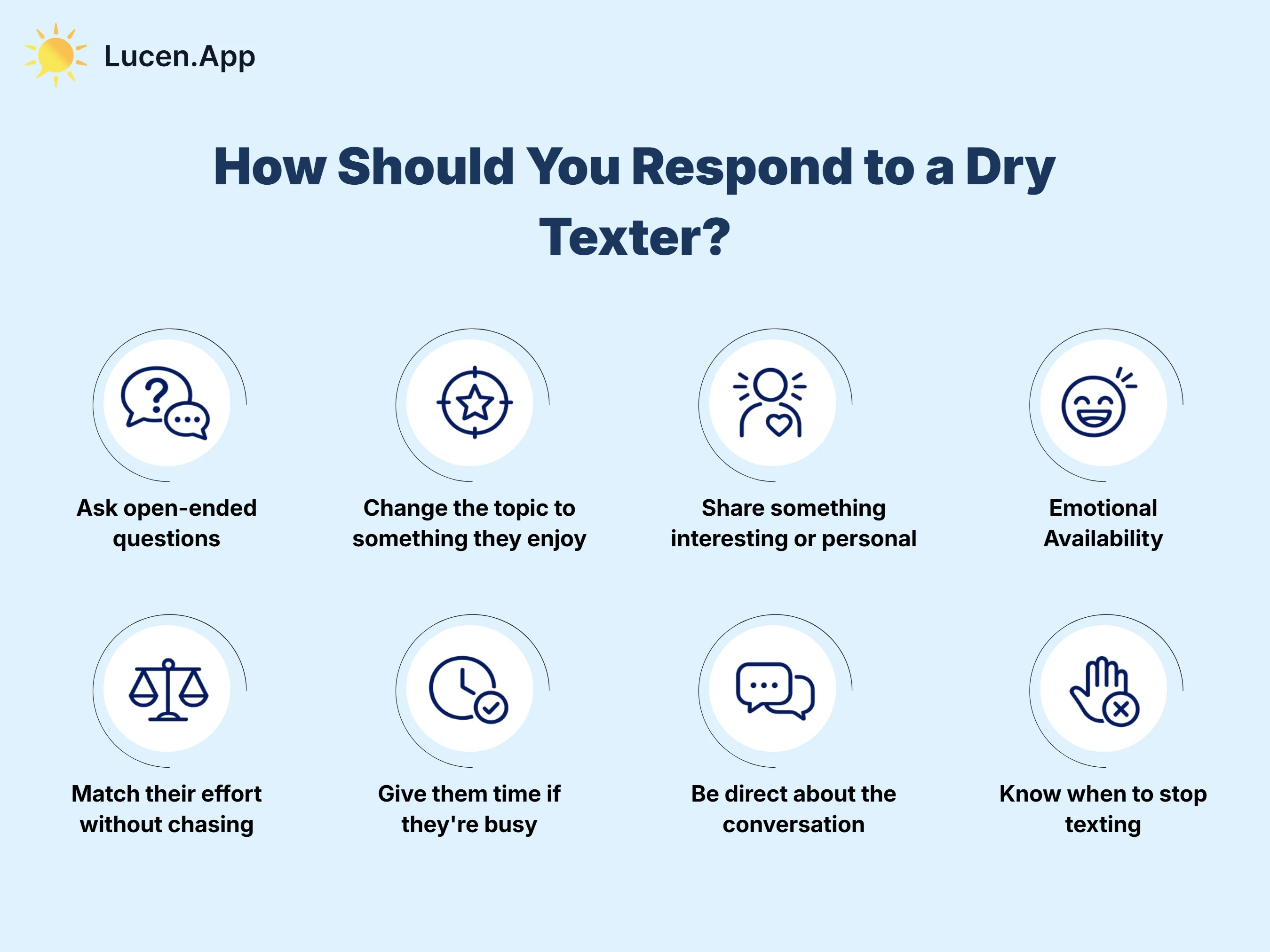
The best way to respond to a dry texter is to ask open-ended questions, change the conversation to topics they enjoy, share something interesting or personal, or use humor. You can also match their level of effort, give them time if they are busy, communicate directly when needed, and know when to stop texting if the conversation remains one-sided. These strategies help you encourage genuine engagement without overinvesting your time or repeatedly chasing someone who isn't contributing to the conversation.
- Ask open-ended questions: Questions that require more than a yes-or-no answer give a dry texter more opportunities to contribute to the conversation. Such questions encourage stories, opinions, and personal experiences rather than one-word replies. Even if someone naturally sends short messages, open-ended questions make it easier for them to respond with more detail and keep the conversation moving.
- What Questions Work Best With Dry Texters?: Questions that invite opinions, experiences, or personal preferences are usually the most effective with dry texters. Asking "What's something you've been looking forward to this week?", "What's the best meal you've had recently?" or "If you had a free weekend, how would you spend it?" gives them a chance to share more than factual answers. Since these questions have no right or wrong response, they naturally encourage longer and more engaging conversations.
- Change the topic to something they enjoy: Switching to a topic the other person genuinely enjoys can quickly increase their willingness to participate. If they regularly talk about sports, travel, gaming, music, or a favorite hobby, asking about those interests often produces more enthusiastic responses than continuing a conversation they find uninteresting. People are naturally more engaged when discussing subjects they care about, making this a simple way to revive a conversation that has become repetitive.
- Share something interesting or personal: Offering a personal story or an interesting experience gives the other person something meaningful to respond to, rather than expecting them to carry the conversation. For example, mentioning a funny situation at work or a surprising fact you recently learned creates natural opportunities for follow-up questions and discussion. Self-disclosure also builds familiarity, making it easier for both people to contribute equally to the conversation.
- Use humor or playful messages: A lighthearted comment or playful joke can break the pattern of repetitive, low-effort replies. Saying something like "You're really making me work for these conversations today!" or "I'll take that as the shortest review ever." keeps the tone friendly while encouraging a more engaging response. Humor works best when it feels natural and avoids making the other person feel criticized or pressured.
- Match their effort without chasing: Matching the other person's level of effort helps maintain healthy communication boundaries. If they're replying with short messages, avoid sending multiple long paragraphs or repeated follow-up texts to restart the conversation. Mirroring their level of engagement prevents the interaction from becoming one-sided while giving them space to contribute when they're ready. If their effort increases, you can naturally do the same.
- Give them time if they're busy: Respecting someone's schedule shows patience and avoids creating unnecessary pressure. If they mention being busy with work, school, family, or other responsibilities, give them time to respond instead of expecting immediate replies. A simple message like "No worries, we can talk when you're free." conveys understanding and allows the conversation to continue naturally when they have more time and attention available.
- Be direct about the conversation: Open communication is often the quickest way to understand what's happening. If dry texting continues for an extended period, calmly expressing how you've noticed a change in the conversation can provide clarity without creating conflict. Saying something like "I've noticed our conversations have been a bit quieter lately. Is everything okay?" invites an honest discussion while avoiding assumptions about the other person's intentions.
- Know when to stop texting: Recognizing when to step back protects both your time and emotional energy. If conversations remain consistently one-sided despite trying different approaches, continuing to force the interaction rarely changes the outcome. Giving the other person space allows you to see whether they make an effort to reconnect on their own. When there is no reciprocal interest, moving on is often healthier than repeatedly carrying the conversation alone.
When Should You Stop Replying?
You should stop replying when the conversation becomes consistently one-sided, and the other person shows little interest in keeping it going. Repeated one-word replies, a lack of follow-up questions, ignored messages, or having to initiate every conversation are common signs that your effort is not being reciprocated. While everyone can have busy days, a long-term pattern of low engagement usually indicates that continuing to chase the conversation is unlikely to change the outcome.
Before stepping away, consider matching their level of effort or communicating your concerns directly if the relationship is important to you. If the conversation remains unbalanced despite those efforts, giving the other person space protects your time and emotional energy while allowing them the opportunity to reach out if they are genuinely interested.
Are You Being a Dry Texter Unknowingly?
Yes, it is possible to be a dry texter without realizing it. Certain texting habits can make your conversations seem low effort even when you have no intention of appearing uninterested.
Common signs of being a dry texter include:
- Sending one-word replies that answer the message but provide little for the other person to respond to.
- Rarely asking follow-up questions that show curiosity or help move the conversation forward.
- Giving short or literal responses without adding context, opinions, or personal thoughts.
- Relying on emoji-only reactions instead of using words to continue the discussion.
- Contributing very little to conversations by expecting the other person to introduce topics and keep the chat going.
How Can You Stop Being a Dry Texter?
You can stop being a dry texter by sharing more than one-word replies, showing genuine curiosity, adding context to your messages, matching the other person's energy, sharing personal stories or experiences, using humor and emojis naturally, and keeping the conversation balanced. These habits make your messages more engaging by giving the other person something meaningful to respond to instead of ending the conversation with short, low-effort replies.
Follow the approaches below to stop being a dry texter:
- Share more than one-word replies: Giving more than a one-word response makes it easier for the other person to continue the conversation. Instead of replying with "good," "fine," or "okay," add a brief explanation, opinion, or update. For example, rather than saying "Good," you could say, "It was a good day. I finally finished the project I've been working on." Even one extra sentence provides new information, making conversations feel more natural and reducing the need for the other person to do all the conversational work.
- Show genuine curiosity: Showing genuine curiosity encourages balanced conversations by making the other person feel heard and valued. After someone shares an experience, ask a follow-up question or invite them to elaborate rather than immediately change the subject. For example, if they mention they went hiking over the weekend, ask "Which trail did you go to?" or "What was your favorite part of the hike?" Simple questions like these demonstrate interest and naturally keep the conversation moving.
- Add context to your messages: Providing context helps your messages feel more complete and easier to respond to. Rather than sending a brief reply like "I'm busy," explain what's happening by saying "I'm finishing a presentation for work, but I'll text you later tonight." This gives the other person a better understanding of your situation while reassuring them that you're still interested in the conversation. Adding small details also reduces misunderstandings caused by overly short replies.
- Match the other person's energy: Keeping a similar level of enthusiasm and effort creates a more comfortable and balanced conversation. If someone enjoys sharing stories and asking questions, responding with equally thoughtful messages helps maintain the flow. At the same time, avoid overwhelming someone who naturally prefers shorter conversations with long paragraphs. Matching their communication style shows attentiveness while making the interaction feel more reciprocal.
- Share personal stories or experiences: Talking about your own experiences gives the conversation new directions rather than relying solely on questions and answers. Mentioning something interesting that happened at work, a movie you recently watched, or a place you visited gives the other person something specific to react to. Personal stories also reveal more about your personality, making conversations feel more authentic and helping both people connect beyond short exchanges.
- Use humor and emojis naturally: Adding humor or an occasional emoji helps communicate tone and makes text conversations feel warmer. A lighthearted joke, a playful comment, or well-placed emojis can make a message sound friendlier without replacing meaningful conversation. The goal is to support your words rather than substitute them entirely. When used naturally, humor and emojis make conversations feel more expressive and enjoyable.
- Keep the conversation balanced: Healthy conversations involve both people asking questions, sharing experiences, and introducing new topics. If you notice that the other person is carrying most of the discussion, make an effort to contribute by sharing your thoughts or asking about their experiences. Likewise, avoid dominating every conversation with your own stories. Maintaining this balance creates a more engaging exchange where both people feel equally involved.
- Use AI Chat Analyzer: If you are unsure whether your texting style comes across as dry, an AI chat analyzer can help identify patterns you might not notice yourself. By reviewing factors such as reply length, question frequency, conversational balance, and engagement, these tools can highlight habits that make conversations feel one-sided. Treat the results as feedback rather than a final judgment, and use the insights to build more engaging, natural conversations over time.
Why is Avoiding One-Word Replies at All Cost So Important?
Avoiding one-word replies is important because they often make conversations feel one-sided and difficult to continue. When these replies like "ok," "yeah," "fine," or "sure" become a habit, they can affect both the quality of the conversation and how your interest is perceived.
One-word replies often:
- Interrupt the flow of the conversation by giving the other person very little to respond to.
- Increase the risk of misinterpretation because they can sound uninterested, dismissive, or even annoyed without additional context.
- Signal low conversational effort by contributing little beyond acknowledging the previous message.
- Shift the responsibility to the other person to introduce new topics, ask more questions, and keep the conversation alive.
Sharing a brief explanation, asking a follow-up question, or reacting to what the other person said gives them something meaningful to respond to and helps create more balanced, engaging conversations. If you're unsure whether your texting style comes across as dry, an AI chat analyzer can help identify recurring patterns and highlight simple ways to improve your communication.




_result.webp&w=3840&q=75&dpl=dpl_DmcYM65DKNssHHvask5qvpsyRCms)