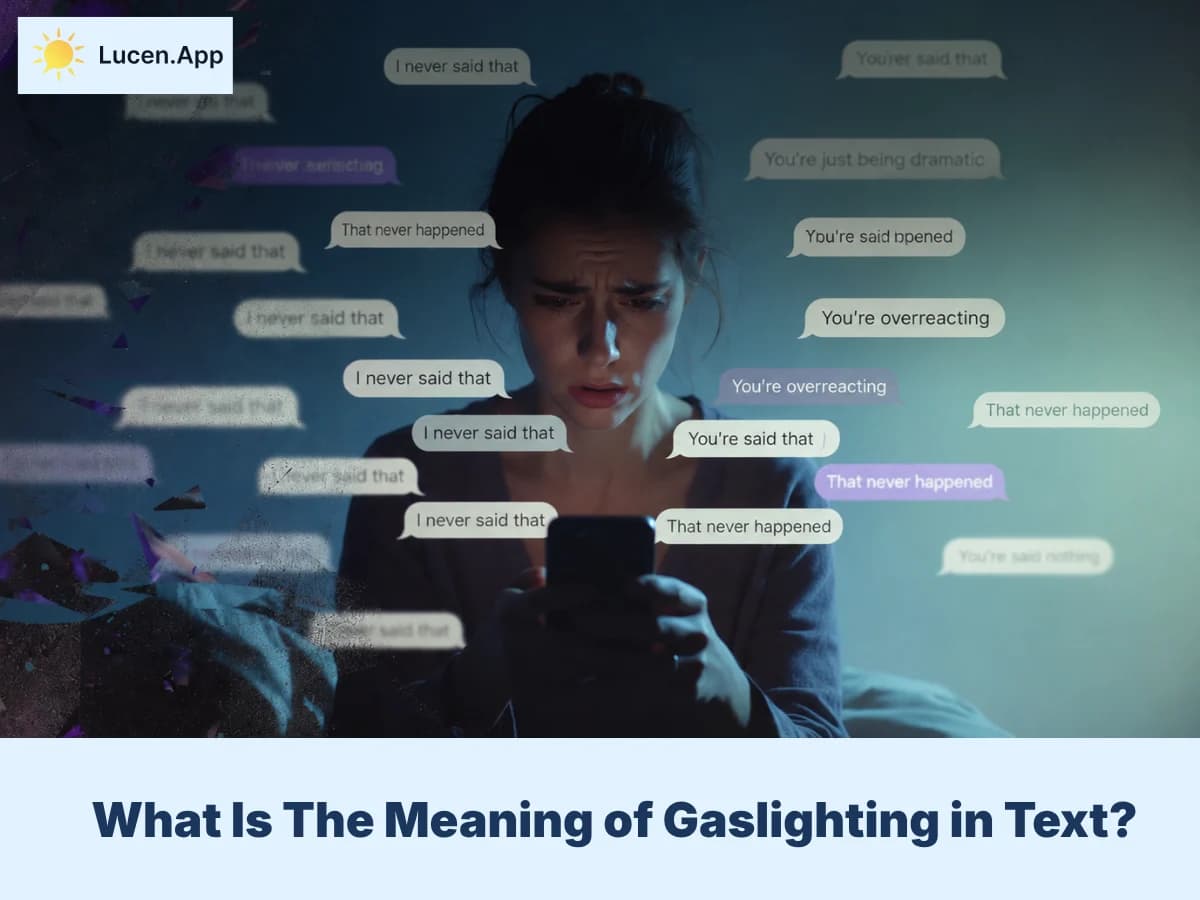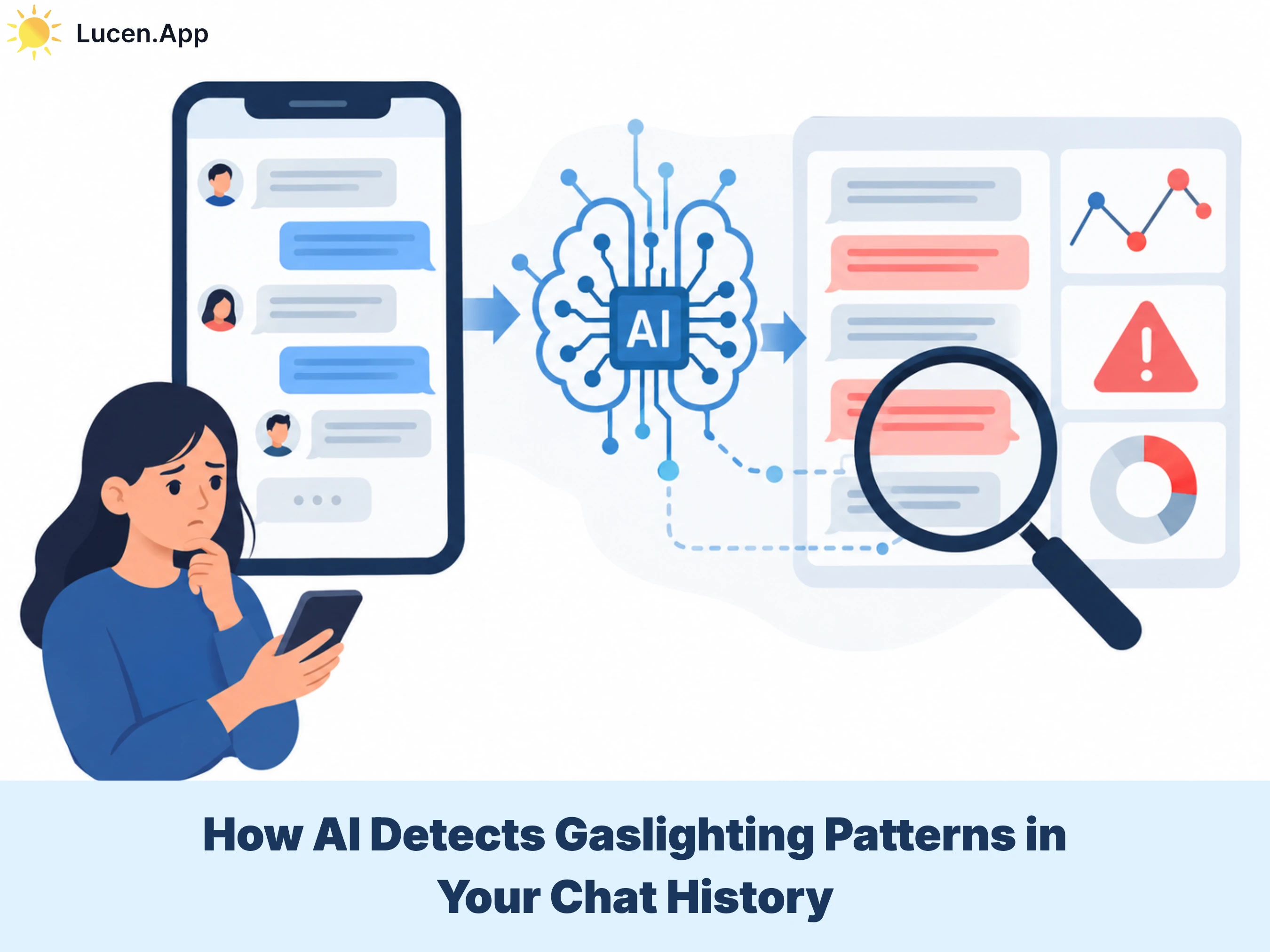
AI detects gaslighting patterns in your chat history by combining linguistic marker detection, behavioral pattern tracking, context analysis, and escalation scoring to identify recurring emotional manipulation. Rather than judging a single message, it analyzes the entire conversation to detect repeated denial, blame-shifting, reality distortion, trivializing language, countering, withholding, and diverting. It also compares current statements with earlier messages, evaluates how communication changes over time, and determines whether manipulative behaviors form a consistent pattern instead of isolated misunderstandings or ordinary disagreements.
The system goes beyond simple sentiment analysis by examining message sequences, repetition, conversational context, and relationship dynamics. It measures factors such as denial frequency, blame-shift patterns, power imbalance, and behavioral escalation to provide explainable insights instead of a single risk score. This pattern-based approach helps users objectively review conversation history, understand recurring communication behaviors, and distinguish potential gaslighting from normal relationship conflict, making AI chat analysis a valuable tool for identifying long-term manipulation patterns.
What Is Gaslighting in Text Messages?
Gaslighting in text messages is a form of emotional manipulation where someone alters the narrative of past events to make you doubt your own memory or sanity. Instead of resolving disagreements, they repeatedly deny previous statements, dismiss your experiences, or claim events never occurred. A single misunderstanding is not gaslighting. Repeated gaslighting in text messages can gradually undermine your confidence in your own memory, perception, and judgment over time.
Common Gaslighting Phrases in Chat Conversations
The most common gaslighting phrases include flat denial, reality reversal, trivializing language, blame reversal, and selective amnesia. These phrases often dismiss experiences, distort facts, or shift responsibility instead of addressing the actual issue. Individually, they may seem harmless, but repeated use across conversations can indicate a recurring pattern of emotional manipulation.
5 common gaslighting phrases in chat conversations are:
- Flat Denial: Statements like “That never happened” or “I never said that” directly contradict a documented part of the conversation, even when the earlier message is still visible in the thread.
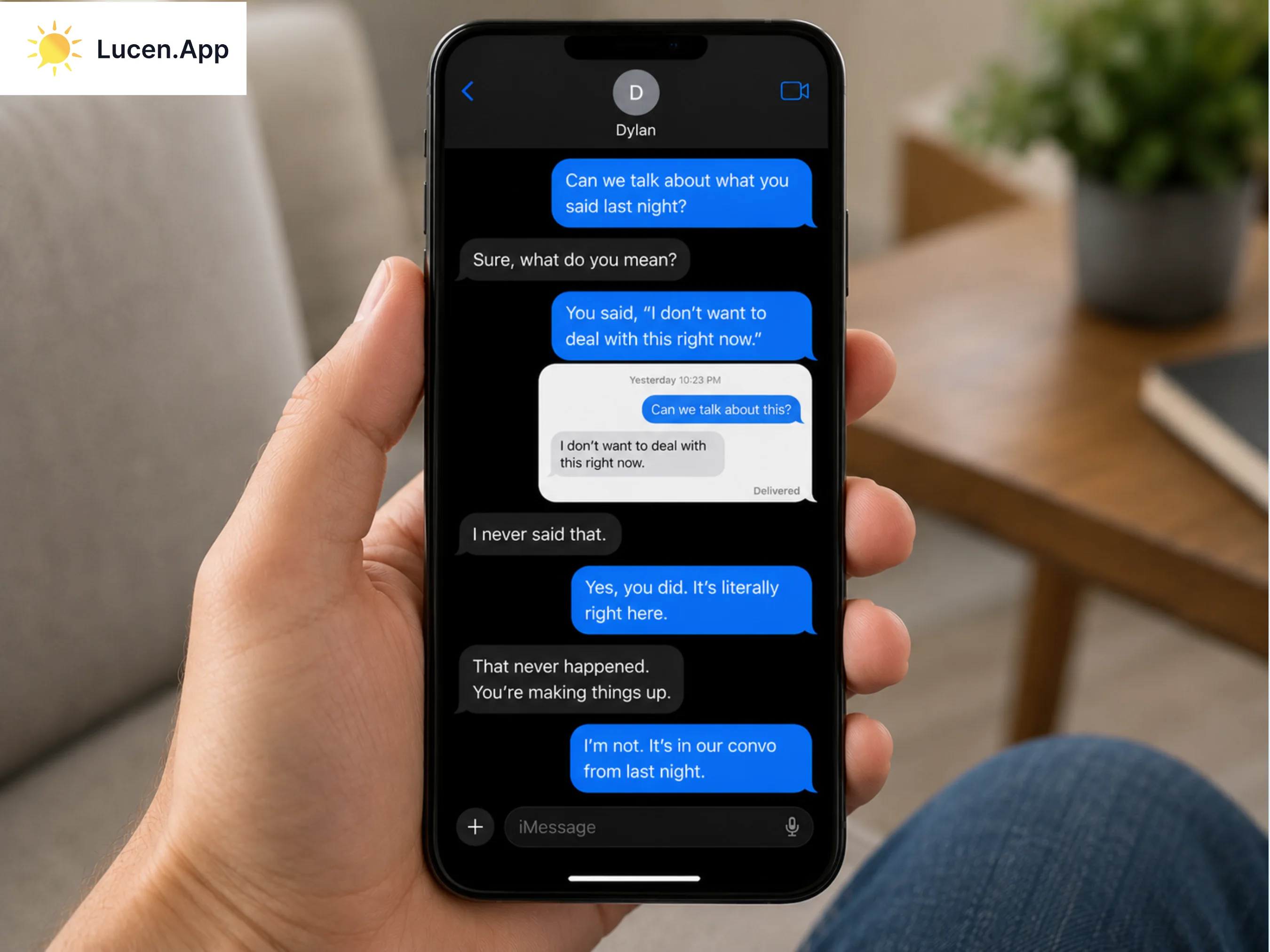
- Reality Reversal: Phrases such as “You're imagining things” or “You're making this up” shift the conversation from what was said to questioning the other person's grip on reality.
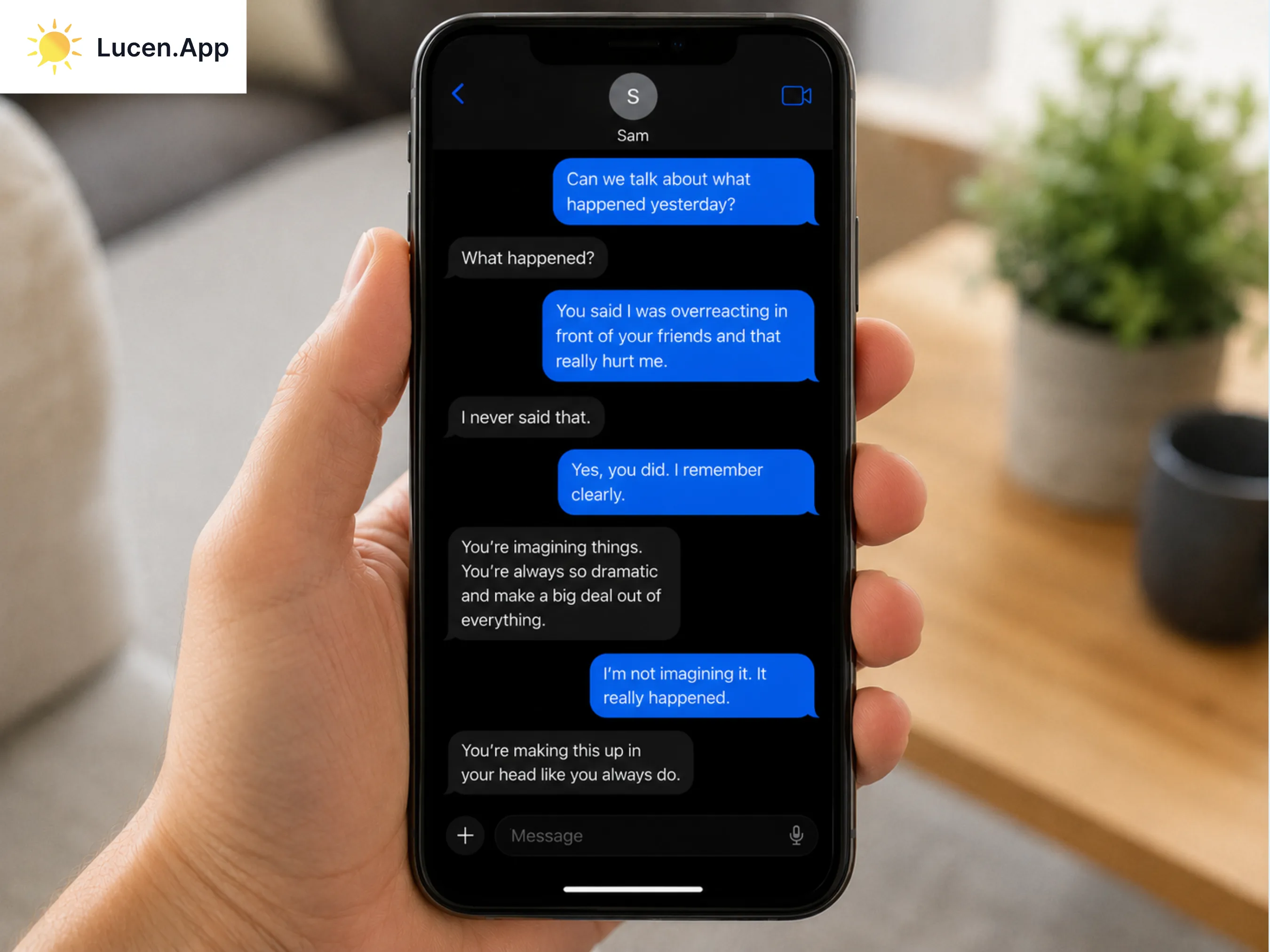
- Trivializing Language: Remarks like “You're too sensitive” or “It was just a joke” minimize a legitimate reaction instead of addressing the actual complaint.
_result.webp)
- Blame Reversal: Using phrases such as "This is your fault for bringing it up" or "Look what you made me do" shifts responsibility for the conflict onto the person who raised the concern.
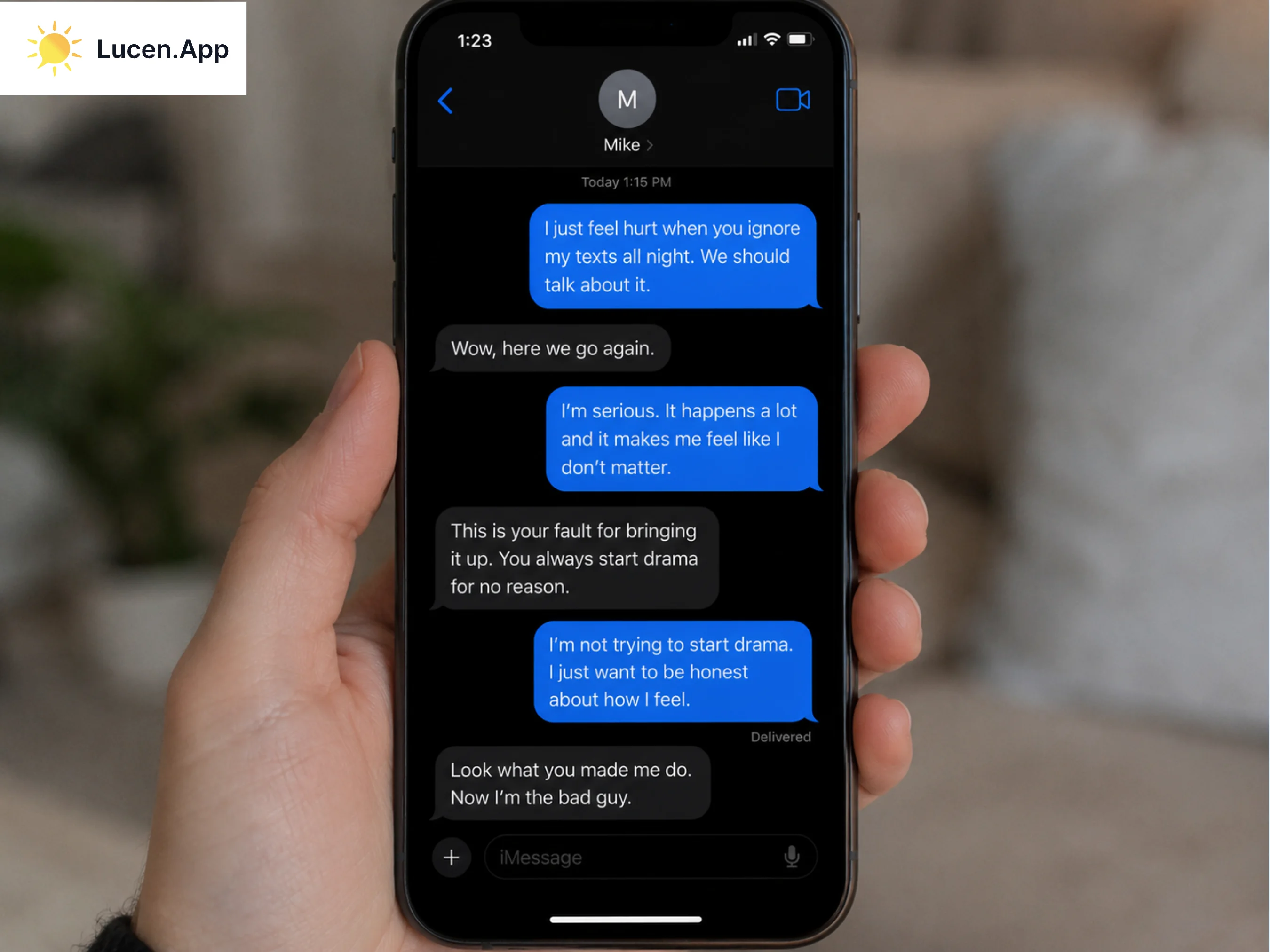
- Selective Amnesia: Statements like “I don't remember saying that,” used repeatedly and specifically for statements that would otherwise require accountability.
_result.webp)
How Gaslighting Differs from Ordinary Disagreement
An ordinary disagreement occurs when two people remember the same event but interpret it differently, whereas gaslighting involves repeatedly denying, distorting, or rewriting past events to make the other person question their own memory or perception. For example, saying, “I think you misunderstood me” reflects a difference in interpretation, while “That conversation never happened” denies the event itself. When this behavior becomes repetitive, it may indicate a pattern of emotional manipulation rather than a normal conflict.
How Does AI Detect Gaslighting Patterns in Chat History?
AI detects gaslighting patterns in chat history through linguistic marker detection, behavioral pattern tracking, context and message-sequence analysis, and escalation and frequency scoring. Instead of evaluating individual messages in isolation, the system analyzes recurring communication patterns across the entire conversation to identify potential signs of emotional manipulation with greater accuracy.
Linguistic Marker Detection
AI scans messages for language commonly associated with manipulation, including denial, blame-shifting, trivializing, and reality-distortion phrases. Each detected phrase is classified by marker type, creating a structured dataset that later helps distinguish manipulative communication from ordinary disagreements, rather than relying solely on general sentiment analysis.
Behavioral Pattern Tracking Across Conversation History
Beyond individual messages, AI evaluates whether manipulative language appears repeatedly throughout the conversation. It measures how often denial, blame-shifting, or trivializing behaviors occur, whether they relate to recurring topics, and if they develop into consistent communication patterns instead of isolated incidents or genuine misunderstandings.
Context and Message-Sequence Analysis
To understand the meaning behind flagged messages, the AI chat analyzer examines the surrounding conversation rather than a single statement in isolation. It analyzes the sequence of messages before and after a flagged statement to identify recurring patterns, such as accusation, denial, and blame reversal, helping differentiate manipulation from ordinary conflict or miscommunication.
Escalation and Frequency Scoring
To measure the severity of potential gaslighting, the AI chat analyzer combines the frequency, intensity, and progression of detected markers into a composite score. This approach reveals whether manipulative behaviors remain occasional or increase over time, providing a clearer view of long-term communication patterns rather than isolated exchanges.
What Linguistic Signals Does AI Look for When Detecting Gaslighting?
AI looks for linguistic signals such as denial phrases, trivializing language, blame-shifting, reality-distortion statements, countering, withholding, and diverting when detecting gaslighting in conversations. Rather than relying on a single phrase, it analyzes how these signals appear together, recur over time, and develop across the conversation. This pattern-based approach helps distinguish emotional manipulation from isolated misunderstandings, memory lapses, or ordinary disagreements.
The following linguistic signs are commonly evaluated together during chat analysis:
- Denial Phrases: By comparing current messages with earlier parts of the conversation, AI detects repeated attempts to deny statements or events that were previously documented. It recognizes statements that contradict verifiable conversations, especially when earlier messages remain visible. Examples include "I never said that" or "That's not what happened."
- Trivializing Language: AI recognizes language that repeatedly minimizes another person's emotions or concerns instead of addressing the underlying issue. It identifies dismissive statements such as "You're overreacting" or "It's not a big deal," which reduce the importance of the other person's emotional experience rather than engaging with the concern itself.
- Blame-Shifting: Blame-shifting occurs when responsibility for a conflict is repeatedly redirected to the other person instead of being acknowledged. AI identifies statements such as "You made me say that" or "This is on you," where the speaker frames their actions as a response to someone else's behavior rather than accepting personal responsibility.
- Reality-Distortion Statements: AI detects recurring statements that undermine another person's memory or perception by comparing messages across the conversation. It identifies phrases such as "You're confused" or "You're remembering it wrong," where the speaker repeatedly portrays the other person's recollection as inaccurate despite previous conversation history.
- Countering: By analyzing conversational patterns, AI detects repeated attempts to replace another person's recollection with a conflicting version of events presented with unwarranted certainty. It identifies statements like "No, it happened exactly the way I said," where a contradictory account is asserted with high confidence despite lacking supporting evidence.
- Withholding: AI identifies patterns where someone repeatedly refuses to discuss concerns or acknowledge issues to avoid accountability. This includes statements such as "I'm not discussing this," where the speaker avoids answering reasonable questions or engaging in meaningful discussion instead of addressing the concern.
- Diverting: Instead of responding to the original concern, AI detects attempts to redirect the conversation by changing the subject or questioning the other person's motives. Common examples include statements like "Why are you even bringing this up now?", which shift attention away from the issue being discussed.
What Types of Gaslighting Patterns Can AI Classify?
AI can classify gaslighting patterns such as denial, countering, trivializing (minimizing), diverting, withholding, stereotyping, and DARVO (Deny, Attack, Reverse Victim and Offender) by analyzing recurring language, conversational context, and interaction patterns rather than isolated statements. It evaluates how these behaviors develop over time to distinguish potential emotional manipulation from ordinary disagreements, misunderstandings, or communication differences.
Types of gaslighting patterns that AI can classify are:
- Denial: Denial is a gaslighting pattern in which previous conversations or events are repeatedly rejected despite existing evidence. To classify this behavior, AI compares current statements, such as "I never said that" or "That never happened," with earlier messages to identify recurring contradictions.
- Countering: When one person consistently replaces another's recollection with a conflicting version of events, the behavior is classified as countering. AI recognizes this pattern by identifying repeated contradictions presented with unwarranted certainty, such as "No, it happened exactly the way I said," despite conflicting messages in the chat.
- Trivializing (Minimizing): Rather than acknowledging someone's concerns, trivializing minimizes emotions by portraying them as exaggerated or unreasonable. AI classifies this pattern by identifying recurring language that dismisses feelings instead of addressing the issue. Examples include "You're overreacting" or "It's not a big deal."
- Diverting: A conversation becomes diverting when attention is repeatedly shifted away from the original concern toward unrelated topics or personal motives. By analyzing conversational flow, AI detects repeated topic changes through remarks like "Why are you bringing this up now?" that shift attention away from the original concern.
- Withholding: AI classifies withholding by detecting repeated refusals to discuss concerns or answer reasonable questions. It identifies communication patterns that avoid accountability through statements like "I'm not discussing this," which repeatedly end or limit conversations instead of addressing the concern.
- Stereotyping: By analyzing recurring language, AI classifies stereotyping when concerns are dismissed using generalized labels instead of evidence. Responses such as "You're just being emotional" or "That's how people like you always react" shift attention from the issue to generalized assumptions.
- DARVO (Deny, Attack, Reverse Victim and Offender): AI classifies DARVO by identifying a sequence where someone denies wrongdoing, attacks the accuser, and presents themselves as the victim. For example, "I never did that", "You're always attacking me", "I'm the one being treated unfairly". This recurring pattern signals manipulation.
How Does AI Distinguish Gaslighting from Ordinary Conflict or Miscommunication?
AI distinguishes gaslighting from ordinary conflict by evaluating repetition instead of isolated incidents, escalating behavior instead of resolved disagreements, one-sided denial instead of mutual acknowledgment of events, and language that reflects a power imbalance instead of equal disagreement. A single insensitive comment, misunderstanding, or heated exchange is not sufficient to classify a conversation as gaslighting. The assessment depends on whether manipulative behaviors appear consistently across interactions rather than in one isolated moment.
To make this distinction, AI analyzes conversation history instead of evaluating messages independently. It tracks recurring denial, blame-shifting, reality distortion, and other manipulation patterns across multiple conversations while considering their frequency, progression, and context. When these behaviors repeatedly target the same issues without showing signs of resolution, the system is more likely to classify them as gaslighting rather than ordinary conflict or miscommunication.
What Chat Signals Beyond Word Choice Help AI Detect Gaslighting?
AI chat analyzers examine repetition frequency, response to pushback, apology-blame sequencing, power-and-control language, cross-message contradiction, and persistence over time. These behavioral signals provide context that individual messages cannot, helping distinguish recurring emotional manipulation from ordinary disagreements or isolated misunderstandings.
- Repetition Frequency: To identify recurring manipulation, AI measures how often tactics such as denial, trivializing, or blame-shifting appear throughout the conversation. Repeated behaviors carry greater significance than isolated statements.
- Response to Pushback: When a statement is challenged, AI evaluates whether the response escalates into denial, blame reversal, or defensiveness instead of constructive discussion or clarification.
- Apology-Blame Sequencing: AI identifies situations where an apology is immediately followed by justification or blame, reducing accountability. For example, "I'm sorry, but you made me do it" shifts responsibility despite the apology.
- Power-and-Control Language: Attempts to control another person's perceptions, decisions, or reality are identified by AI as potential manipulation signals. Examples include "You need to trust me over your own memory," which may indicate psychological dominance.
- Cross-Message Contradiction: By comparing current messages with earlier conversations, AI detects contradictions between present claims and previously documented statements, revealing recurring inconsistencies over time.
- Persistence Over Time: AI tracks whether manipulative behaviors continue, intensify, or repeatedly appear across weeks or months. Sustained behavioral patterns are more reliable indicators of gaslighting than temporary communication problems.
Why Is Gaslighting Detection Harder Than Standard Sentiment Analysis?
Gaslighting detection is harder than standard sentiment analysis because manipulation rarely appears in a single message and cannot be measured by tone or word choice alone. While sentiment analysis classifies text as positive, negative, or neutral using word-level indicators, gaslighting detection focuses on the gradual distortion of another person's perception of reality. Statements such as "I'm just worried about you" or "I think you're misremembering" may sound caring, yet they can become manipulative when repeated across conversations.
Unlike sentiment analysis, gaslighting detection requires long-term conversational context. AI chat analyzer compares current statements with earlier messages, tracks recurring denial, blame reversal, and reality distortion, and evaluates whether these behaviors persist or escalate over time. This analysis helps distinguish sustained emotional manipulation from disagreements, stress, or miscommunication, while reducing false positives and missed patterns.
Can an AI Chat Analyzer Flag Gaslighting Patterns Automatically?
Yes, an AI chat analyzer can flag gaslighting patterns automatically by scanning an entire conversation history at once and surfacing denial, blame-shifting, and reality-distortion markers as scored, explainable insights rather than a single verdict. Instead of manually rereading months of messages to spot a pattern, the analyzer applies linguistic-marker and pattern-tracking methods to highlight exactly where these behavioral clusters appear, how frequently they recur, and whether they escalate over time.
What Types of Conversations Can an AI Chat Analyzer Review for Gaslighting?
An AI chat analyzer can review text messages, SMS, WhatsApp, Messenger, Instagram, Telegram, Slack, Discord, emails, workplace chats, and other text-based conversations for gaslighting patterns. Instead of focusing on the platform, it analyzes language, context, and behavioral consistency across conversations. With enough message history, AI can distinguish recurring emotional manipulation from ordinary disagreements or misunderstandings.
How Does an AI Chat Analyzer Track Gaslighting Across an Entire Conversation?
An AI chat analyzer tracks gaslighting across an entire conversation by building a cumulative behavioral profile from the full message history rather than evaluating each message in isolation. It compares current statements with earlier messages, identifies recurring denial, blame-shifting, contradictions, and reality-distortion patterns, and measures how these behaviors evolve over time. This conversation-level analysis helps distinguish sustained emotional manipulation from ordinary disagreements or isolated misunderstandings.
What Relationship Insights Can an AI Chat Analyzer Provide Around Gaslighting?
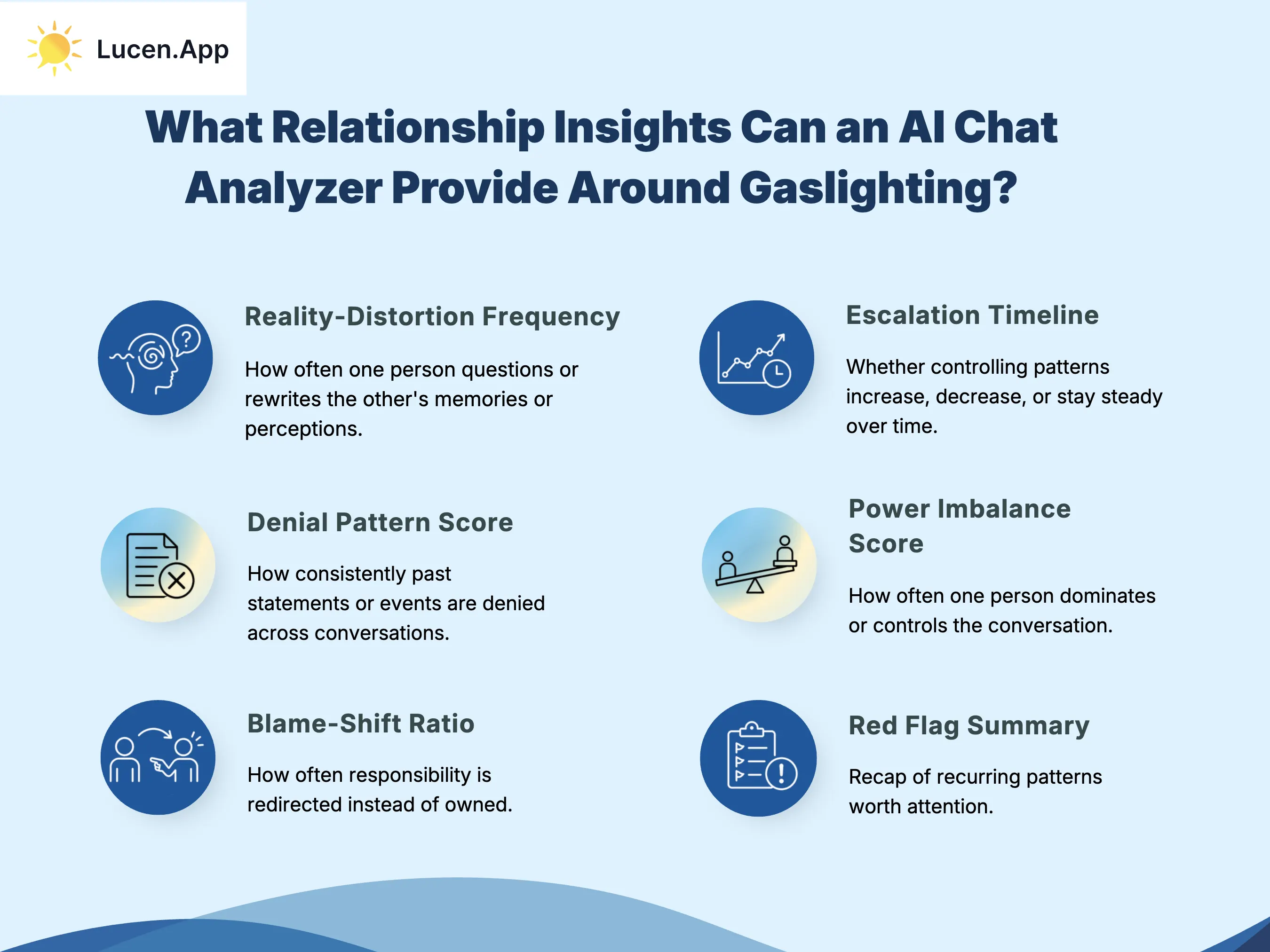
An AI chat analyzer provides relationship insights such as reality-distortion frequency, denial pattern score, blame-shift ratio, escalation timeline, power imbalance score, and a red flag summary to help users identify recurring communication patterns associated with gaslighting. Rather than diagnosing emotional abuse or relying on a single overall risk score, these insights analyze repeated conversational behaviors over time, making it easier to recognize potential manipulation, denial, blame-shifting, and changes in relationship dynamics.
An AI chat analyzer can provide the following relationship insights:
- Reality-Distortion Frequency: Measures how often one person's statements question, dismiss, or attempt to rewrite the other person's memories, perceptions, or reality.
- Denial Pattern Score: Measures how consistently previous statements, actions, or events are denied or contradicted over multiple conversations.
- Blame-Shift Ratio: Measures how frequently responsibility is redirected to the other person instead of being acknowledged.
- Escalation Timeline: Tracks whether manipulative or controlling communication patterns increase, decrease, or remain consistent over time.
- Power Imbalance Score: Measures how often one person dominates, controls, dismisses, or directs the conversation relative to the other participant.
- Red Flag Summary: Summarizes the recurring behavioral patterns and communication signals that may warrant closer attention.
When Should You Use an AI Chat Analyzer to Check for Gaslighting?
You should use an AI chat analyzer when conversations leave you feeling confused, questioning your memory, or noticing the same conflicts repeatedly. Instead of relying on memory alone, it reviews conversation history to identify recurring denial, blame-shifting, and reality-distortion patterns, offering a more objective view of how interactions evolve over time.
An AI chat analyzer is especially useful for documenting recurring behaviors, validating your interpretation, or preparing for difficult discussions. By highlighting dated examples and repeated communication patterns, an AI chat analyzer helps you approach sensitive situations with greater clarity. However, it is a pattern-recognition tool, not a substitute for professional support. If you suspect ongoing gaslighting or emotional abuse, seek guidance from a qualified mental health professional or support organization.