What is Double Texting?
Double texting is the act of sending a second (or multiple) text message before the other person has replied to your previous one. It commonly happens in personal conversations, dating, friendships, work chats, and business communication when someone follows up without receiving a response. A double text may be sent to clarify a message, share information you forgot, confirm plans, restart a conversation, or check whether the first message was missed. While the behavior itself is neutral, how it is perceived depends on the purpose, timing, frequency, and relationship between the two people.
Whether double texting is appropriate depends on the context rather than the number of messages sent. A thoughtful follow-up that adds new information or addresses something time-sensitive is often acceptable, whereas repeated messages driven by impatience, anxiety, or reassurance can create unnecessary pressure. Understanding when to double text, when to avoid it, and how to follow up respectfully helps maintain healthy communication and stronger relationships across different texting situations.
What Makes Someone Double Text?
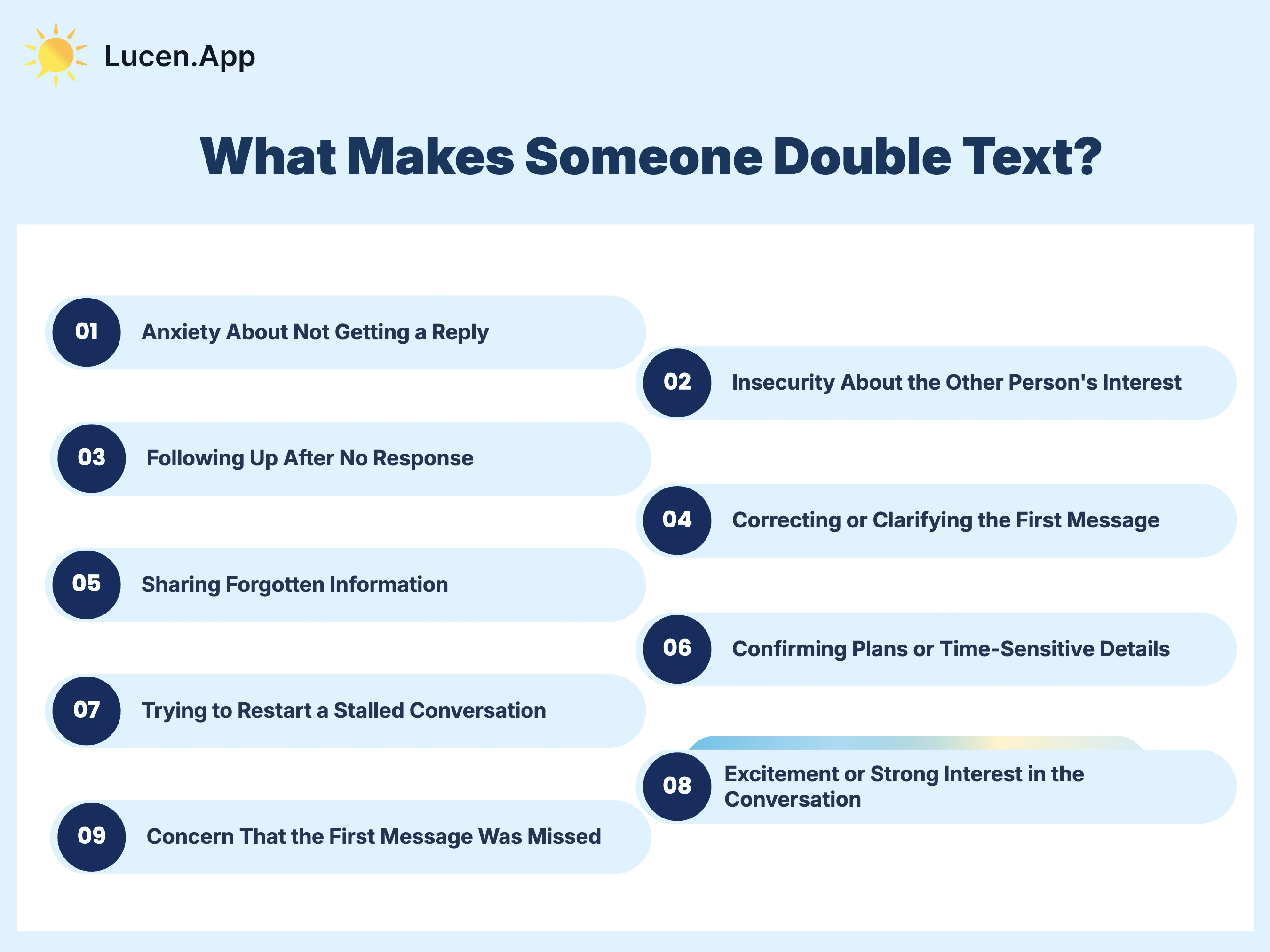
People double-text for emotional and practical reasons, including anxiety, insecurity, unanswered messages, clarification, forgotten details, urgent plans, stalled conversations, excitement, and concern that a message was missed. The motive behind double texting depends on the sender's feelings, the conversation's importance, and the relationship. Considering the overall context helps distinguish genuine interest, necessary follow-up, or urgency from negative assumptions.
Below are the most common reasons someone double-texts:
Anxiety About Not Getting a Reply
Worry about being ignored or overlooked can prompt someone to double-text before receiving a reply. The sender may interpret silence as rejection, disinterest, or a communication problem. This anxiety can increase when the conversation feels important, the relationship is new, or the recipient usually responds quickly to messages.
Insecurity About the Other Person's Interest
Doubts about whether the other person is genuinely interested may lead to sending additional messages for reassurance. A delayed response can make the sender question the relationship, the tone of the previous message, or the recipient’s feelings. The second text may seek confirmation, attention, or emotional certainty from the recipient.
Following Up After No Response
When a message goes unanswered, people often double-text to prompt a response or keep the conversation going. The follow-up may be a polite reminder, a new question, or an attempt to reopen the exchange. Its effect depends on how long the sender waited and whether the message creates pressure.
Correcting or Clarifying the First Message
If the initial message was unclear or contained errors, a follow-up message is often sent to clarify or correct the information. The sender may fix a typo, explain the intended meaning, or add context that prevents misunderstanding. In this case, double texting supports accuracy rather than demanding an immediate reply.
Sharing Forgotten Information
Sometimes important details are forgotten in the message, leading to a second message to provide the missing information. The follow-up may include a time, location, name, link, or instruction the recipient needs. This type of double text is usually practical because it adds information instead of repeating the original message.
Confirming Plans or Time-Sensitive Details
Double texting can occur when someone needs to confirm plans or communicate urgent details that require timely acknowledgment. A second message may verify a meeting time, update a location, or explain a last-minute change. Because the information affects an immediate decision, the follow-up can be both necessary and not intrusive.
Trying to Restart a Stalled Conversation
If a conversation loses momentum, sending another message is a common way to try to revive the interaction. The sender may introduce a new topic, mention a shared interest, or ask an open-ended question. This approach can feel natural when enough time has passed, and the message offers something new.
Excitement or Strong Interest in the Conversation
Strong enthusiasm or eagerness during the conversation can lead to sending multiple messages in quick succession. The sender may want to share another thought, continue a story, or respond before the excitement fades. This behavior can communicate interest, although frequent messages may overwhelm someone who prefers a slower texting pace.
Concern That the First Message Was Missed
Concern that the first message was overlooked or not delivered can lead someone to send a follow-up. Delayed notifications, poor connectivity, busy schedules, or an unusually slow response may create uncertainty. A brief second message can confirm whether the recipient saw the original text, but repeated checks may feel unnecessary.
Is Double Texting Bad?
Double texting is not inherently bad, but it depends heavily on context and intent. Sending a second message is perfectly fine for adding new information, continuing a topic, or confirming plans. However, sending follow-ups out of anxiety, impatience, or a need for constant reassurance can come across as pushy, overwhelming, or emotionally dependent. The purpose behind the message often shapes how it is received.
The timing, frequency, and content of a follow-up also influence its impact. A thoughtful second message that provides value or clarifies information is usually welcomed, while repeated messages requesting a reply can create unnecessary pressure. Every conversation has its own pace, so considering the other person's communication style and response habits helps determine whether a double text supports the conversation or disrupts it.
When is Double Texting Okay?
Double texting is okay after waiting a reasonable time, when confirming existing plans, for time-sensitive information, after forgetting important details, to clarify a previous message, when the conversation has stalled naturally, or when the first message was missed. In these situations, the follow-up serves a clear purpose, adds value to the conversation, and respects the other person's time and communication boundaries, rather than creating unnecessary pressure.
Here are the situations where double texting is appropriate:
After Waiting a Reasonable Time
If you have not received a reply after a reasonable period, sending a follow-up message can show continued interest without appearing impatient. Waiting several hours or even a day, depending on the conversation, demonstrates patience while giving the recipient enough time to respond before you check in politely.
When Confirming Existing Plans
It is appropriate to double-text when you need to confirm details for an upcoming date or meeting. A brief follow-up about the time, location, or schedule helps prevent misunderstandings and ensures both people have the same expectations, particularly when plans are approaching or require timely confirmation.
For Time-Sensitive Information
If something urgent comes up, such as a last-minute change in location or timing, sending a second message ensures the other person receives the update promptly. In these situations, the follow-up serves a practical purpose because the information directly affects decisions or scheduled plans.
After Forgetting Important Details
Double-texting is acceptable if you realize you left out key information in your previous message. Adding the missing details, such as a meeting time, address, phone number, or important instructions, improves clarity and helps the recipient understand the full context without causing confusion.
To Clarify a Previous Message
If your previous message was unclear or could be misunderstood, sending another message to clarify your intent helps avoid confusion. Correcting wording, explaining your meaning, or providing additional context improves communication and ensures the recipient interprets your message as intended.
When the Conversation Stalled Naturally
When a conversation naturally fizzles out but you want to re-engage, sending a new message after some time can restart the interaction without seeming pushy. Introducing a fresh topic, asking a thoughtful question, or referring to a shared interest helps the conversation continue naturally.
When the First Message Was Missed
A polite follow-up is appropriate when your message may have been missed due to technical issues or a busy schedule. A single, respectful check-in acknowledges that missed notifications happen without assuming the other person intentionally ignored your message.
When Should You Avoid Double Texting?
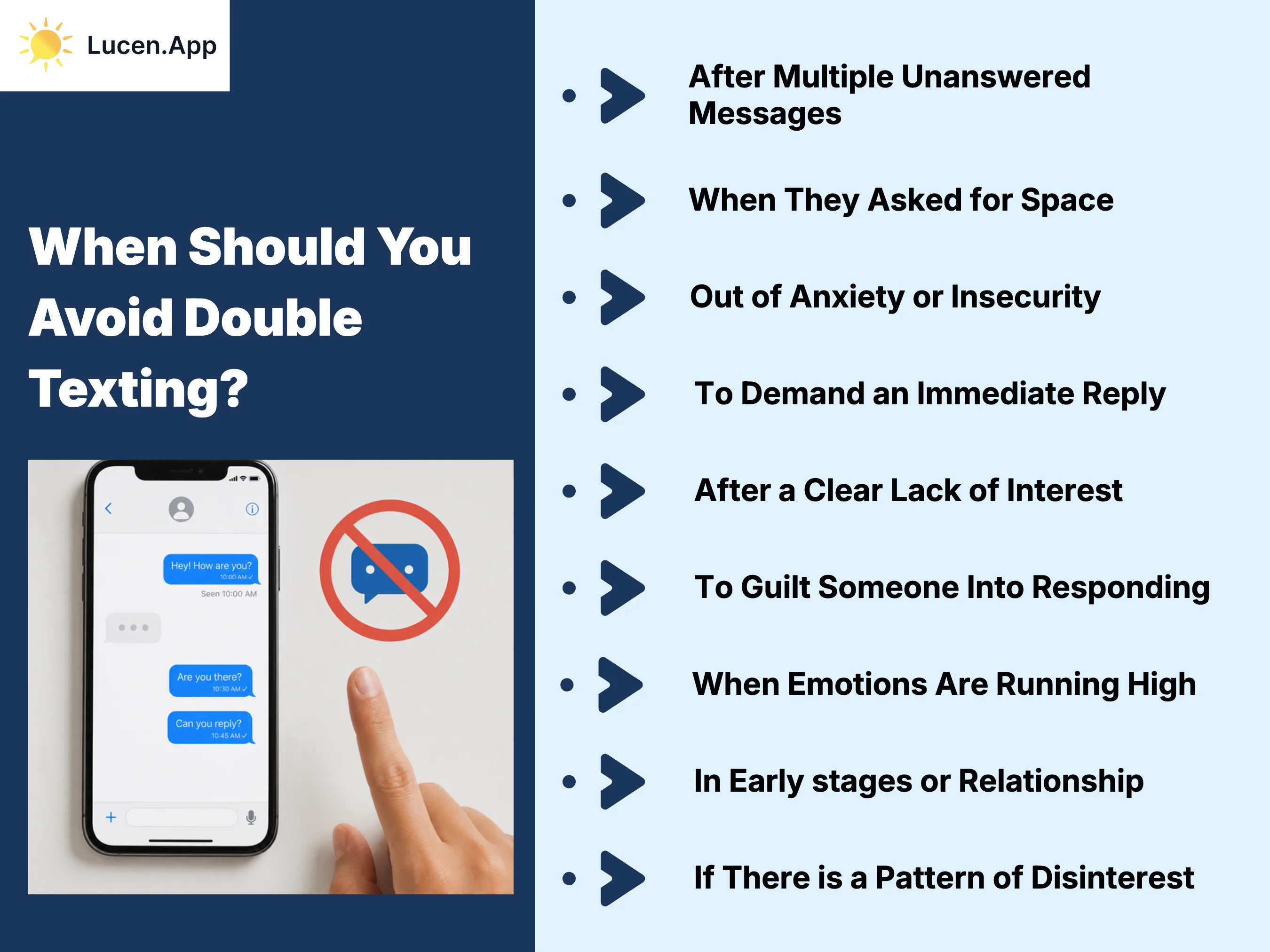
Double texting should be avoided after multiple unanswered messages, when someone has asked for space, out of anxiety or insecurity, to demand an immediate reply, after a clear lack of interest, to guilt someone into responding, when emotions are running high, in the early stages of a relationship, or when there is a pattern of disinterest. In these situations, waiting is usually more respectful than sending another message.
After Multiple Unanswered Messages
Continuing to send messages after several have gone unanswered can appear intrusive and may signal a lack of respect for the other person's boundaries. Repeated follow-ups can create pressure, reduce the likelihood of a positive response, and make the conversation feel one-sided rather than mutually engaging.
When They Asked for Space
Reaching out again when someone has explicitly requested space disregards their needs and can damage trust in the relationship. Respecting their request demonstrates emotional maturity and gives them the time they need before deciding whether to continue the conversation.
Out of Anxiety or Insecurity
Double texting due to personal anxiety or insecurity can place unfair pressure on the recipient and may be perceived as clingy or overwhelming. Instead of seeking immediate reassurance, allow the other person time to respond naturally and avoid letting emotions dictate your communication.
To Demand an Immediate Reply
Sending repeated messages to demand an immediate reply can come across as controlling and disrespectful of the other person's time and priorities. Everyone has different schedules and response habits, so expecting instant replies may create unnecessary tension in the conversation.
After a Clear Lack of Interest
If someone has shown clear disinterest, continuing to message them is uncomfortable and may be interpreted as ignoring their feelings. Accepting their response, whether direct or indirect, shows respect for their boundaries and prevents unwanted communication from continuing.
To Guilt Someone Into Responding
Trying to guilt someone into responding by double texting undermines healthy communication and can create resentment or discomfort. Messages designed to provoke sympathy or obligation often damage trust rather than encouraging a genuine, willing response.
When Emotions Are Running High
When emotions are heightened, double texting can escalate conflicts and lead to misunderstandings or regrettable exchanges. Taking time to calm down before responding allows both people to communicate more thoughtfully and reduces the risk of impulsive remarks.
In Early Stages of a Relationship
In the early stages of a relationship, excessive messaging can seem overly eager and may push the other person away before trust is established. Giving conversations time to develop naturally creates a more comfortable pace and encourages balanced communication.
If There is a Pattern of Disinterest
If there is a consistent pattern of disinterest, continuing to double text can reinforce negative dynamics and hinder the development of mutual respect. When repeated efforts receive little or no engagement, it is often better to step back and allow the other person to initiate future conversations.
How Does Double Texting Affect Dating and Relationships
Double texting affects dating and relationships by showing genuine interest when balanced, building trust through clear communication, and encouraging responses when used appropriately. However, it can also create pressure to reply, signal anxiety or insecurity, shape early dating impressions, influence long-term communication patterns, and lead to misunderstandings when texting habits differ. Ultimately, its impact depends on the timing, purpose, frequency, and communication preferences of both people involved.
The following are the key effects of double texting on dating and relationships:
Shows Genuine Interest When Balanced
Sending a second message after no reply can demonstrate authentic interest and attentiveness if done thoughtfully and not excessively. A well-timed follow-up shows that you value the conversation without creating pressure, especially when it adds meaningful information or continues the discussion naturally.
Builds Trust Through Clear Communication
Following up with another message can clarify intentions and reduce misunderstandings, fostering openness and reliability in communication. When the second message provides helpful context or corrects missing information, it supports honest conversations and strengthens trust between both people.
Boosts Response Rates if Healthy
When used appropriately, double texting can increase the likelihood of getting a response by showing engagement, but only if it aligns with both parties' comfort levels. A respectful follow-up that adds value is more effective than repeated messages asking why someone has not replied.
Can Create Pressure to Reply
Receiving multiple messages in a row may make someone feel obligated or rushed to respond, especially if the timing feels too insistent. Frequent follow-ups before giving the other person enough time can make the conversation feel demanding instead of comfortable and natural.
Signals Anxiety or Insecurity
Repeated double texting, especially early on, may be interpreted as nervousness or a lack of confidence, potentially raising concerns about emotional dependence. When follow-up messages are driven by reassurance rather than purpose, they may create an unintended negative impression.
Changes Early Dating Impressions
Early double texting can shape impressions, either positively as proactive or negatively as impatient, depending on the recipient's expectations and the context. Respecting the other person's response pace helps create a balanced first impression and encourages healthier communication habits.
Affects Long-Term Communication Patterns
Consistent patterns of double texting can set the tone for ongoing communication, influencing whether interactions feel supportive or overwhelming over time. Healthy messaging habits encourage mutual respect, while repeated excessive follow-ups may create unrealistic expectations for immediate responses.
Depends on Mutual Texting Habits
The impact of double texting varies based on whether both people are comfortable with frequent messaging or prefer more space between replies. Understanding each other's communication style helps prevent misunderstandings and creates expectations that feel comfortable for both individuals.
Does Double Texting Really Affect Friendship Too?
Double texting generally does not harm established friendships because close friends often communicate more casually and understand each other's texting habits. A thoughtful follow-up can show care, continue an ongoing conversation, or help coordinate plans. However, repeated messages that demand a reply, express frustration, or seek constant reassurance can create unnecessary pressure. The effect of double texting ultimately depends on the intent, timing, frequency, and mutual communication boundaries within the friendship.
Can Double Text Sound Make You Look Desperate?
Double texting can definitely make you look desperate if your follow-up message reads as impatient, anxious, or demanding. However, it is rarely a dealbreaker when the second message adds genuine value, introduces a new topic, or keeps the conversation light without expecting an immediate reply. Ultimately, timing, intent, and frequency determine how your message is perceived, making thoughtful follow-ups more effective than repeated requests for attention.
How Long Should You Wait Before Double Texting?
Wait at least 4 to 24 hours before double-texting a new romantic interest, as this gives the other person enough time to see and respond to your message without feeling pressured. For casual conversations, waiting several hours is generally appropriate, while urgent matters, such as confirming plans or sharing time-sensitive information, may justify a follow-up sooner. Patience demonstrates confidence and respect for the other person's schedule.
The ideal wait time also depends on the urgency of your message, the recipient's usual response habits, and the stage of your relationship. Someone who normally replies quickly may simply be busy, while others naturally take longer to respond. A thoughtful follow-up after a reasonable wait is more likely to be appreciated than repeated messages sent too soon.
What is The Difference Between Double Texting, Triple Texting and Over Texting?
Double texting involves sending two consecutive messages before receiving a reply, triple texting means sending three messages in a row, while over texting refers to repeatedly sending multiple messages that can overwhelm the recipient. Double texting is often considered acceptable when used thoughtfully and for a clear purpose, whereas triple texting and over texting are increasingly likely to come across as impatient, needy, or intrusive. The context, urgency, relationship, and recipient's communication style ultimately determine whether these texting habits are appropriate.
The table below compares the key differences between these texting habits:
| Aspect | Double Texting | Triple Texting | Over Texting |
|---|---|---|---|
| Messages | Sending a second message before receiving a reply. | Sending three consecutive messages before receiving a reply. | Sending multiple consecutive messages, usually more than three, without a response. |
| Purpose | Follow-up or clarification | Check in again | Repeated attempts to get a response |
| Perception | Usually acceptable | May seem impatient | Often seen as excessive or intrusive |
| Best Used | Clarifying or confirming plans | Urgent situations | Only in genuine emergencies |
How To Double Text Without Looking Needy and Desperate?
To double text without looking needy and desperate, wait before sending another message, keep your follow-up brief, give the other person time to reply, avoid repeated follow-ups, add new value to the conversation, skip guilt-inducing messages, match their texting pace, and respect their response boundaries. These habits help your follow-up feel thoughtful, confident, and respectful rather than impatient or demanding.
Some practical habits that can help you double text with confidence are:
- Wait Before Sending Another Message: Allowing some time to pass before sending a second message shows patience and reduces the chance of appearing impatient or demanding.
- Keep Your Follow-Up Short: A brief follow-up message feels casual and non-intrusive, making it easier for the recipient to respond without pressure.
- Give Them Room to Reply: Giving the other person space to respond demonstrates respect for their time and comfort, helping maintain a balanced conversation.
- Avoid Sending Multiple Follow-Ups: Sending only one follow-up prevents your interest from coming across as overwhelming or desperate, keeping the interaction light.
- Add New Value to Conversation: Introducing a new topic or perspective in your follow-up adds value and shows genuine interest, rather than just seeking a reply.
- Skip Guilt-Inducing Messages: Avoid messages that imply blame or guilt to keep the tone positive and prevent the recipient from feeling pressured.
- Match Their Texting Pace: Adapting to the other person's texting frequency helps you stay in sync and signals that you are attentive to their communication style.
- Respect Their Response Boundaries: Recognizing and honoring when someone needs more time or space to respond fosters mutual respect and healthy boundaries in the conversation.
What Should You Say While Double Texting? (Examples)
You should follow up politely, clarify your previous message, confirm plans, add new information, acknowledge they may be busy, use light humor, or restart the conversation naturally instead of repeating yourself or sounding frustrated. Keep your message brief, respectful, and purposeful. For example, say, "Hey, just checking if you saw my last message," "I forgot to mention one more thing," or "Are we still on for tomorrow?" Ending with "No worries if you're busy!" helps keep the follow-up friendly and pressure-free.
The examples below show how to double-text appropriately in different situations:
Following Up Without Sounding Pushy
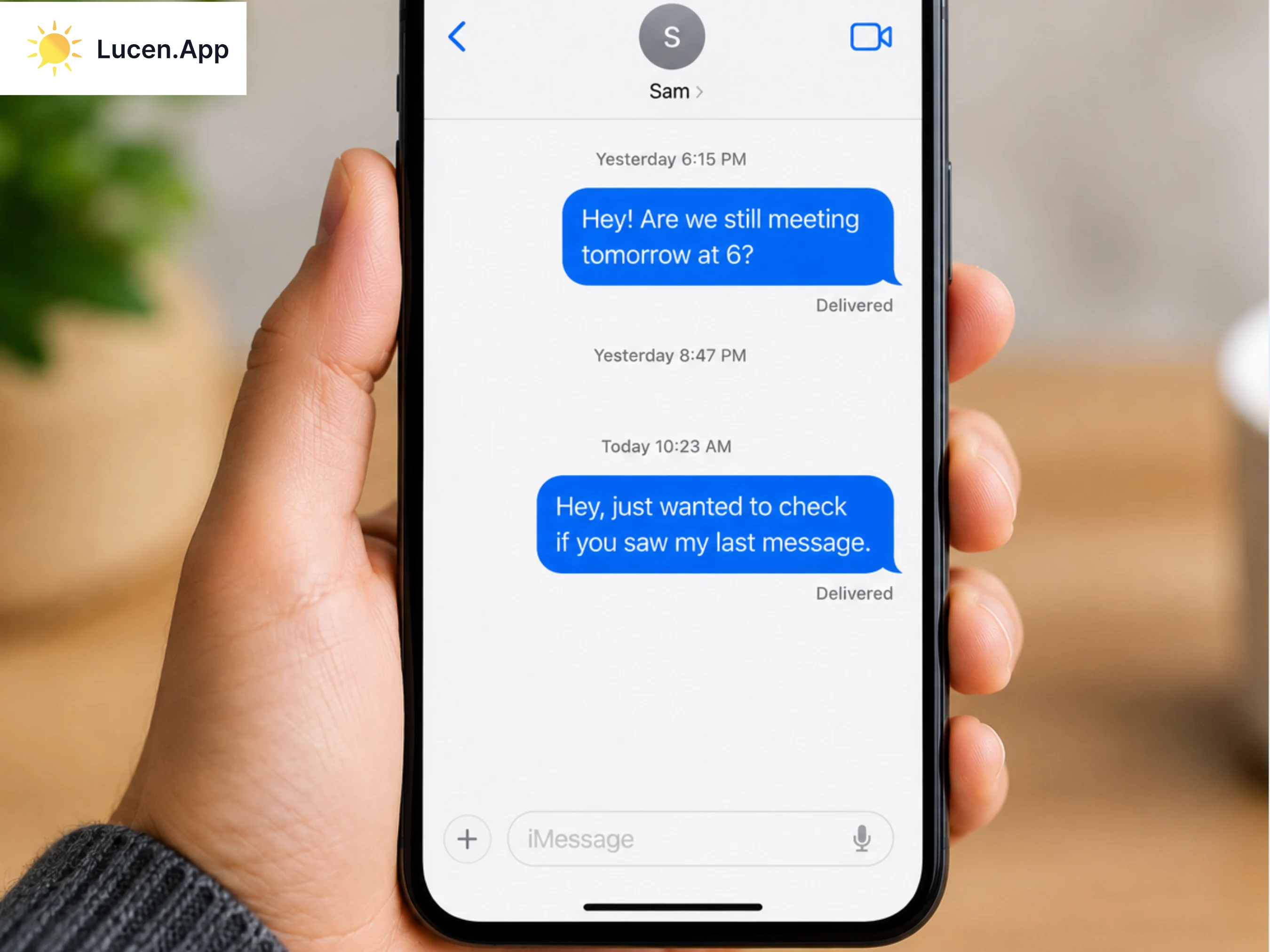
A gentle follow-up message, such as "Hey, just wanted to check if you saw my last message," shows interest without demanding an immediate response, keeping the tone friendly and respectful.
Checking In After a Reasonable Wait
_result.webp)
Waiting a reasonable amount of time before sending a message like "Hope your week is going well! Just checking in" demonstrates patience and understanding, which helps maintain a positive interaction.
Clarifying Your Previous Message
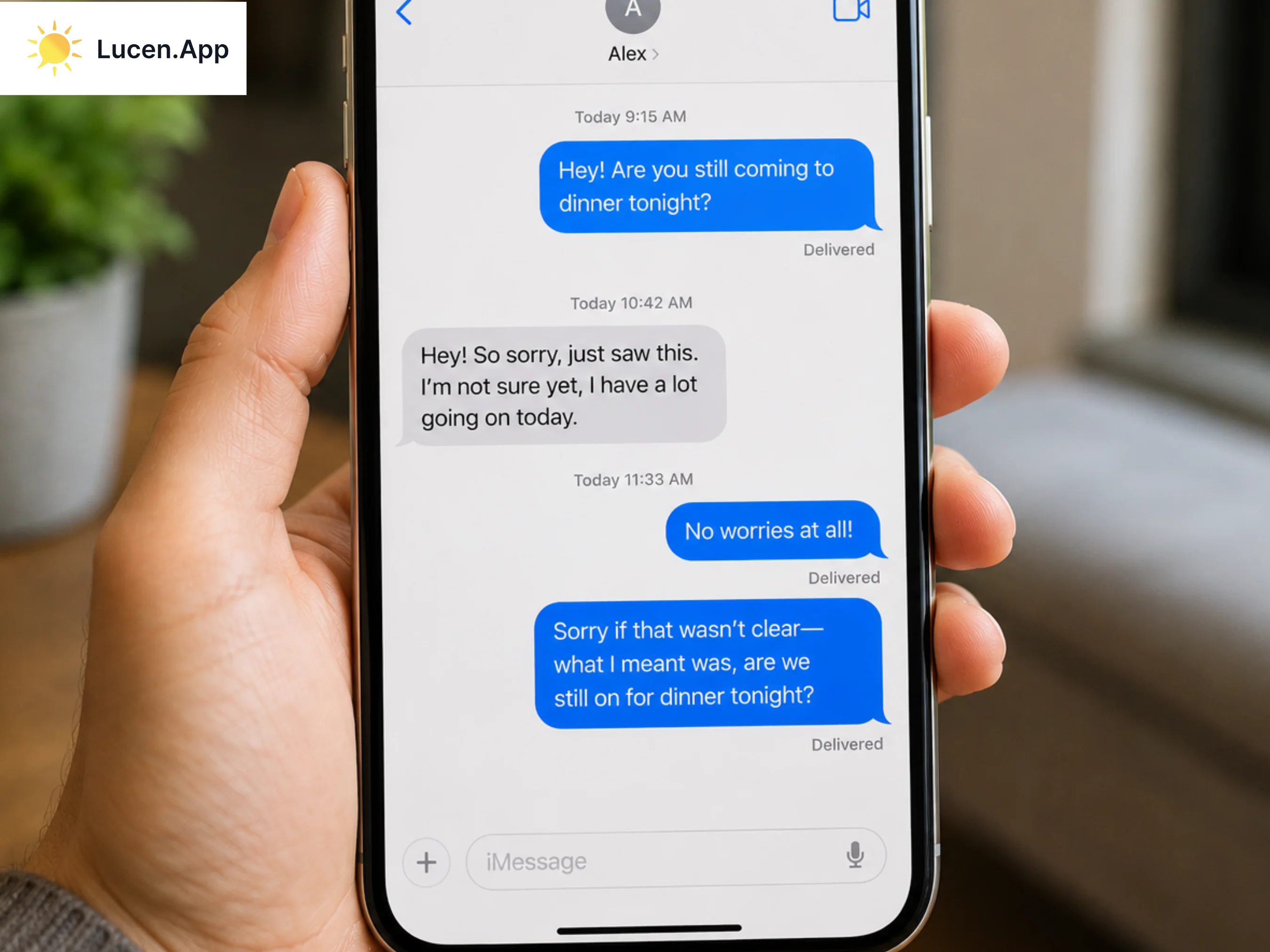
If your previous message was unclear, a follow-up like "Sorry if that wasn’t clear-what I meant was…" helps avoid misunderstandings and shows you care about effective communication.
Sharing Information You Forgot Earlier
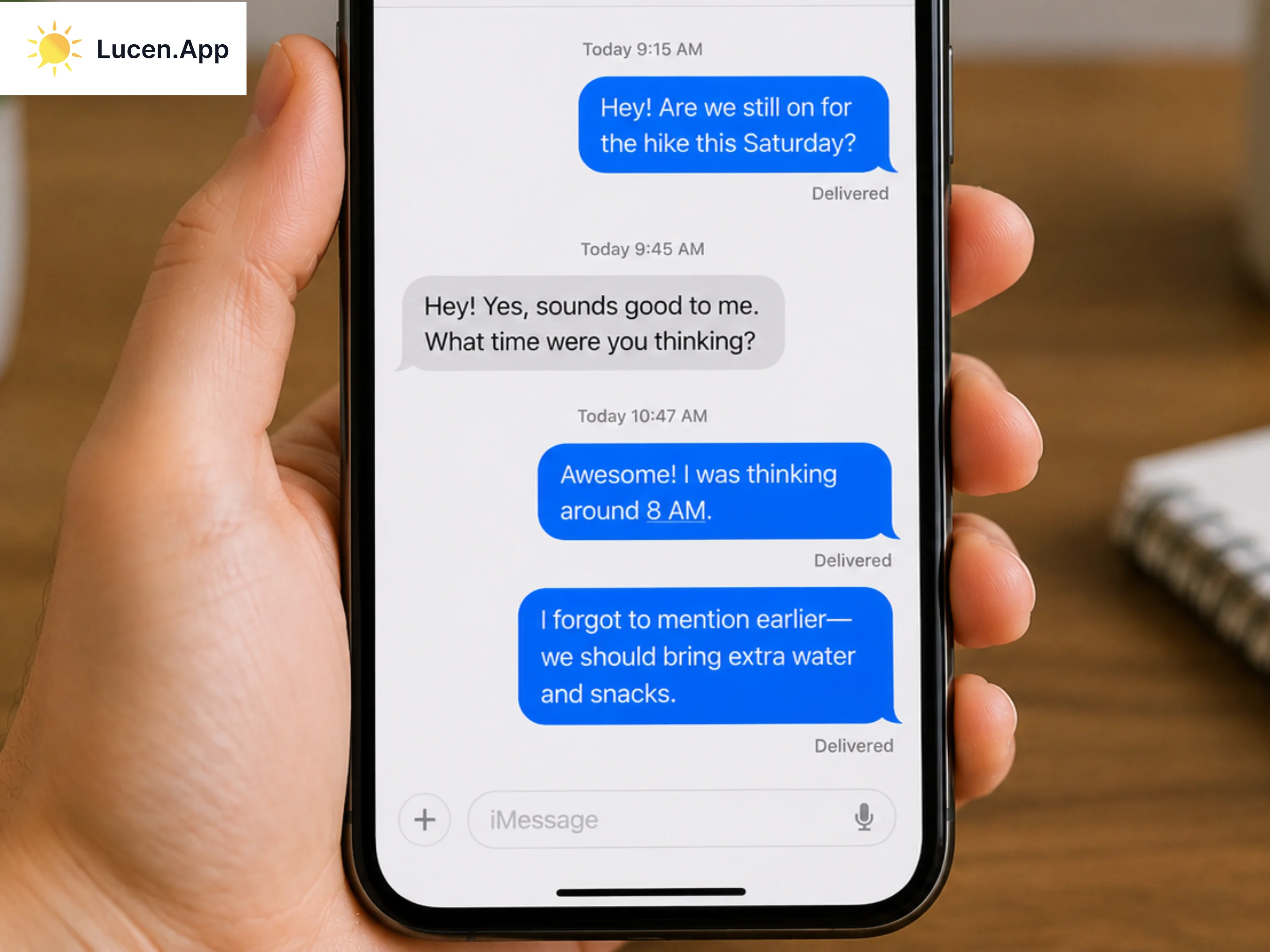
Sending a message such as "I forgot to mention earlier…" allows you to add relevant information, making your follow-up purposeful and showing attentiveness.
Confirming Plans Without Applying Pressure
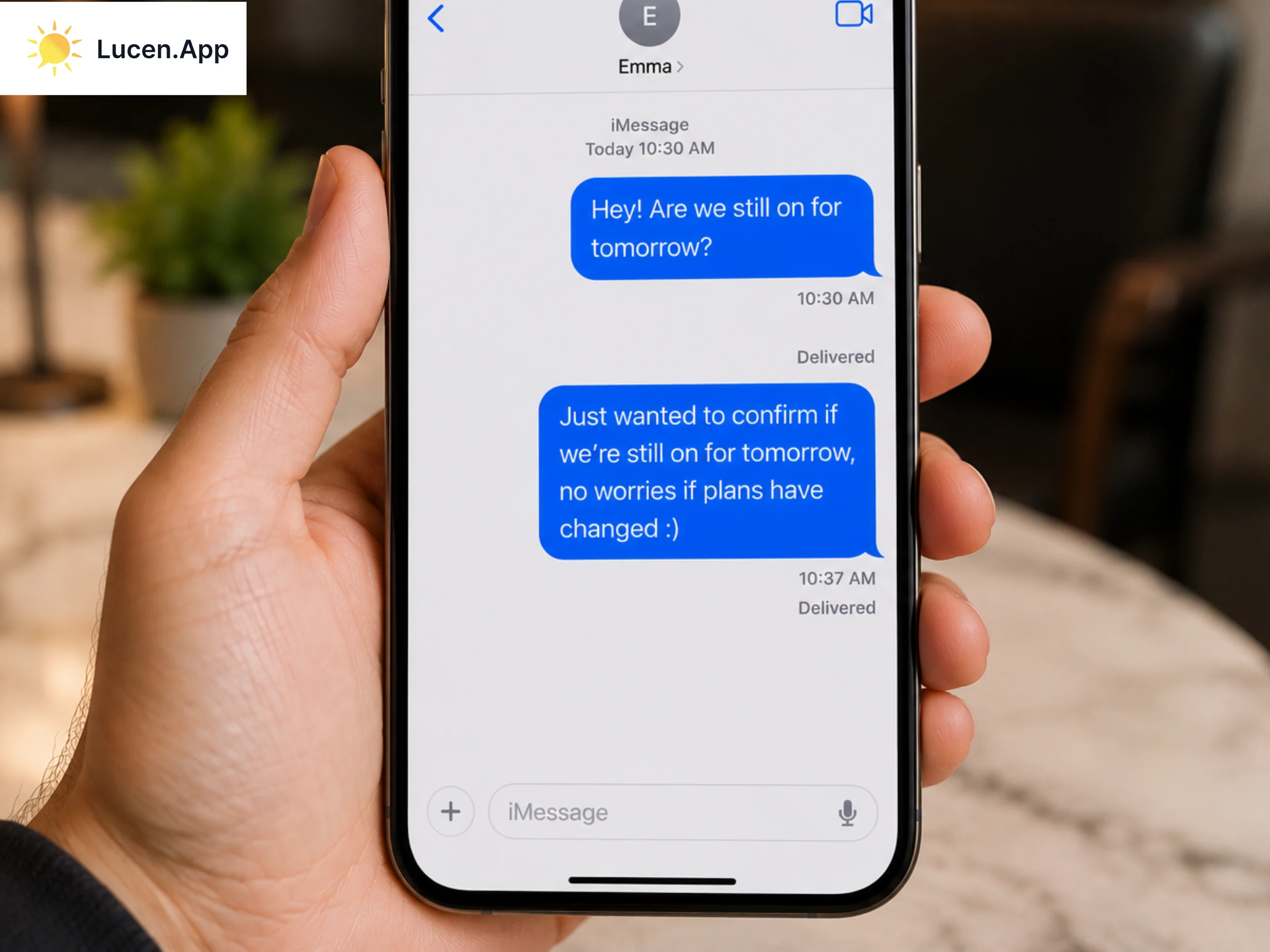
A message like "Just wanted to confirm if we’re still on for tomorrow, no worries if plans have changed," checks in on arrangements while making it clear there’s no pressure, which keeps things comfortable.
Restarting a Conversation Naturally
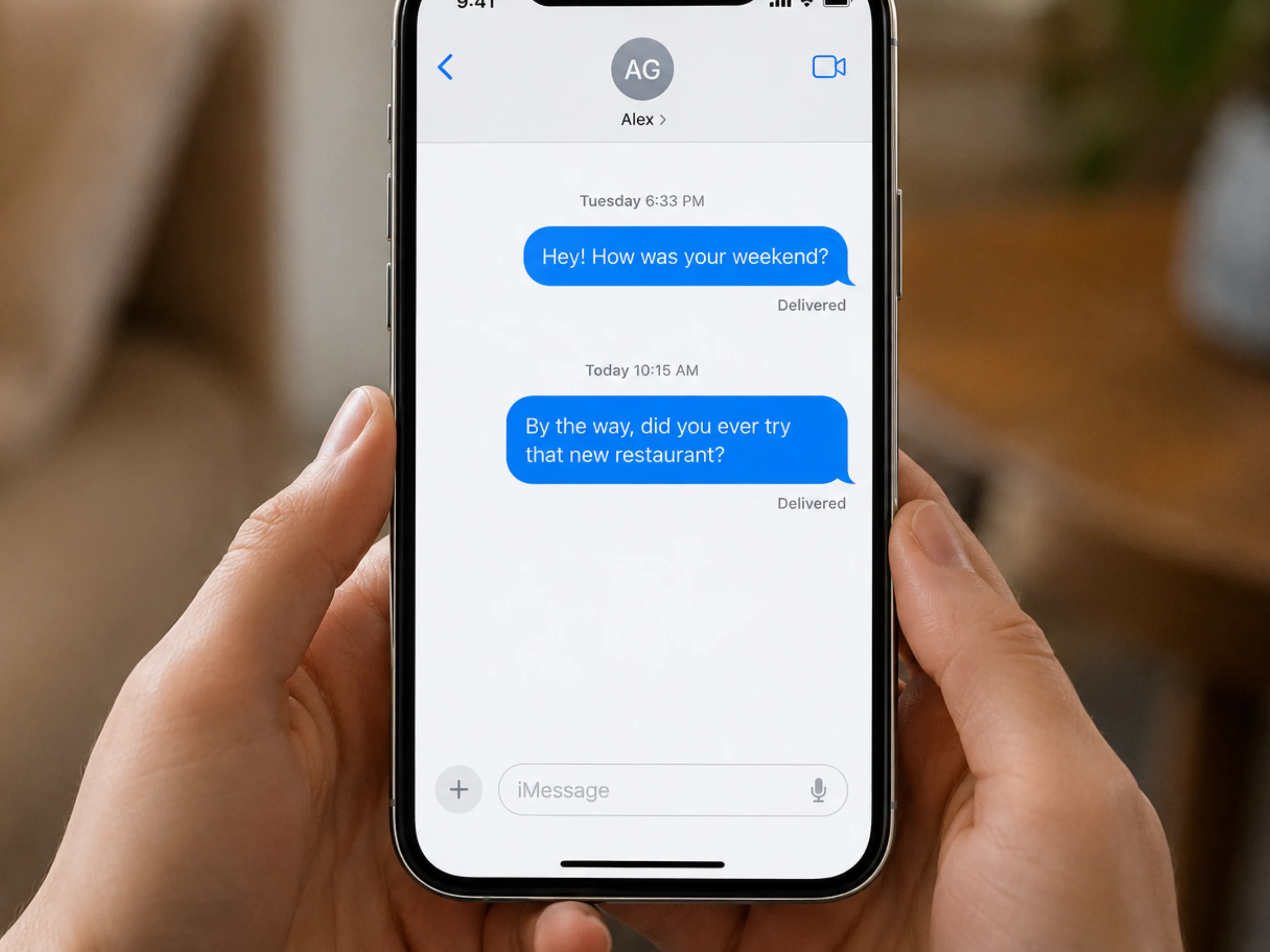
Re-engaging with a casual question or comment, such as "By the way, did you ever try that new restaurant?" helps restart the conversation in a natural, non-intrusive way.
Sending a Lighthearted Follow-Up
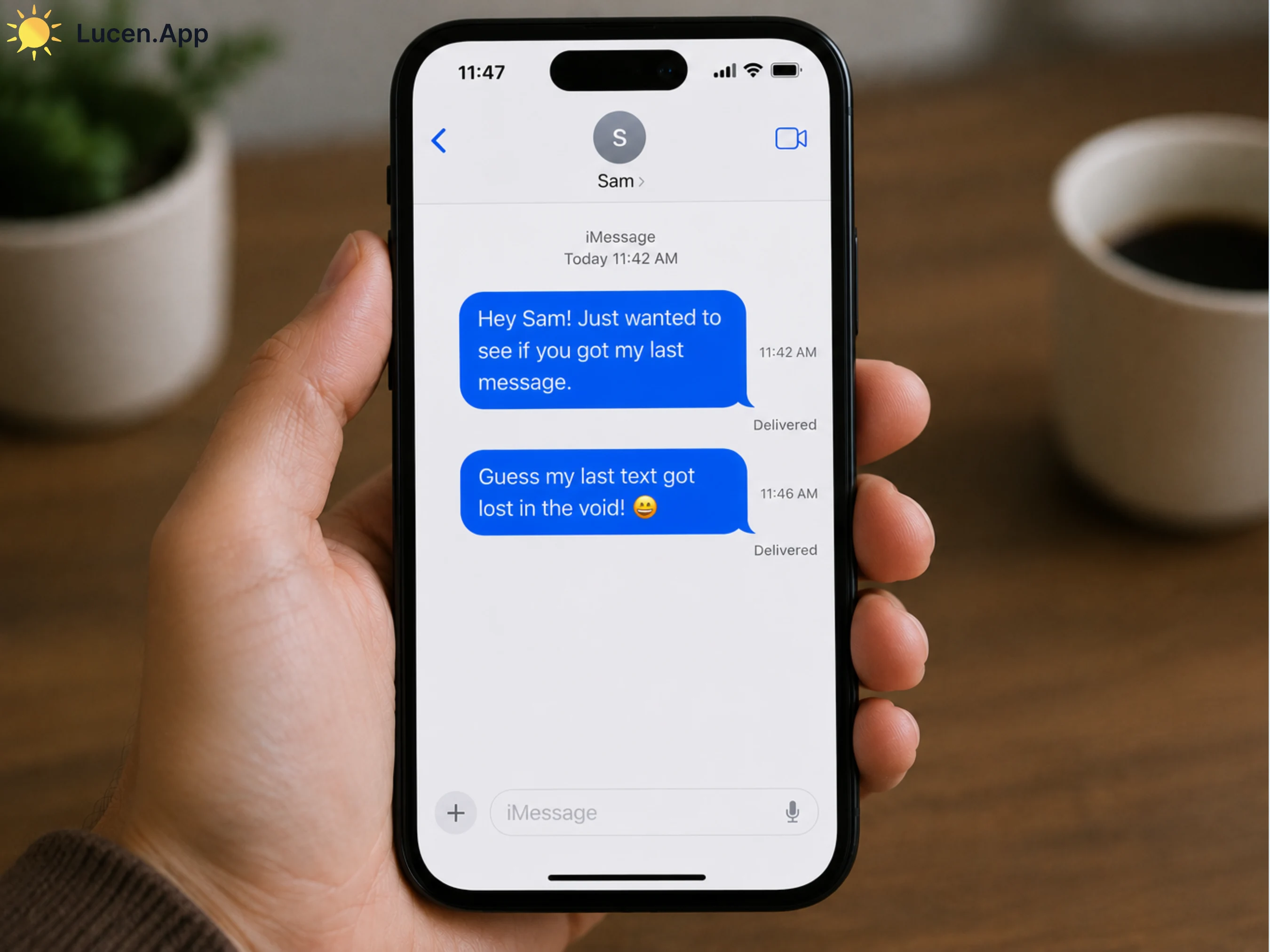
A playful message like "Guess my last text got lost in the void!" adds humor and lightness, making the follow-up feel less serious and more approachable.
Acknowledging They May Be Busy
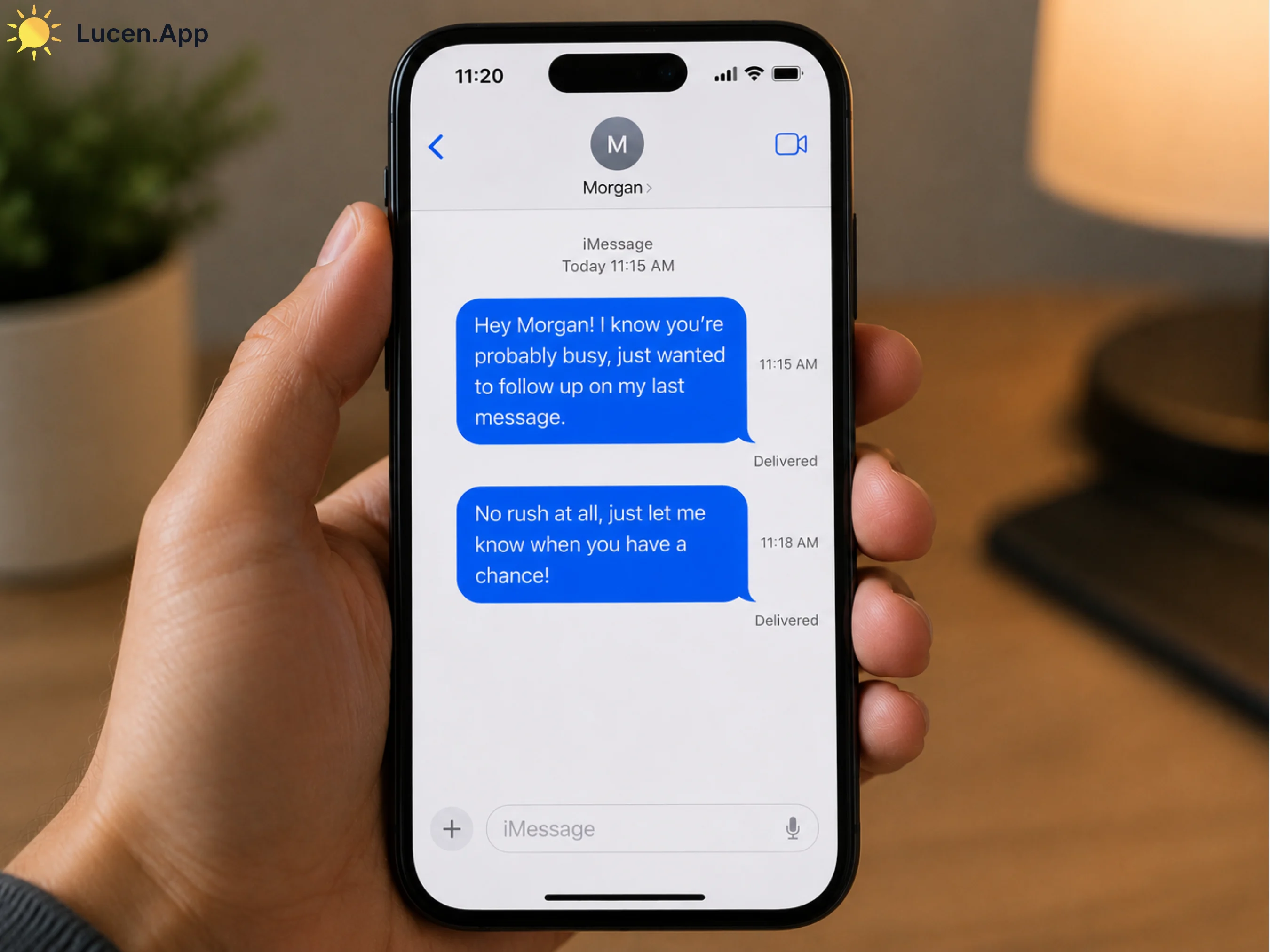
Acknowledging their schedule with a message like "I know you’re probably busy, just wanted to follow up" shows empathy and respect for their time.
Adding New Value Instead of Repeating Yourself
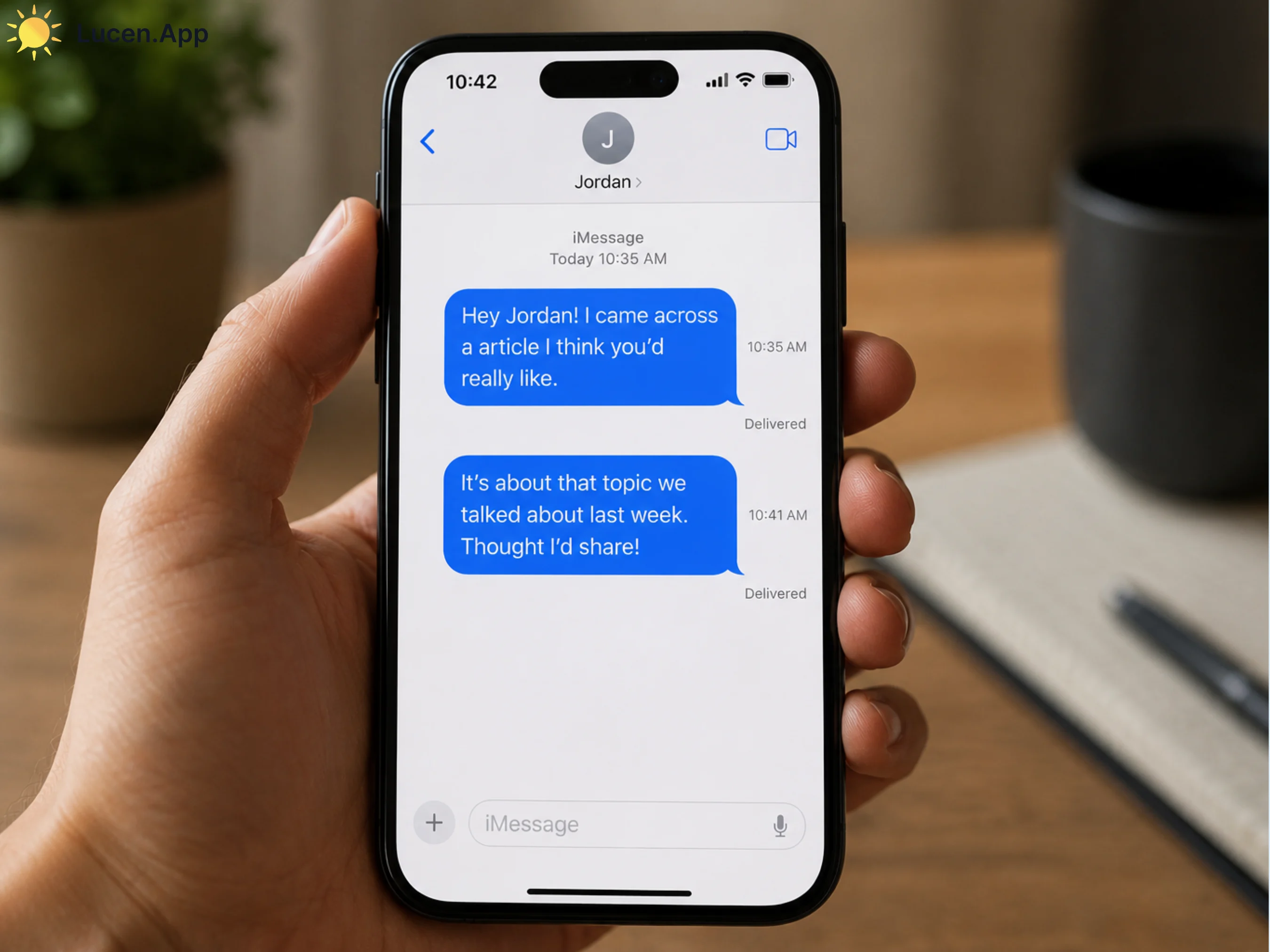
Offering something new, such as "I just saw something that reminded me of our last conversation," adds value and keeps the exchange fresh rather than repetitive.
Ending the Follow-Up Gracefully
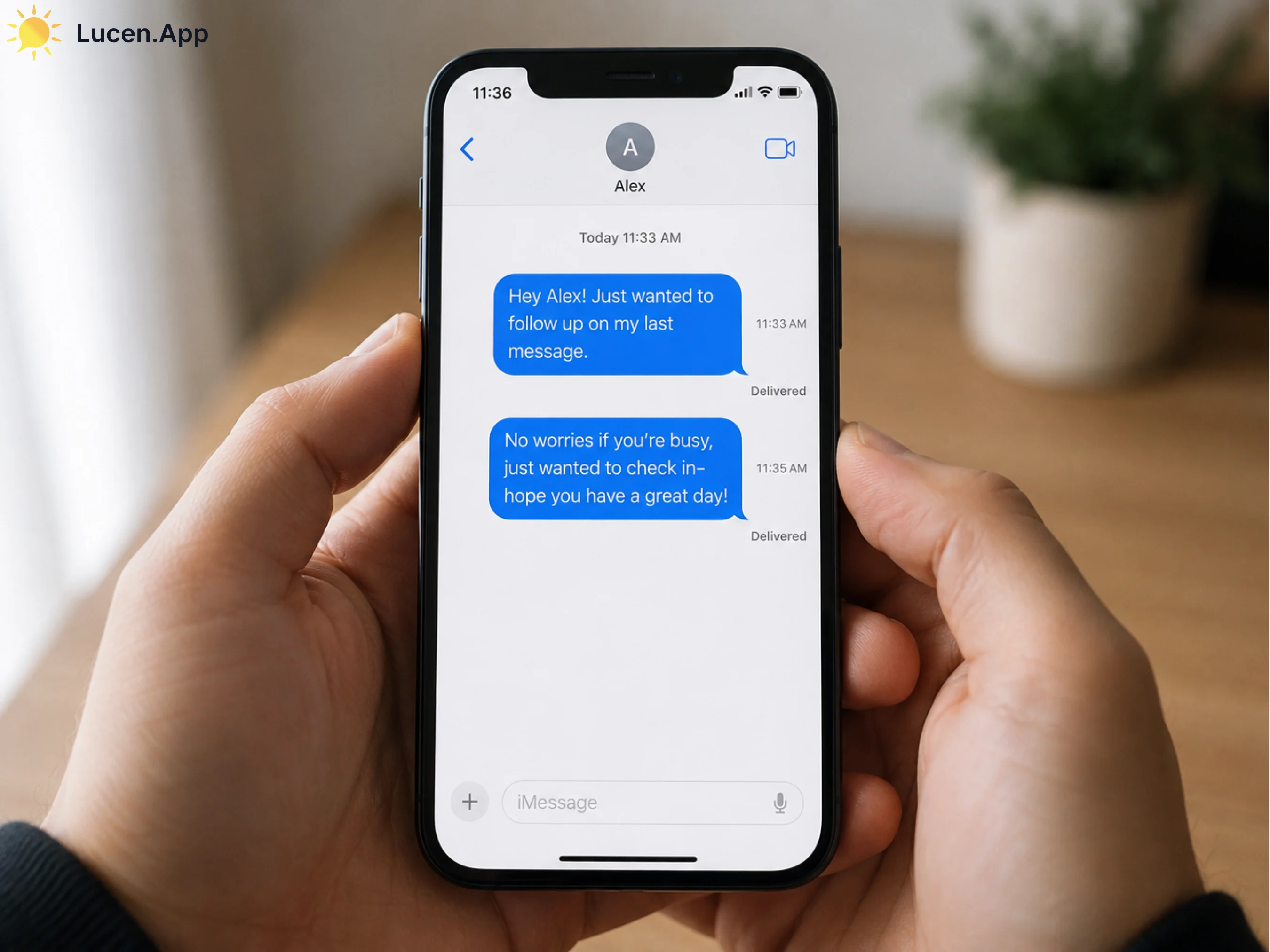
Closing with a message like "No worries if you’re busy, just wanted to check in-hope you have a great day!" allows you to end the follow-up on a positive note, leaving the door open for future conversation.
How to Stop Double Texting Overall?
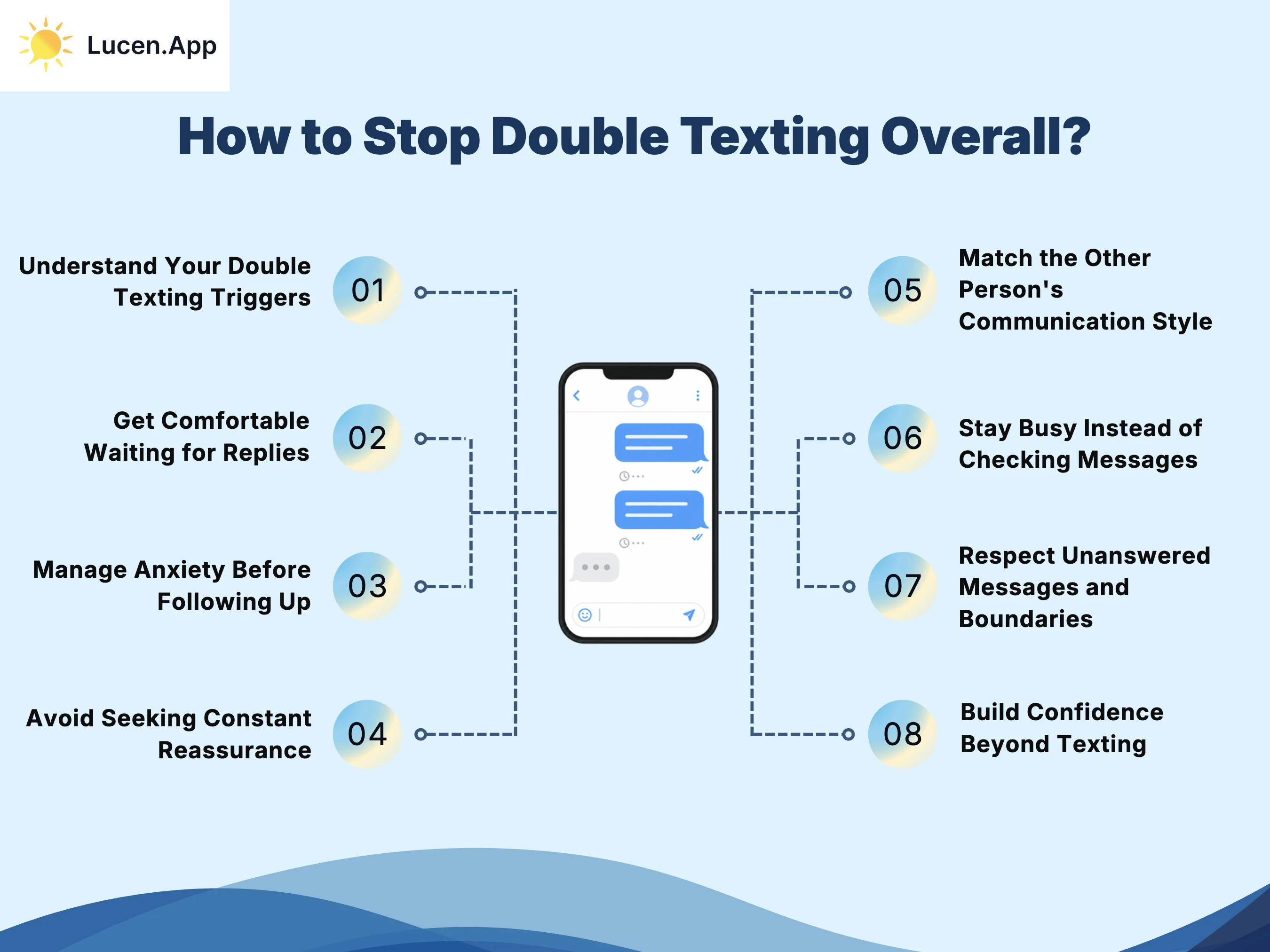
To stop double texting overall, identify your texting triggers, wait patiently for replies, manage anxiety before following up, avoid seeking constant reassurance, match the other person's communication style, stay busy instead of checking your phone, respect unanswered messages and personal boundaries, and build confidence beyond texting. These habits encourage healthier communication and help you avoid sending unnecessary follow-up messages.
The following strategies can help you stop double texting:
Understand Your Double Texting Triggers
Identify the situations or emotions that prompt you to send multiple messages before receiving a reply, similar to how customer support systems track common triggers for follow-up messages.
Get Comfortable Waiting for Replies
Practice patience by allowing time for the other person to respond, much like how sms platforms wait for a reply before sending automated reminders.
Manage Anxiety Before Following Up
Pause and address any anxious feelings before sending another message, as managing anxiety can prevent unnecessary follow-ups and maintain a smoother communication flow.
Avoid Seeking Constant Reassurance
Resist the urge to double-text for reassurance, recognizing that frequent check-ins can disrupt the natural pace of conversation, similar to how excessive notifications can overwhelm users.
Match the Other Person's Communication Style
Observe and adapt to the other person's texting habits, mirroring their response times and message frequency to create a balanced exchange, as sms services often adjust outreach based on recipient engagement.
Stay Busy Instead of Checking Messages
Engage in other activities to distract yourself from constantly checking for replies, just as customer support teams handle multiple tickets instead of focusing on a single pending response.
Respect Unanswered Messages and Boundaries
Accept that not every message will receive an immediate answer and respect the other person's boundaries, much like how sms platforms honor opt-out requests and response delays.
Build Confidence Beyond Texting
Develop self-assurance in your interactions so your confidence is not solely dependent on texting, similar to how strong customer relationships are built on trust beyond automated messages.
Can You Be Double Texting Without Realizing?
Yes, you can be double-texting without realizing it, especially during fast-paced conversations, busy workdays, or when switching between different messaging apps. People often send a follow-up because they think their first message was missed, want to clarify something, or need to share additional information. Read receipts, delayed notifications, and different response habits can also cause unintentional double texting. Being aware of your messaging patterns and giving others time to reply can help prevent unnecessary follow-up messages.
How to Recognize Double Texting That Feels Normal But Isn't?
To recognize double texting that feels normal but isn't, notice if you send another message before receiving a reply, repeat the same request without adding new information, switch between multiple platforms to get a response, or follow up mainly for reassurance. If you're unsure, an AI chat analyzer can help assess your message's tone, timing, and intent before you send it.
Start by evaluating your texting habits using the steps below:
- Notice if you send a second message before receiving a reply. For example, adding another text to clarify or check in immediately after your first message often reflects urgency rather than necessity.
- Check whether your follow-up simply repeats your original message. Saying "Did you see my last text?" or "Just checking in" without adding new information can make the conversation feel more demanding.
- Avoid switching between SMS, WhatsApp, Instagram, or email to reach the same person before they reply. Using multiple platforms can create unnecessary pressure instead of improving communication.
- Reflect on why you're sending another message. If it's to speed up a reply or seek reassurance, wait instead. An AI chat analyzer can help assess your message's tone, timing, and intent before you send it.