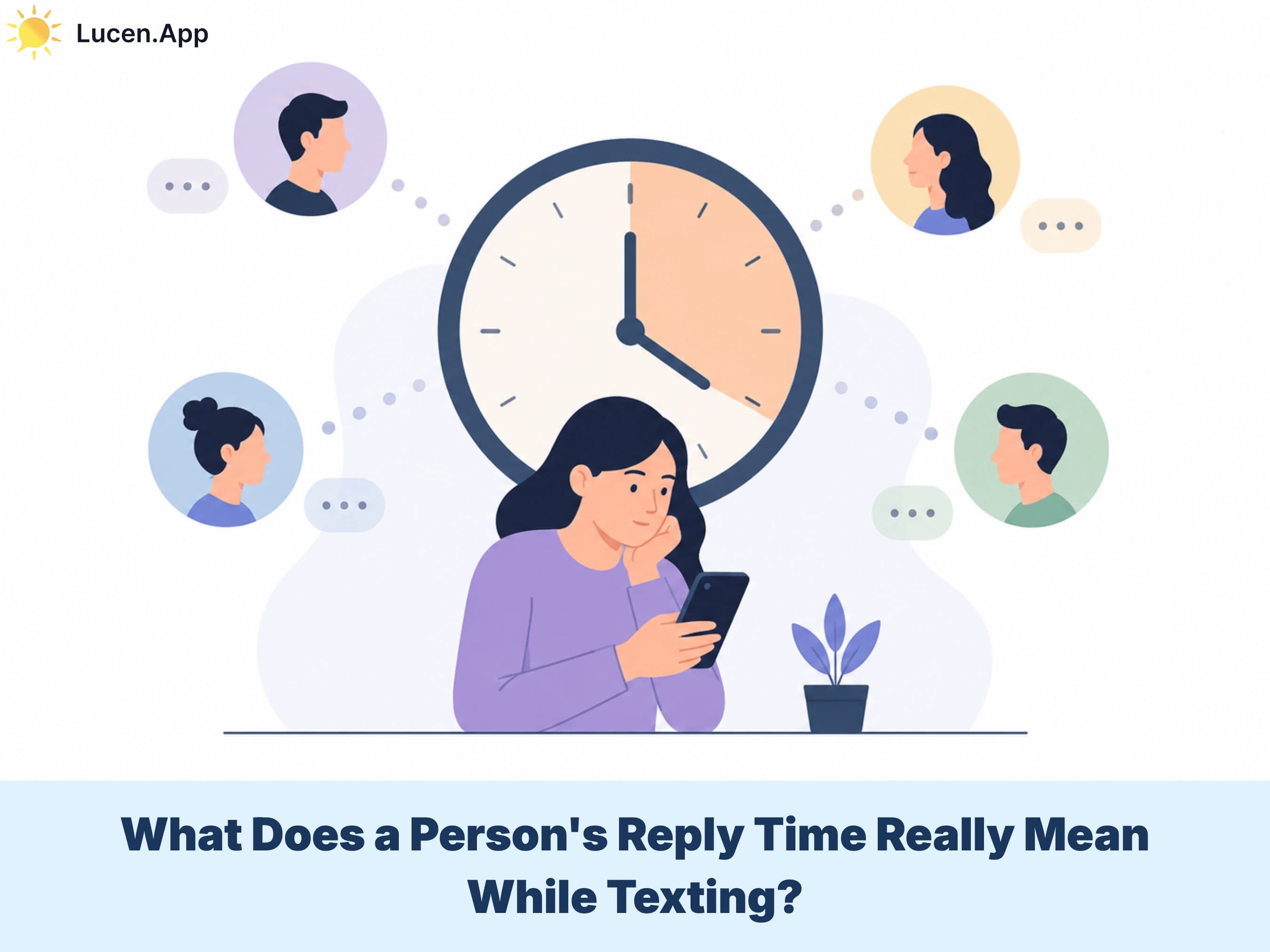
A person's reply time while texting can reveal their availability, communication style, level of interest, or current priorities, but it should never be judged in isolation. While an instant reply often signals high interest and immediate phone access, delayed replies usually reflect personal texting habits, busy schedules, or simply treating texting as an asynchronous form of communication rather than a live chat. Work, school, travel, stress, personal boundaries, time zone differences, or technical issues can all influence how quickly someone responds. For this reason, one delayed message rarely provides enough information to accurately judge someone's feelings or intentions.
The most accurate way to interpret reply time is by considering the overall context and communication pattern. Consistency over time, thoughtful messages, meaningful questions, follow-ups, willingness to make plans, emotional openness, and actions matching words provide stronger evidence of interest than response speed alone. Rather than focusing on isolated delays, evaluate how the person communicates across multiple conversations. This broader perspective reduces misunderstandings, prevents unnecessary overthinking, and helps you form more balanced expectations about the relationship.
How Long Does It Usually Take for a Person to Reply to Your Text?
Most people reply to casual texts within 15 to 20 minutes when they are available, although there is no universal rule. In active, ongoing conversations, friends or romantic partners often respond within minutes. Research on digital communication found that 64% to 68% of close connections reply immediately or within a few minutes (Source: Martin Pielot). Less urgent messages may take several hours, while a response within 24 hours is generally considered reasonable for everyday communication, depending on the relationship, message urgency, and the person's usual texting habits.
Response times also vary across platforms and situations. Someone may check text messages frequently but open social media messages less often. Work, school, travel, sleep, emotional stress, or technical issues can all delay a reply. Rather than judging a single delayed response, consider the person's normal communication pattern, the quality of their messages, and whether they communicate consistently over time.
What Does Someone's Text Response Time Reveal?
Someone's text response time can reveal their level of interest, availability, communication style, or priorities, but it is not a definitive measure of how they feel. Instant or quick replies often suggest enthusiasm and engagement, while responses within a few hours are generally normal. Delayed replies or no response may indicate low priority, disinterest, avoidance, or simply a busy schedule, depending on the context.
The following response times often reflect different levels of interest or availability:
Instant Reply
A very quick response often signals high interest, enthusiasm, or urgency, and is generally seen as polite in close friendships or romantic contexts. It may also indicate that the person is available, actively using their phone, or eager to continue the conversation. However, some people naturally reply quickly to everyone, so consistency matters.
5 to 15 Minutes
Responding within a 5- to 15-minute window is considered attentive and respectful, showing engagement without appearing overly eager, and is appropriate for most social and professional exchanges. It usually reflects a healthy balance between availability and other responsibilities. For many people, this response time feels natural and aligns with common texting expectations.
Within a Few Hours
A reply within a few hours is usually acceptable, especially during busy periods, and suggests the person values the conversation but may be occupied with other responsibilities. Work, meetings, family commitments, or travel often explain this delay. If replies remain thoughtful and consistent, a few hours is generally not viewed negatively.
Replying After 24 Hours
Taking more than a day to respond can indicate low priority, waning interest, or a busy schedule and may be perceived as dismissive in dating or friendship contexts unless explained. In some cases, personal emergencies, digital breaks, or forgotten notifications may also contribute. Looking at overall communication patterns provides a more accurate interpretation.
Replying After Several Days
Waiting several days to reply is often viewed as a sign of disinterest, avoidance, or poor communication etiquette and can negatively impact both personal and professional relationships. Repeated long delays may weaken trust and reduce the momentum of conversation. However, occasional late replies caused by exceptional circumstances should be considered before reaching conclusions.
No Reply
Not replying at all is typically interpreted as intentional avoidance, disinterest, or ghosting, and is generally considered disrespectful unless there are extenuating circumstances. A missed message, technical issue, or personal crisis can sometimes explain the silence. Before assuming the worst, consider previous communication patterns and the broader context of the relationship.
Is Slow Reply a Red Flag in Texting?
A slow reply is not necessarily a red flag, as it often reflects a person's communication style, busy schedule, or need to unplug. However, it can become a red flag when the delay is paired with behaviors that show a lack of care or consistency, such as repeatedly leaving messages unanswered, putting less effort into conversations, avoiding important discussions, or only replying when it is convenient for them.
When is Slow Reply To Your Texts a Red Flag?
A slow reply becomes a red flag when it forms a consistent pattern rather than an occasional delay. Warning signs include unexplained increases in reply time, unanswered messages, short or disengaged responses, avoiding important questions, only replying after follow-ups, communicating only when convenient, and showing little effort to maintain or progress the conversation despite being active elsewhere.
Below are the common signs that slow replies may be a red flag:
- Their reply time suddenly becomes much longer without explanation.
- They regularly leave your messages unanswered for days.
- Their replies become short, cold, or less engaged.
- They stop asking questions or continuing the conversation.
- They ignore direct questions while replying to easier messages.
- They only respond after you send another text.
- They are active online but repeatedly avoid replying to you.
- They only reply when they need attention, help, or validation.
- They avoid important conversations about plans or the relationship.
- Their slow replies form a repeated pattern rather than an occasional delay.
When is Slow Reply To Your Texts not a Red Flag?
A slow reply is not a red flag if it is an established habit, not a sudden shift, and the person consistently shows interest in the relationship. They communicate at a similar pace with everyone, explain delays, send thoughtful replies, stay engaged, and follow through on their words. Slow responses caused by work, school, travel, or other genuine commitments are usually normal.
Common signs that slow replies are not a red flag are:
- They usually communicate consistently, even if they reply slowly.
- They tell you in advance when they will be busy or unavailable.
- They send thoughtful, meaningful replies instead of rushed responses.
- They apologize or explain long delays without making excuses.
- They stay engaged and keep the conversation moving when they reply.
- Their actions match their words outside of texting.
- Their reply time is consistent with how they communicate with everyone.
- They make time to call, meet, or follow through despite slow texting.
- Their slow replies happen during work, school, travel, or other busy periods.
- The relationship remains healthy even though they don't text frequently.
What Factors Can Cause Someone to Reply Slowly to Your Texts?
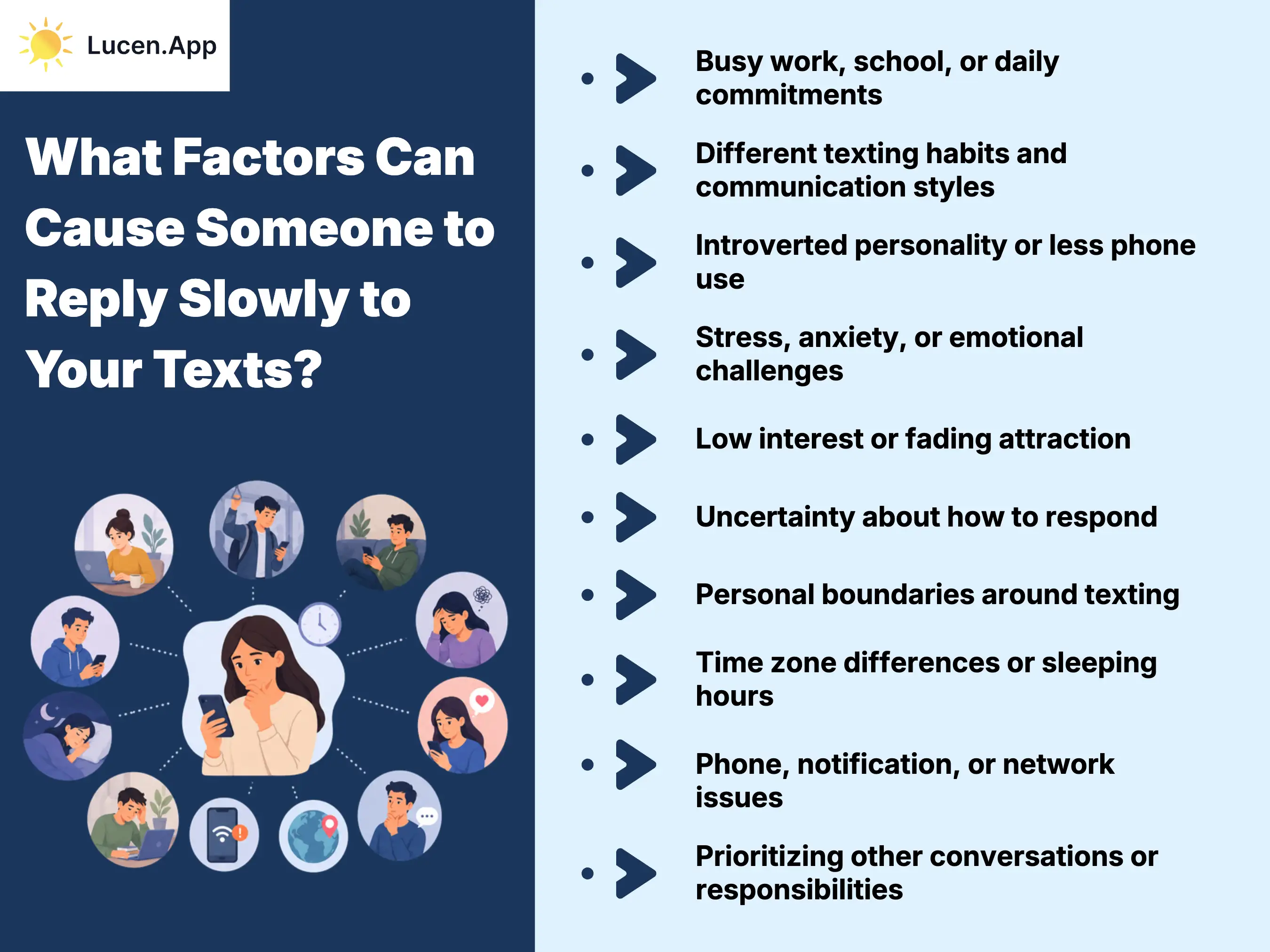
The factors causing someone to reply slowly to your texts include busy schedules, different texting habits, personality traits, emotional challenges, low interest, uncertainty about what to say, personal texting boundaries, time zone differences, technical issues, and competing priorities. A delayed reply often reflects a combination of personal circumstances and communication style, making it important to consider the overall context rather than assuming a lack of interest.
Several factors can contribute to slow text replies, including:
Busy work, school, or daily commitments
Demands from work, school, or daily routines can limit someone's availability to check and respond to messages promptly. Meetings, deadlines, classes, family responsibilities, or commuting often take priority over texting. A delayed response during busy periods is common and usually reflects limited availability rather than a lack of interest.
Different texting habits and communication styles
People have varying preferences for how often and quickly they reply to texts, which can lead to mismatched expectations. Some enjoy frequent conversations throughout the day, while others check messages only occasionally. Understanding a person's natural communication style helps prevent unnecessary misunderstandings about delayed replies.
Introverted personality or less phone use
Those who are introverted or prefer spending less time on their phones may naturally take longer to reply. They often value meaningful conversations over constant messaging and may respond only when they have enough time to engage. Slower replies can simply reflect their lifestyle rather than emotional distance.
Stress, anxiety, or emotional challenges
Emotional difficulties or high stress levels can make it harder for someone to engage in conversations or respond quickly. Mental exhaustion, anxiety, or personal challenges may reduce the motivation to text, even when they care about the relationship. Delayed replies during difficult periods are not always intentional.
Low interest or fading attraction
A decrease in interest or attraction may result in slower or less frequent replies as communication becomes less of a priority. This often appears alongside shorter messages, reduced effort, or fewer attempts to continue the conversation. Looking for consistent changes over time provides a more reliable indicator than one delayed reply.
Uncertainty about how to respond
Not knowing what to say or feeling unsure about the right response can cause hesitation and delays in replying. Someone may take extra time to think through their answer, especially during emotional, serious, or sensitive conversations. A thoughtful delay often reflects uncertainty rather than avoidance.
Personal boundaries around texting
Some individuals set personal limits on how often they text to maintain balance or protect their well-being. They may avoid checking messages constantly, silence notifications, or reserve certain hours for work, family, or rest. Respecting these boundaries helps create healthier communication expectations.
Time zone differences or sleeping hours
Differences in time zones or being asleep when a message arrives can delay responses until the person is available. International friendships, travel, night shifts, or different daily schedules naturally affect reply times. In these situations, delayed responses are expected and should not be interpreted negatively.
Phone, notification, or network issues
Technical problems like missed notifications, poor network connectivity, or phone issues can prevent timely replies. A dead battery, software glitches, airplane mode, or unreliable internet access may delay messages without the person's knowledge. Technical factors are often overlooked but can easily explain unexpected silence.
Prioritizing other conversations or responsibilities
Someone may choose to focus on other conversations or responsibilities, causing them to respond to your texts later. Important tasks, family commitments, urgent work, or face-to-face interactions often require immediate attention. Delayed replies do not necessarily indicate disinterest if communication remains consistent over time.
Does Gender Affect Reply Time While Texting?
Yes, gender can influence reply time while texting, but only to a limited extent because social expectations and cultural norms may shape how some people approach digital communication. For example, dating norms sometimes encourage women to avoid replying too quickly or men to respond promptly to show interest. However, personality, availability, texting habits, and the nature of the relationship have a much greater influence on response time than gender alone, making individual behavior a better predictor of texting patterns.
Does Relationship Stage Affect Reply Time While Texting?
Yes, the relationship stage affects reply time while texting because expectations, comfort levels, and communication priorities naturally change as relationships develop. During early dating, people often reply more quickly to express interest and build momentum. As trust grows in established relationships, response times usually become more relaxed without reducing emotional connection. Friendships also vary with routines and communication preferences, making the relationship stage an important factor in interpreting delayed replies.
Does Reply Time Really Matter While Texting?
Yes, reply time does matter because it influences conversation flow and may signal interest, attentiveness, or emotional availability. However, context matters just as much. Consistently fast replies can reflect engagement, while slower responses are often caused by busy schedules, personality, stress, or communication habits rather than a lack of interest. Looking at overall communication patterns provides the most accurate interpretation.
What Conversation Signals Matter More Than the Reply Time of Your Texts?
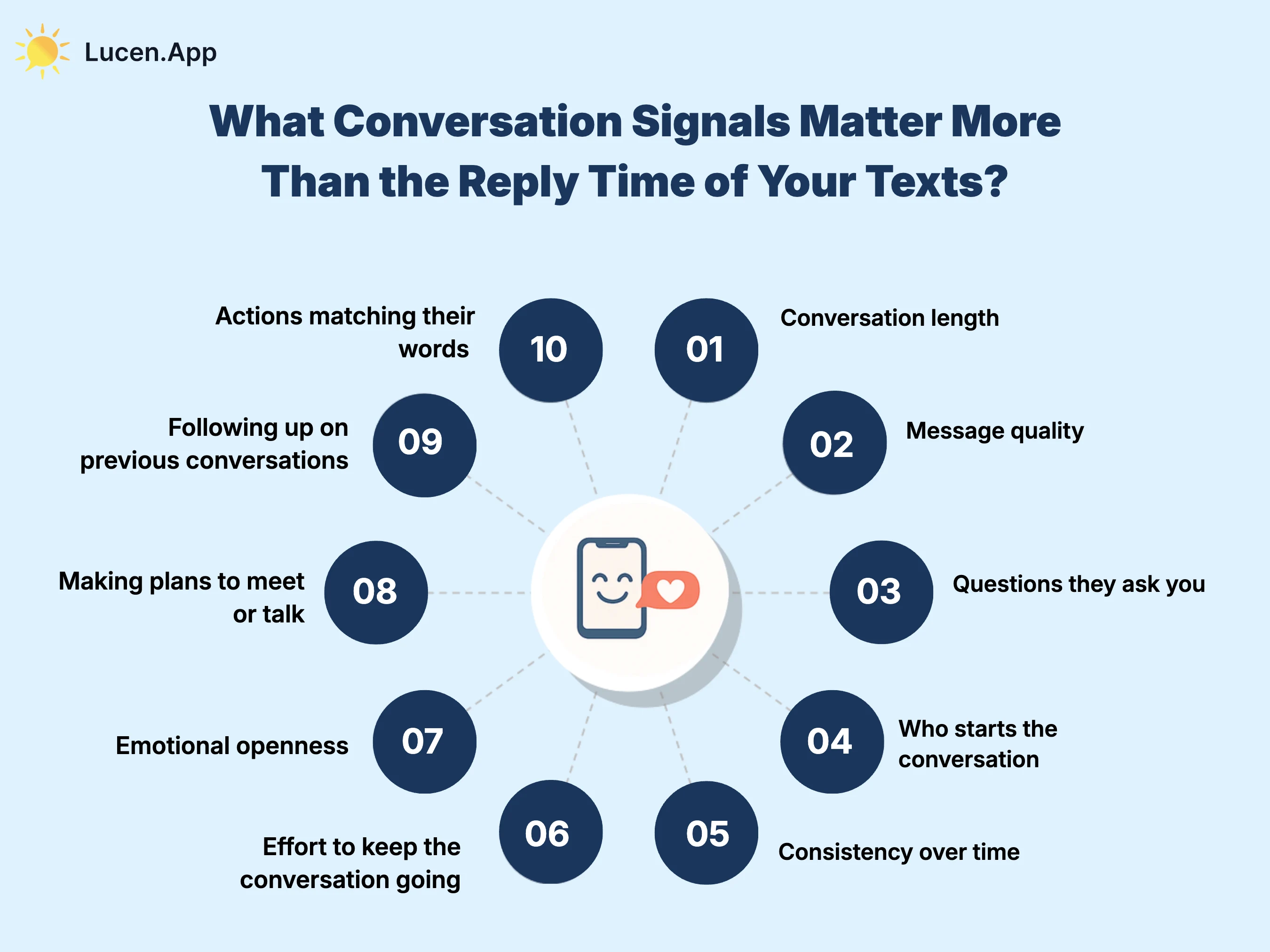
Conversation signals that matter more than reply time include message quality, conversation length, mutual effort, who initiates conversations, thoughtful questions, consistency over time, emotional openness, making plans, following up on previous discussions, and actions matching words. Together, these behaviors provide a more accurate picture of someone's interest, engagement, and commitment than response speed alone.
Key conversation signals that matter more than the reply time of your texts are:
- Conversation length: Longer conversations usually indicate sustained interest and engagement, showing both people are invested in continuing the interaction rather than exchanging brief messages.
- Message quality: Thoughtful, personalized messages demonstrate genuine attention and effort, while detailed replies often reveal stronger interest than short or generic responses.
- Questions they ask you: Asking questions about your life, opinions, or experiences shows curiosity and a genuine desire to keep the conversation meaningful and engaging.
- Who starts the conversation: Regularly initiating conversations reflects proactive interest and willingness to connect, instead of relying on you to maintain communication every time.
- Consistency over time: Consistent communication over days or weeks signals reliability and genuine interest, making it a stronger indicator than occasional bursts of messaging.
- Effort to keep the conversation going: Introducing new topics, asking follow-up questions, or expanding discussions shows a genuine effort to maintain engagement and avoid one-sided conversations.
- Emotional openness: Sharing personal thoughts, feelings, or experiences demonstrates trust, emotional investment, and a willingness to build a deeper connection over time.
- Making plans to meet or talk: Suggesting a call or meeting in person shows genuine intent to strengthen the relationship beyond texting and move the connection forward.
- Following up on previous conversations: Remembering and revisiting earlier conversations shows attentiveness, genuine interest, and that they value the connection you share.
- Actions matching their words: Consistent actions that support what they say build trust and demonstrate genuine interest, making their intentions clearer than reply speed alone.
What Is Good Text Response Time Etiquette?
Good text etiquette means respecting others' time and boundaries by matching your reply speed to the message's urgency, responding immediately to urgent texts and within 24 hours for non-urgent ones. While close friends, family members, or romantic partners may expect quicker responses, professional conversations often allow more flexibility. If you are unable to reply promptly, letting the other person know helps manage expectations and prevents misunderstandings.
Beyond response speed, the quality and consistency of your communication define good texting etiquette. A thoughtful, relevant message sent after a reasonable delay is often more valuable than a rushed reply. Acknowledging important messages, being transparent about delays, and respecting each other's communication style help build trust, reduce misunderstandings, and create healthier digital conversations.
Should You Wait or Move On If Someone Takes Long to Reply?
If someone takes a long time to reply, move on with your day instead of waiting for a response. Avoid sending repeated follow-up messages or assuming the worst after a single delay. Instead, focus on your own work, hobbies, and relationships while observing their overall communication pattern. If slow replies become consistent and are paired with little effort or engagement, it may be time to move on.
How Can You Stop Overthinking Someone's Reply Time?
You can stop overthinking someone's reply time by avoiding assumptions based on a single delayed response and focusing on their overall communication patterns instead of response speed alone. Setting realistic expectations, respecting different texting habits, and communicating openly about recurring delays can also help reduce unnecessary worry. These habits encourage healthier communication and reduce unnecessary anxiety about delayed replies.
The following tips can help you stop overthinking slow text replies:
- Avoid judging one delayed reply: A single slow response can happen for many reasons, so avoid making assumptions based on one instance to prevent unnecessary worry.
- Track patterns across several conversations: Looking at reply times over multiple conversations helps you identify genuine patterns rather than reacting to isolated delays.
- Focus on effort, not response speed: Pay attention to the thoughtfulness and engagement in their messages, as meaningful interaction matters more than how quickly they reply.
- Wait before sending another message: Give the other person time to respond, which reduces pressure and helps you manage your own anxiety.
- Limit repeated checks of the chat: Set boundaries on how often you check your messages to avoid overthinking and maintain a healthier mindset.
- Match expectations to their texting habits: Adjust your expectations to align with how often and quickly they typically reply, which helps prevent disappointment and misinterpretation.
- Discuss repeated delays directly: If delayed replies become a consistent issue, address it openly to clarify intentions and avoid misunderstandings.
- Always Communicate Your Needs Clearly: Express your communication preferences and needs so both parties understand each other's expectations regarding reply times.
Can Chat Analyzer AI Help You Understand Reply Time More Accurately?
Yes, chat analyzer AI can help you understand reply times more accurately by analyzing communication patterns rather than isolated delays. It tracks average response times, identifies changes in engagement, detects recurring slow replies or ghosting patterns, and compares behavior across conversations and messaging platforms. Through pattern recognition and conversation analysis, AI chat analyzers provide objective insights into delayed replies, making them easier to interpret without assumptions.