Breadcrumbing over text is a dating manipulation tactic in which someone sends occasional flirty messages or vague expressions of interest to keep you emotionally invested without building a genuine relationship or following through on meaningful plans. Unlike ghosting, communication never completely stops. Instead, intermittent attention creates false hope and uncertainty, making it difficult to know whether someone is genuinely interested or simply keeping the connection available.
Common signs of breadcrumbing include inconsistent communication, flirty texts that never lead to real plans, vague future promises, avoiding relationship labels, hot-and-cold engagement, and mixed signals that leave you questioning where you stand. People often breadcrumb for validation, emotional comfort, fear of being alone, or to avoid difficult conversations without ending the connection. Understanding these patterns, their emotional impact, and the difference between genuine interest and breadcrumbing can help you recognize red flags earlier, set healthier boundaries, and make more confident dating decisions.
What Does Breadcrumbing Over Text Actually Mean?
Breadcrumbing over text means someone sends sporadic, non-committal messages that give you just enough attention to keep you interested, without any genuine intention of building a deeper relationship or following through with real plans. This behavior often includes flirty texts, random check-ins, vague compliments, or messages like “we should hang out soon” that never lead to a specific date or meaningful progress.
Unlike ghosting, where communication stops completely, breadcrumbing keeps the connection alive through occasional messages that create a false sense of hope. A text may arrive after days or weeks of silence, making it seem like the relationship is moving forward when little has actually changed. Over time, the gap between what they say and what they do becomes one of the clearest signs of breadcrumbing over text.
9 Signs You're Being Breadcrumbed Over Text
9 signs you are being breadcrumbed over text include inconsistent communication, flirty messages without concrete plans, vague talk about the future, avoiding relationship labels, hot-and-cold behavior, surface-level conversations, ongoing confusion, communication that happens only on their terms, and a lack of concrete dates. These patterns often work together to keep you emotionally invested while preventing genuine progress in the relationship. Although their messages may suggest interest, their actions rarely show consistency, commitment, or follow-through.
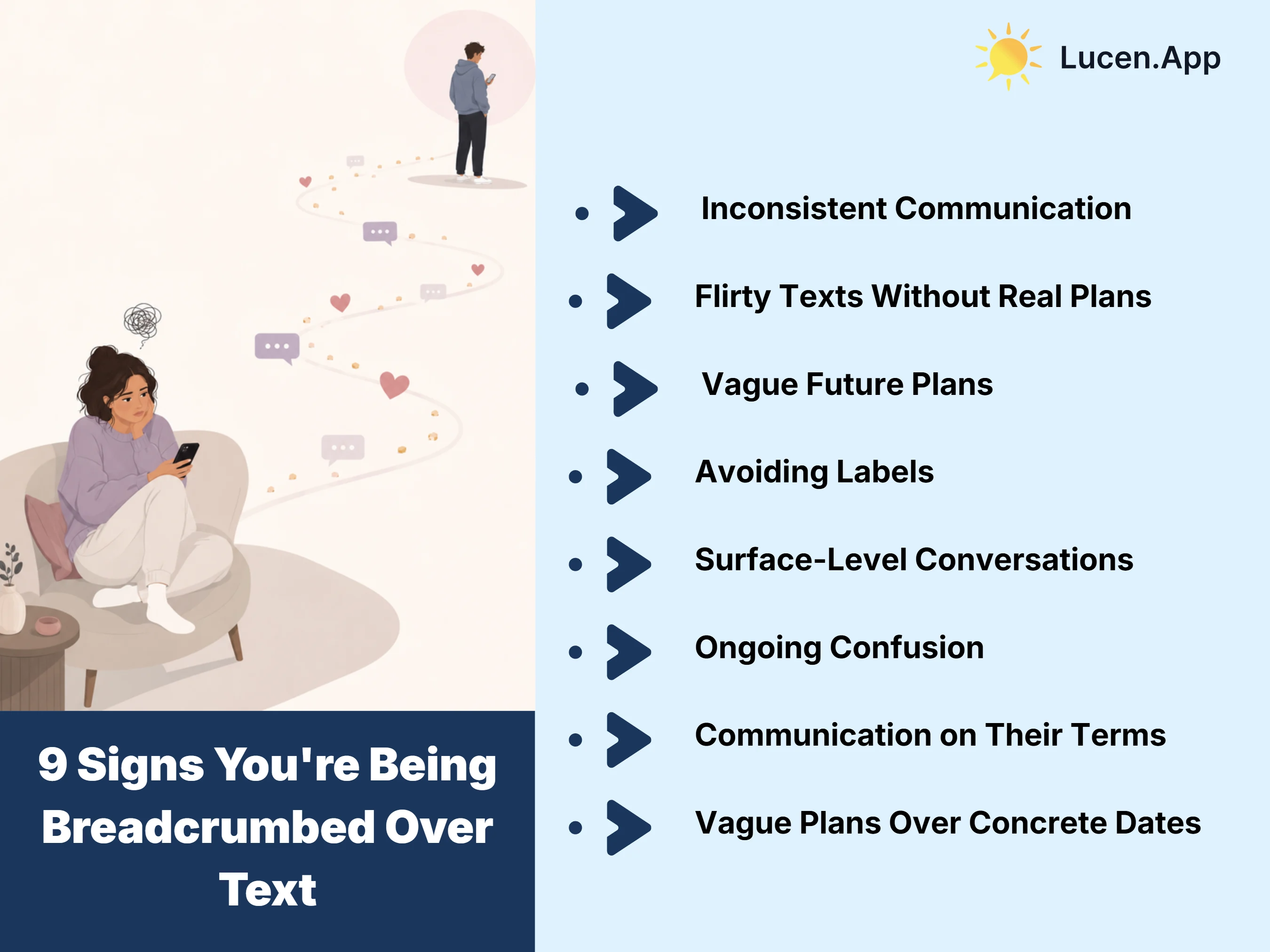
9 Signs You're Being Breadcrumbed Over Text:
- Inconsistent Communication: Their attention comes in unpredictable bursts, creating hope through occasional messages while avoiding consistent effort.
- Flirty Texts Without Real Plans: They use compliments and romantic messages to maintain interest, but rarely turn conversations into actual dates.
- Vague Future Plans: They talk about meeting up "sometime" without committing to a specific day, time, or arrangement.
- Avoiding Labels: They keep the relationship undefined, creating ambiguity rather than clarifying their intentions.
- Hot-and-Cold Behavior: They alternate between intense engagement and complete withdrawal, leaving you emotionally off balance.
- Surface-Level Conversations: They keep the chat active through small talk while avoiding deeper emotional connection and vulnerability.
- Ongoing Confusion: Their mixed signals make it difficult to understand where you stand or what they truly want.
- Communication on Their Terms: They reach out when convenient for them and disappear when consistency or commitment is expected.
- Vague Plans Over Concrete Dates: They express interest in meeting but repeatedly avoid confirming the details needed to make it happen.
1. Inconsistent Communication
Inconsistent communication is one of the clearest signs of breadcrumbing because it creates a cycle of attention followed by silence. You may go days or weeks without hearing from them, only to receive a sudden flirty text that pulls you back in. Their messages often stay low-effort through memes, late-night check-ins, or vague promises to meet up that never materialize into real plans. If their attention increases whenever you pull away but fades once you re-engage, breadcrumbing may be driving the pattern.
2. Flirty Texts That Never Turn Into Real Plans
Receiving frequent compliments, affectionate messages, and playful flirting without any effort to meet in person is a common sign of breadcrumbing. The person creates a sense of romantic interest through engaging conversations and attentive behavior that keep you emotionally invested. Yet when the discussion turns to a specific date, they remain vague, delay making plans, or avoid committing to a date and time. Over time, the contrast between their flirtatious communication and lack of follow-through reveals that the connection is not progressing beyond text messages.
3. Vague Future Plans Like "We Should Hang Soon"
Using vague future plans instead of specific invitations allows someone to appear interested without making a real commitment. Statements like “we should hang out soon” or “let’s grab coffee sometime” create excitement because they suggest the relationship is moving forward. Yet these conversations rarely progress to a set day, time, or location. When you ask for details, they often offer another vague promise instead of a concrete plan. Over time, this pattern keeps hope alive while avoiding the effort and accountability that genuine interest typically shows.
4. Avoiding Labels
People who breadcrumb often resist defining the relationship because labels create expectations, accountability, and clearer intentions. You might notice that months of texting, flirting, or even occasional dates never lead to a conversation about exclusivity or where the relationship is headed. When you ask direct questions, they may respond with phrases like "let's not rush things" or "I'm just seeing where life takes me." The issue is not the absence of a label itself, but the persistent lack of clarity despite ongoing emotional investment and relationship-like behavior.
5. Hot-and-Cold Engagement Cycles
One of the most emotionally confusing breadcrumbing patterns involves alternating between intense attention and complete withdrawal. After periods of silence, they may suddenly send affectionate messages, respond quickly, or act highly interested, making it seem as though the connection is gaining momentum. Yet this increased engagement rarely lasts. Once they regain your attention, the communication often fades again. These unpredictable shifts can create anticipation and emotional dependency because you begin focusing on when the next period of attention will return rather than whether the relationship is progressing.
6. Surface-Level Chats With No Emotional Depth
A breadcrumbing connection can generate hundreds of messages while revealing very little about the person behind them. Conversations may revolve around daily routines, social media content, memes, or casual small talk, but rarely move toward personal values, emotional experiences, relationship goals, or future plans. They know how to keep the conversation active, yet they avoid the vulnerability required to build trust and intimacy. If months of texting leave you feeling entertained but not truly known, the communication may be maintaining attention rather than creating a connection.
7. Leaving You Consistently Confused
Persistent confusion is often one of the strongest emotional indicators of breadcrumbing, as their messages may alternate between interest and distance, creating mixed signals that make their intentions difficult to understand. One conversation can feel promising, while the next leaves you questioning where you stand. Healthy romantic interest generally creates more certainty as communication develops. If you constantly analyze texts, second-guess their behavior, or seek reassurance from others, the uncertainty may reflect the pattern itself.
8. Communication on Their Terms
A hallmark of breadcrumbing is communication that happens primarily on the other person's terms. They often reach out when they want attention, respond when it suits their schedule, and disappear when you seek greater consistency. Your messages may wait for a reply, yet they expect engagement when they return. This imbalance allows them to control the pace of the interaction while maintaining access to your attention. Genuine interest typically involves mutual effort, responsiveness, and respect for both people's needs.
9. Vague Plans Over Concrete Dates
Repeatedly discussing future activities without committing to specific details often keeps a connection alive without moving it forward. Unlike general future talk, this pattern becomes visible when opportunities to meet arise, and they avoid setting an actual date, time, or location. They may agree that the meeting sounds great, but leave every detail unresolved. People who are genuinely interested usually make plans easier, not harder. When conversations repeatedly end in uncertainty rather than confirmed arrangements, their intentions may not match their words.
Why Do People Breadcrumb Over Text?
People breadcrumb over text because of intermittent reinforcement, ego and validation, fear of being alone, control and manipulation, and avoidance of confrontation. In most cases, these behaviors stem from a desire to maintain attention, emotional comfort, or personal benefits without taking responsibility for a deeper commitment. By sending occasional messages and keeping the connection active, they can preserve access to your interest while avoiding difficult conversations, relationship expectations, or the risk of losing the connection entirely.
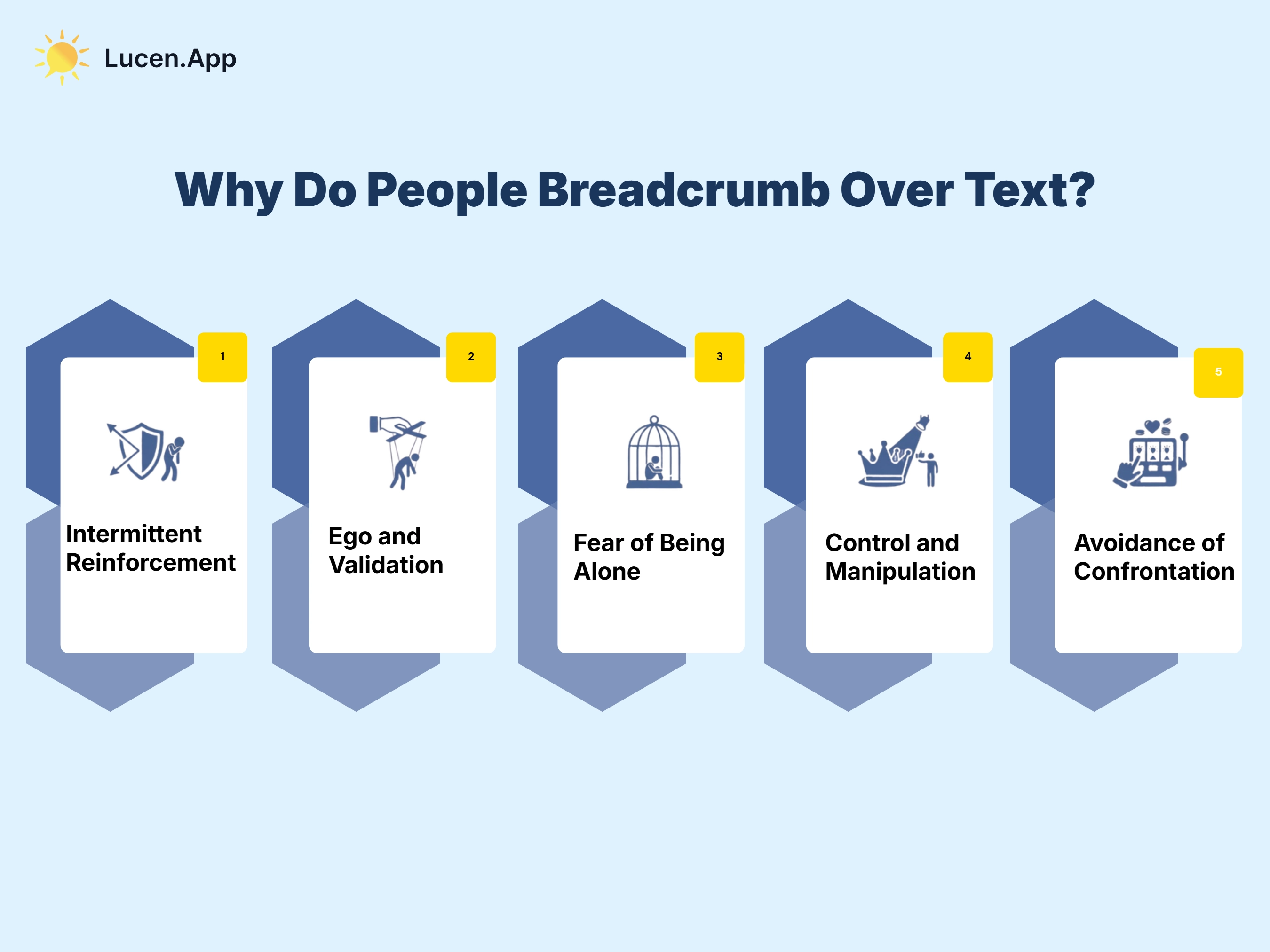
Major reasons people breadcrumb over text are:
Intermittent Reinforcement
Intermittent reinforcement keeps people emotionally invested by rewarding them with attention at unpredictable intervals. Instead of communicating consistently, the person may disappear for several days and then return with a warm message, flirtatious text, or sudden burst of interest. The unpredictability creates anticipation because each message feels significant after a period of silence. Over time, you may focus on the occasional positive interaction and overlook the lack of consistency, effort, or progress in the relationship.
Ego and Validation
For some people, breadcrumbing becomes a way to gain validation and feel desirable without pursuing a serious relationship. Each reply, compliment, or sign of interest reinforces their sense of attractiveness and importance. They may enjoy knowing that someone is thinking about them or waiting for their messages, even if they have no intention of deepening the connection. The attention itself becomes the reward, which allows them to maintain contact without investing in meaningful relationship growth.
Fear of Being Alone
A fear of being alone can motivate someone to keep romantic connections available even when they are not fully interested. Instead of ending the interaction, they maintain occasional communication for emotional comfort and companionship. Messages often become more frequent during periods of loneliness, boredom, or after setbacks in other dating situations. This behavior creates a backup connection that helps them avoid feeling isolated while preventing the relationship from moving forward in a meaningful way.
Control and Manipulation
Maintaining control over the relationship dynamic is another reason some people breadcrumb through text. By deciding when to start, stop, and resume communication, they keep the other person uncertain and emotionally engaged. They may reappear after periods of silence, increase attention when interest begins to fade, or offer just enough encouragement to keep the connection alive. This pattern allows them to influence the pace of the relationship while avoiding the commitment and accountability that genuine interest requires.
Avoidance of Confrontation
Many people breadcrumb to avoid uncomfortable conversations about their true feelings or intentions. Rather than openly saying they are not interested in a relationship, they continue sending occasional messages that keep the connection active. This approach helps them sidestep rejection, disappointment, or conflict in the short term. Unfortunately, a lack of honesty often creates greater confusion because the other person continues to receive signals suggesting the relationship still has potential.
How to Tell the Difference Between Breadcrumbing vs. Slow Texting
Breadcrumbing involves inconsistent attention, vague promises, and mixed signals that keep the connection alive without meaningful progress, whereas slow texting involves delayed responses but clear interest, consistent effort, and genuine follow-through. A person who texts breadcrumbs may talk about meeting up without making plans, whereas a slow texter eventually turns intentions into action. While breadcrumbing often leaves you unsure where you stand, slow texting usually provides clarity, stability, and a clear sense of the relationship's direction.
| Breadcrumbing | Slow Texting |
|---|---|
| Sends inconsistent messages, creating uncertainty and mixed signals. | Replies less frequently but maintains a consistent level of interest. |
| Talks about meeting up but rarely follows through with actual plans. | Makes concrete plans even if responses are delayed. |
| Keeps intentions vague and difficult to interpret. | Communicates intentions clearly through words and actions. |
| Creates emotional confusion and leaves you questioning where you stand. | Provides reassurance and clarity despite slower communication. |
| Uses attention sporadically to keep the connection active. | Communicates at a slower pace because of personal habits, work, or responsibilities. |
| Shows interest inconsistently and rarely moves the relationship forward. | Demonstrates steady effort that supports relationship progress. |
| Words and actions often fail to align. | Actions generally support what they communicate. |
| Leaves you feeling uncertain about the future of the connection. | Leaves you with a clear understanding of the relationship direction. |
What Are Examples of Breadcrumbing Texts?
Examples of breadcrumbing texts include “I miss you” with no plan to follow up, “we should hang out soon” with no date set, late-night flirty messages, random check-ins after a period of silence, vague future promises, and apologies without changed behavior. These messages create a sense of interest and possibility, yet they rarely lead to concrete plans, consistent effort, or meaningful progress in the relationship.
Common examples of breadcrumbing texts are:
“I miss you,” but no plan follows A message like “I miss you” can feel meaningful because it suggests emotional connection and continued interest. Yet when the statement never leads to a phone call, date, or concrete plan, it often serves to keep the connection alive rather than move the relationship forward.
“We should hang out soon,” but no date is set On the surface, this message sounds like an invitation, but the lack of a specific day or time tells a different story. When the same phrase appears repeatedly without follow-through, it creates anticipation while avoiding the commitment needed to make plans happen.
Late-night flirty messages Often arriving after hours of silence, late-night texts can create a sense of intimacy and romantic interest. The problem is that the attention frequently disappears by the next day, leaving little evidence of genuine effort or long-term relationship intentions.
Random check-in texts after silence After days or weeks of no contact, a simple check-in message can quickly revive your interest. Instead of addressing the previous silence or building momentum, the text usually reopens the conversation just enough to maintain the connection.
Vague future promises Talking about future dates, trips, or experiences together can create the impression that the relationship is progressing. Yet when every promise remains open-ended, and no details ever follow, the future becomes a conversation topic rather than a realistic plan.
Apologies without changed behavior Repeated apologies can sound reassuring, especially after missed messages, canceled plans, or periods of silence. If the same behavior continues after every apology, the words provide temporary comfort but fail to demonstrate accountability, effort, or meaningful change.
What Is the Emotional Impact of Being Breadcrumbed Over Text?
The emotional impact of being breadcrumbed over text often includes confusion, anxiety, self-doubt, false hope, and reduced dating confidence. Because occasional messages create the illusion of progress without providing clarity or commitment, many people become emotionally invested in a relationship that rarely moves forward.
- Confusion: Mixed signals make it difficult to understand where the relationship stands or what the other person truly wants.
- Anxiety: Unpredictable communication can lead to overthinking, waiting for replies, and constantly analyzing text conversations.
- Self-Doubt: Inconsistent attention may cause you to question your worth, expectations, or whether you did something wrong.
- False Hope: Sporadic affection and vague promises keep the possibility of a relationship alive despite little real progress.
- Reduced Dating Confidence: Repeated emotional uncertainty can weaken trust in future relationships and make healthy connections harder to recognize.
How to Spot Breadcrumbing Patterns in Your Own Chats?
To spot breadcrumbing patterns in your own chats, look for reply gaps followed by affection, flirty texts without plans, vague promises, repeated apologies, one-sided effort, late-night check-ins, and mixed signals. Together, these behaviors often show a pattern of inconsistent interest, limited follow-through, and attention that keeps the connection alive without creating clarity, commitment, or meaningful progress in the relationship.
7 Breadcrumbing Patterns to Watch for in Your Chats include:
Long reply gaps followed by sudden affection In breadcrumbing, long periods of silence are often followed by sudden affectionate messages that quickly restore emotional momentum. After days or weeks without contact, the person may return with compliments, warmth, or renewed interest, making the connection feel meaningful again. If this cycle repeats, the occasional attention often becomes more noticeable than the lack of consistent effort.
Flirty texts without clear plans One way to spot breadcrumbing is to look for flirtatious conversations that never develop into actual plans. The person may attract others with compliments, playful banter, and romantic messages, yet avoid committing to a date when the opportunity arises. Strong chemistry without meaningful follow-through often signals attention rather than genuine intent.
Repeated vague promises Consistently making future-oriented statements without following through is a common breadcrumbing pattern. They may talk about meeting up, taking a trip together, or spending time with you soon. Although the promises sound encouraging, they rarely translate into specific arrangements, keeping expectations high while delaying meaningful action.
Apologies without changed behavior Apologies without a change in behavior usually indicate a recurring pattern of breadcrumbing rather than a temporary mistake. Someone may repeatedly apologize for disappearing, inconsistent communication, or canceled plans, yet continue making the same choices. In these situations, consistent actions provide a more reliable measure of interest than repeated expressions of regret.
One-sided effort Breadcrumbing can become apparent when you review who contributes the most effort in the conversation. If you consistently initiate contact, restart stalled chats, and suggest plans while the other person contributes very little, the imbalance may indicate limited investment. Healthy connections usually involve mutual participation from both sides.
Late-night check-ins Occasional late-night messages are a recurring feature of many breadcrumbing patterns. These texts often appear after stretches of limited communication and create a temporary sense of closeness or interest. Yet meaningful conversations, consistent engagement, and concrete plans rarely follow once the moment passes.
Mixed signals across the chat The clearest way to spot breadcrumbing is to look for mixed signals across the entire conversation. The person may express interest, affection, or excitement one day and become distant or unavailable the next. When words and actions repeatedly point in different directions, the overall communication pattern often provides the answer.
Can Chat Patterns Show If Someone Is Interested or Just Breadcrumbing?
Yes, chat patterns such as consistent effort, clear plans, balanced replies, emotional clarity, follow-through, respect for boundaries, and the absence of recurring red flags can indicate whether someone is genuinely interested rather than breadcrumbing. Together, these behaviors create trust, consistency, and relationship progress because the person's actions align with their words, communication remains reciprocal, and interest translates into meaningful effort instead of mixed signals or vague promises.
7 Chat Patterns That Show Genuine Interest are:
- Consistent effort: When evaluating chat patterns, consistent effort often provides one of the clearest signs of genuine interest. The person maintains regular communication, initiates conversations, and stays engaged without disappearing for long periods. Even during busy times, they make an effort to stay connected, which creates stability and demonstrates that the relationship remains a priority rather than an afterthought.
- Clear plans: Interest becomes much easier to recognize when conversations regularly lead to real-world interaction. Instead of relying on vague talk about the future, the person suggests specific dates, confirms arrangements, and follows through. This pattern signals intention because the relationship moves beyond texting and into meaningful experiences together.
- Balanced replies: Mutual engagement often reveals more about someone's intentions than the speed of their responses. Both people contribute to the conversation, ask questions, and invest similar energy into keeping communication active. When effort flows in both directions, the connection feels collaborative rather than dependent on one person carrying it.
- Emotional clarity: Emotional clarity often shows genuine interest because the person's intentions become easier to understand over time. Their communication reduces confusion rather than creating mixed signals or uncertainty. As conversations develop, you gain a clearer sense of where the relationship stands and where it may be heading.
- Follow-through: Actions that consistently match previous conversations often provide the strongest evidence of genuine interest. If someone talks about calling, making plans, or staying in touch, they usually follow through on those commitments. This consistency builds trust because their behavior reinforces what they communicate rather than creating uncertainty through unfulfilled promises.
- Respect for boundaries: The way someone responds to personal limits can reveal a great deal about their intentions and emotional maturity. A genuinely interested person respects your preferences, accepts boundaries without pressure, and communicates in a considerate manner. This behavior creates emotional safety and shows that they value the relationship rather than simply seeking attention or convenience.
- Repeated red flags: The absence of recurring red flags can indicate genuine interest, as healthy chat patterns tend to remain relatively consistent over time. Behaviors such as frequent disappearances, broken promises, recurring excuses, or persistent mixed signals become less common when someone's intentions are sincere. Looking at long-term patterns often provides a clearer picture than focusing on individual messages.
Can Chat Analysis Help You Break Repeated Dating Patterns?
Yes, chat analysis can help you break repeated dating patterns by identifying communication behaviors that often go unnoticed while you're emotionally invested. It can reveal recurring issues such as mixed signals, inconsistent effort, vague promises, and poor follow-through that contribute to unhealthy relationship dynamics. A chat analyzer helps uncover these patterns by evaluating conversation trends and texting behaviors over time. This added clarity can help you recognize red flags earlier and make healthier dating decisions.
How To Deal With Someone Who Breadcrumbs You?
To deal with someone who breadcrumbs you, get clear on your non-negotiables, understand your patterns, stop being available on their schedule, have a direct conversation, watch their actions, know when it is time to walk away, and build your vision for an ideal relationship. These steps help you set stronger boundaries, prioritize actions over words, break unhealthy relationship cycles, and focus on connections that offer consistency, clarity, and genuine commitment.
6 Ways to Deal With Someone Who Breadcrumbs You are:
Get Clear on Your Non-Negotiables Getting clear on your non-negotiables helps you define the minimum standards a healthy relationship must meet. Whether that includes consistent communication, honesty, emotional availability, or effort, knowing these expectations makes it easier to recognize when someone's behavior falls short instead of continually making exceptions.
Understand Your Patterns Understanding your patterns can reveal why certain relationship dynamics keep repeating. Looking at past experiences may help you identify tendencies such as overlooking red flags, becoming attached to potential, or staying invested in inconsistent connections longer than you would like.
Stop Being Available on Their Schedule Constantly adjusting your availability around someone else's communication habits can reinforce the breadcrumbing cycle. Creating your own boundaries around texting, attention, and time helps restore balance and prevents the relationship from revolving entirely around their convenience.
Have the Direct Conversation (And Watch Their Actions) Having a direct conversation creates an opportunity to gain clarity about intentions, expectations, and relationship goals. While their response may provide useful information, their actions afterward often reveal far more about their genuine level of interest and commitment.
Know When It’s Time to Walk Away Repeated disappointment often signals that the relationship is giving you information you should not ignore. If confusion, inconsistency, and unmet expectations continue despite your efforts to address them, stepping away may be the healthiest way to protect your emotional well-being.
Build Your Vision for Your Ideal Relationship Building a vision for your ideal relationship helps shift your focus from chasing attention to identifying compatibility. When you have a clear picture of the communication, values, effort, and emotional connection you want, it becomes easier to recognize relationships that genuinely align with those goals.
Can Breadcrumbing Happen Without Bad Intent?
Yes, breadcrumbing can happen without bad intent, although the outcome often feels the same. While some cases involve manipulation, others stem from uncertainty, emotional unavailability, fear of rejection, poor communication skills, or insecure attachment patterns. A person may enjoy the connection and send occasional messages without realizing they are creating false hope. Even without malicious intent, the behavior can still lead to confusion, mixed signals, and limited progress in the relationship.